
Here’s a thought for the day: in 1439 (or thereabouts) Gutenberg introduced the printing press. It made everyman a reader for the first time in history. Prior to that, in the western world especially, the act of reading and writing was not necessary to living one’s life, most cultures on earth lived by oral tradition and these special esoteric arts were kept secret and passed down mostly along the religious orders where power was concentrated. The monks and priests were the keepers of all knowledge and utilized it, with the reigning monarchs, to hold onto power in a top-down hierarchy to keep the masses in order. This is not a dissimilar scenario in Vedic and Eastern cultures, religion and power were equally co-concentrated.
Gutenberg’s disruption spawned two movements that realigned the face of culture forever: one was the Renaissance and the other was the Reformation.
With the Renaissance, western epistemology was now cracked wide open and not only made available but subject to revision by everyone. The horizons of every individual were broadened beyond their eyelids and own individual labor. The world became large for the first time in human history: there was now a visible past that spurred speculation of the future and the rush of thinking, invention, philosophy and commerce changed the world. It was the blossoming of humankind.
But the Reformation had the most immediate and consequential effect. It broke the hegemony of the Church and busted up the power hierarchy by pulling their God out of the hands of a few and placing him in the hands of the many. You no longer had to gather at a communal focal point to receive its message and blessings through the hands of the chosen select, a place where they could continue to exercise power as well. Consequently, the influence of those that held that power was diminished and when a disruption is this severe it spurs a defense. And so the wars of the Reformation lasted close to 100 years and with it realigned power, land, titles, holdings and creeds. It fragmented society into broad camps, into larger tribes now held together not by their relationship to a monarch or title, but by a common bond of thought in how one relates to the supernatural. “I think this way and you think that way and that’s where our fences are built”. Where the promise of the Renaissance would bring us together, the factionalism of the Reformation kept us apart.

In the 1980s (or thereabout), we created the Internet, the 2nd great disruptor after Gutenberg. Now, everyman is an encyclopedia, a single container of the world’s knowledge, a holder of individual epistemology that can be arranged and re-arranged as fits that person’s needs. There is now no longer a need for communal affirmation and with that, no space for communal regulation: “I, alone, make the decision what reality is and what it is to become. I, alone, interpret history and I alone create the future. I am bonded to you only by your affirmation of my reality. And that can change at any time.”
The individualism that was curried by the Renaissance but also created the factionalism of the Reformation has now been hyper-realized. The Renaissance created the friction of the “marketplace of ideas”, where human progress was spurred by a Darwinian competition of competing ideas with a common good. It recaptured the ancient Greek notions of beauty for the sake of itself, allowing art to flow. The Reformation huddled us into ideological camps, constricted creativity as it pressed it into service to whichever ideology it served. Both of these movements took place simultaneously and over hundreds of years.
And so the internet carries the same twin competing forces but in virtual time with no obligation to chronology. Its ability to unite us and its ability to fractionalize us are being carried out simultaneously, but this time globally and at a speed that our primitive brains are unable to comprehend. It has favored our individualism and as a result has created our boundaries, as the only collective trait we share is a mutual cognitive dissonance, the feeling that our perception does not meet reality.
So if you’ve read this far, here’s my plea: shut down your computer and go out and start a conversation with someone. Don’t talk about your job or your friends. Talk about art, music, or a crazy idea you had. Talk about a place in the world you’ve never been to and ask that person to speculate on it. Re-enact the promise of the Renaissance.







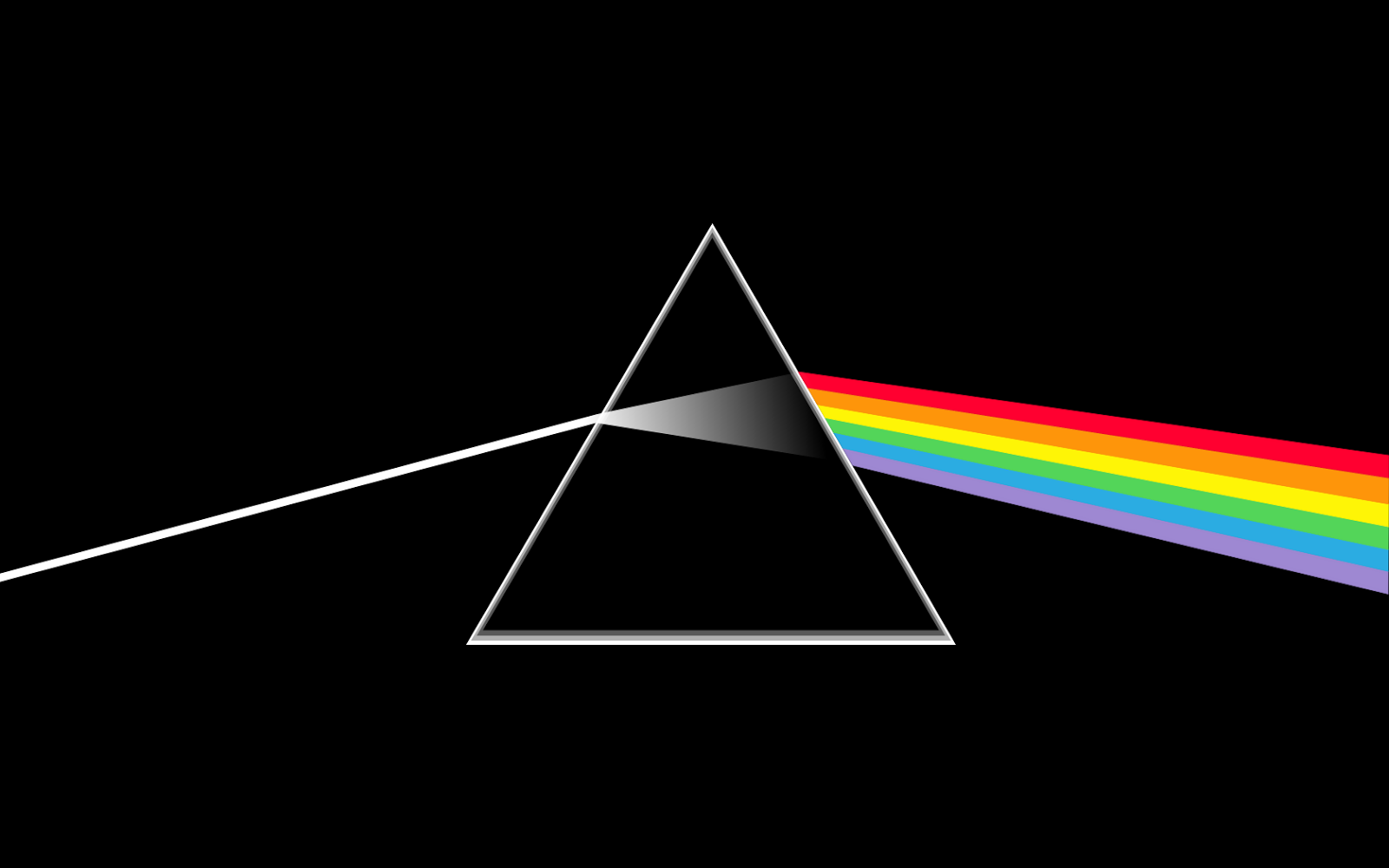 Hundreds of years later, Roger Waters of Pink Floyd at the tender age of 29 writes preciently: “…you are young and life is long, and there is time to kill today. And then one day you find, 10 years has got behind you, no one told you when to run, you missed the starting gun.” And we run and we run to catch up with the sun but its sinking. Certainly John Lennon understood this futility when he said, “Life is what happens to you while you were making other plans”. Chronos time is road rage and impatience with others: you’ve interrupted my race with the clock and you are now my enemy.
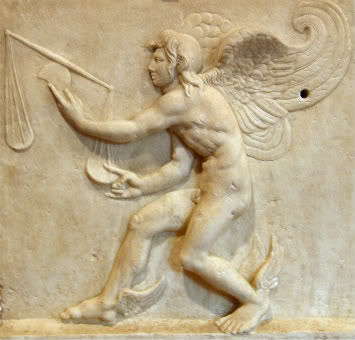 The other part of time then is kairos time. This is the ancient time, the time of the Jews and early Christians, the time of the ancient Chinese lords, the Vedic shaman and sub-Saharan tribes. It is the time that is fashionably being recreated amongst the cognoscente as “mindfullness” (which in reality is a great business plan to separate people from their money by teaching them to sit still). But it is not that. Kairos is the space of time where lovers gaze, where mother and child become one, where you can hear your own heartbeat and in that, your own destiny. It is your silent vigil during the agony of a friend’s loss or your constantcy next to a loved one’s triumphful moment. It is the contemplation of your own mortality as a strategy for being alive. As Jerzy Kosinski knew of Chance the gardner, it is simply “Being There”, whether its sitting in the car with your child next to you or actively participating in play with your friends. Children live in kairos time because kairos makes the most out of the time that we are in: not the minute that just passed, not the day that is to come, but that exact moment we are living in, not peeking away at a smartphone, not responding to a bell, not allowing a gnat’s distraction to interrupt a meaningful conversation. Kairos time is its own reward, it doesn’t need likes or stars or the glowing embers of someone else’s clock. Actors are trained to “be in the moment”, open and receptive to immediate stimuli that allows them to respond in an appropriate way to find their way to a truth. If not, they’re caught “faking it”. An athlete must live in kairos or else she will falter.
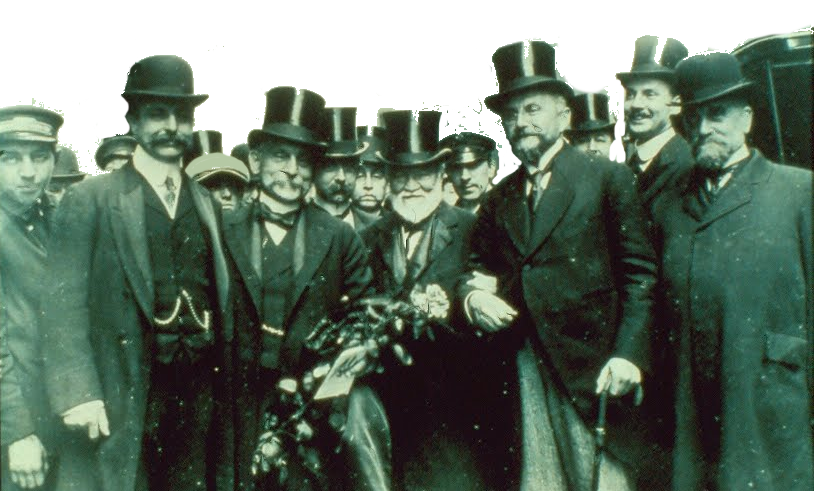 In the Gilded Age, the then powers of industry – Gould, Morgan, Mellon, Rockefeller, Ford, Carnegie, Vanderbilt – consolidated the means of the industrial economy into the hands of an oligarchy who controlled the actual wealth of the United States. The means at that time were steel, oil, railroads, transportation and banks. Wealth has nothing to do with being rich, it has everything to do with the power to bend the arc of history to one’s desired end point. For the first time in human history, non-royal entities, these Robber Barons, were able to consolidate and use wealth to affect the outcome of ordinary lives, not only in this country, but around the world, without ever having fired a shot or burned a village. To provide justification and prevent a natural backlash from those who were conquered, and this was indeed a conquering, they utilized an ancient method of control: mythology. They created the mythology of the self-made man, the Walter Mitty, the rise-from-the-gutter-into-the-penthouse kind of person, who through their own pluck and persistence, hard work and sacrifice, were able to pull themselves by their bootstraps into a position of dominance over their own meager environment. It was one of Aristotle’s classic dramatic constructs from ancient times: man against the world, now writ large and in real time, but this time married with the freedoms granted by this new country, only 100+ years old, that insisted that all men were created equal.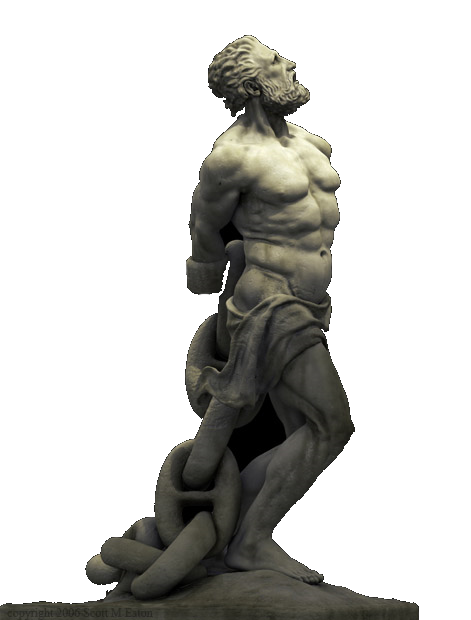

 Let’s all re-read the myth of Pandora’s Box to understand the age we’re living in. Pandora was warned that once the box is open, there are things that once escaped can never be returned. The current occupant of the White House, a person afflicted with one of the worst social diseases of all, sociopathy, is our modern day Pandora and has allowed the dark forces that have been crawling around for over 200 years under the fabric of this country to escape into the zeitgeist.
 Bile
Bile 