Not all statues are made the same

photo posted on post-gazette.com
“Hunky Steelworker” Luis Jimenez, 1990

I come from a small steel town in western Pennsylvania outside of Pittsburgh who’s very name conjures up the history of steel in America: Homestead. A plot of land on the Monongahela River that was home to a glass factory but grew a facility owned by a poor immigrant, Andrew Carnegie, managed by a wealthy elitist, Henry Clay Frick, and eventually transformed into US Steel by an emperor, J.P. Morgan. Every time I see pictures in books of WWII Navy Destroyers or mid-century Buicks and Chevys; or look up at the Empire State Building or glimpse the Verrazano Narrows Bridge, I see the steel that came from my hometown.  The first graphic picture I remember is a circle containing the letters “USS” that evolved into the three star symbol that adorns the helmets of my beloved Steelers and was on the mill gates I passed every day on my bike.  I inhaled the smoke from those smokestacks that produced it, briefly worked in the belly of the beast that churned it and grew up in a time that benefited from it.  For a while the Homestead Works was the largest steel making facility in the world and it was also the site of one of the most significant labor strikes in history in 1892.  We knew a lot about steel in Homestead. We knew a lot about rich guys in Homestead and we knew a lot about being star-struck and let down by them as well.

In my family, I was the kid that showed promise, that read early and often, that had the dazzling vocabulary and wit not typical of the mill household.  I had interests in art and music and the science that sent men to the moon and my Dad once told me, “you ain’t going into the mill with the rest of those hunks”.  And by “hunks”, he didn’t mean centerfolds with six-packs and dreamy eyes.  He meant “mill hunky” a term of derision so vile it could provoke a saloon fight.  My mother re-iterated the same thing: “you’re not going to be a mill hunky, you’re going to college and become someone important”.

Mill hunky.  Chances are you never heard this word but I heard it a million times. While the mill hunkies built the industry, they were forever castigated as the ruffians and underclass, the unwashed hordes that landed on the banks of the Mon’ and forever changed America.  They were the vast majority of workers in the mills – in Homestead, South Side, McKeesport, Rankin, Braddock, Duquesne, and Clairton – that were recruited from the declining Austro-Hungarian and Ottoman Empires of Europe during the early years of steelworking in America.  Andrew Carnegie first established a meritocracy of artisans to create steel from pig iron and coke in the 1880s, pulling them from the Northern European countries of England, Scotland, Wales and Germany.  They looked like and for the most part acted like him, a native Scot.  But as steel making progressed -from the old open hearth Bessemer furnaces of the 19th century to the blast furnaces of the early 20th -it became more complex and steel became more in demand. More workers were needed to fill in the heavy labor jobs that these new “artisans” now felt were beneath them: ditch digging, flume-cleaning and the hundreds of other dirty and dangerous jobs that attended the manufacturing process.  So Frick opened the mill up to immigrants from Eastern and Southern Europe that were fleeing the region in the throes of political and cultural upheaval, areas we now know as Slovakia, Czech Republic, Poland, Croatia, Ukraine, Hungary, Romania, Greece, Macedonia, Turkey and Syria.  Their names ended in “-ski”, and “-vitch” and “-stan” and “-ko”, and all manner of strange spellings with too many consonants and not enough vowels.  These men would be recruited as a cheap labor force and would fill in the labor pool of a now expanding steel empire, while at the same time undercut the growing union movement spurred by the existing “white” workers.  These new immigrants were mostly illiterate, unschooled and backwards rural dwellers, many of them brown and tawny castoffs looking for a better life in a promised land.  The Austro-Hungarian empire was the largest area of recruitment, so they and their families were all thought to be “Hungarian”, with their strange languages, odd foods and clothing and bizarre cultural rituals, dances and religions.  It wasn’t long until “those Hungarians” who cleaned the scrap pits, dug the ditches, worked for low wages, who lived low and bred like rabbits in the tenement flatlands next to the expanding mill became objects of derision, defamation and fear.  Those Hungarians soon became “those hunkys” and the class-divide in working class Pittsburgh now had a vocabulary, imagery and social order that fit in with the rest of America in the denigration of “the other”.  The “mill hunky” was born.

The events that led up to the Homestead Strike pull all this together.  Carnegie’s steel making artisans were getting increasingly frustrated with the 24/7 schedule demands of Frick (Carnegie at this point became an absentee landlord and spent most of his time hunting pheasant in Scotland) and had pressed for guild organization.  They had joined forces with these “hunkys” to gain a larger force to aid in negotiations for these trade unions, and in 2 separate instances, had prevailed in winning better conditions and wages.  But it all came to a head when Frick countered to use these new immigrants as a wedge to shut down negotiations. He followed this with an attempt to lock the workers out of the mill and bring in hired Pinkerton security goons to take it over in the dead of night.

These actions caused the events of July 6, 1892.  The townspeople and workers learned of the plan to float the guards up the Monongahela River in the middle of the night to effect the takeover and instead met them on the banks, and the next 12 hours were a barrage of gunshots and rioting.  The Pennsylvania militia was eventually called in to put down the “rebellion”, and the unions were banished from the American labor landscape for the next 40 years. But the role of the “hunky” was burnished as a divisive group that, while being caught in the middle, were blamed for the poor fortunes of workers from that time on.

steelmills

As the decades of the 20th century rolled into the second world war with the wartime expansion of the mill, the hunky became institutionalized.  They mixed uneasily at first with the rural blacks of the Great Migration of the 1920s and then settled into a grudging respect as the economy grew enough to provide all of them with meat on their tables. All through this time their understanding of second class status was also embedded in their psyches and by the time I was born the word hunky could cause a fist fight and break open old wounds.  It was always delivered behind someone’s back like a curse, with a curled lip and twisted face, while at the same time it inspired camaraderie among those who wore it.  In some ways, it was as bad or worse than the “n” word, and I often heard older black men curse each other with it.  Like the black man, the hunky occupied a solid place in the economic fortunes of Pittsburgh while at the same time brought a strange cultural identity that integrated itself in similar ways.  At one point in time in the 60s and 70s, before the industry fell in on itself, there was a brief convergence, where we all danced to Motown, ate pierogies and dressed like Ziggy Stardust; and affected the latest Afro-inspired clothing while dancing to “Roll Out the Barrel” in 3/4 time.  At the same time we felt these were both somehow forbidden in mixed adult company.

The mills all but closed down in the eighties because of collusion between management and unions: both of them fattened by the pre and post-war building boom, failed to upgrade the technology and the processes to keep them competitive.  After WWII, America rebuilt the Japanese and German mills with the latest in both and ironically they put us out of business. Many of the once bustling towns along the river fell into the ruin that they find themselves in today: Homestead, Munhall, Braddock, Rankin are all a mix of uneasiness, despair and methadone.  The mills of Homestead are the one bright spot and the miles of river flatland where blast furnaces once prevailed have been replaced by an upbeat mix of retail, commercial, entertainment and residential development.  They catch bass in the same rivers that were once a parent’s caution for skin rashes and dissolved flesh if you touched it.  Pittsburgh as a whole has shown the world what vision and commitment from the duality of government and private industry can build and is surprising us daily with its technological innovation, cultural savvy and educational leadership.

tamburitzens
Tamburitzens

The word hunky has now softened to a kind of self-referential badge of honor, a way to memorialize and honor your immigrant roots and the sacrifices of your forebearers.  Pittsburgher’s all wear that badge in the same way we all wear green on St. Patrick’s Day.  In Pittsburgh, everyone’s a hunky in the same way that we’re all Yinzers, eat Primantis and bleed black and yellow during the fall while waving a Terrible Towel above our heads.

Except one time.  In 1990 the commissioners of Pittsburgh’s Three Rivers Arts Festival had commissioned a statue to commemorate the city’s place in the industrial history of America.  The winning proposal was from Mexican-American sculptor Luis Jimenez. Everyone was excited about its unveiling on the first day of the festival.  When the tarp was pulled from the 15 foot tall full-body statue of a steelworker, in full steel-making garb, the audience was thrilled with power it conveyed.  Then they noticed the title: “The Hunky-Steel Worker”.  The whole town erupted into arguments and meetings, and reluctantly, after a year of litigation, the word “hunky” was ground off the base of the statue and the statue itself was eventually moved to its current location on the U of Mass campus in Boston.

This was one case where they should have kept it.

Things Lost

On 9/11.

Just to show you what kind of a weird day it was, a day full of contradictions in the ether of the unreal, the tragic and the absurd: my sales team was looking to close a $1.2M technology deal with Morgan Stanley Dean Witter that morning at 9:30am at their offices on 50th and 8th Avenue.  Myself, my regional and national sales VPs and 2 partners from an allied technology in from Baltimore had gathered in New York City to make this happen.  We stayed overnight at the Sheraton on Broadway to finalize our close strategy and button up our final presentation. Early that morning, we were having breakfast in the lobby restaurant when Andy got a call on his cell phone from his wife about an airplane that hit the World Trade Center.  In our minds it was a weird event, maybe a Piper Cub that got lost (“didn’t something like that happen with the Empire State Building back in the ‘30s”?), but we were engrossed in the discussion of the upcoming meeting.  Suddenly, around us, other phones were ringing and looks of concern grew on the faces that answered them.  Neither the restaurant nor lobby had TVs mounted.  We paid the bill and were getting ready to walk over to the offices when utterances, phrases and words started to erupt from diners about “explosion”, “huge fireball”, “terror”. Then my wife called, watching it all on TV and relating it over my phone, which in those days, was just a phone.  She was upset and scared and worried.

We’re standing in the lobby of the Sheraton by the revolving door and it looks like any other day in the life of New York City: people making mad dashes, tipping doormen, catching cabs, conversing in groups, paying the bill, laughing, etc.  We realize something of importance and tragic significance has happened downtown but we have no idea what, there is no TV, no newsfeeds, but we’re all on phones getting different stories from the other end.  It’s around 9:15 and it’s a 5 minute walk and another 5 through the building to the 37th floor and a signed contract and time started to move very slow as we stood there, each of us pondering the same question in our minds as we felt the pressure of the tick of the clock and the enervating pulse of the conversations, growing looks of panic and increasingly rapid movements of those around us.  We paused briefly, which was an odd thing to do for 5 sales guys on the way to close a deal.  Finally, Kevin, our national sales VP, broke the silence, turns to me and asks the worst question possible: “Robin, it’s your deal.  What do we do?”

Snapped out of my own paralysis I suddenly realized what was at stake: we worked for a tiny technology startup out of Mountainview, CA, a company like many others that needed every single revenue source; I was the sole Eastern Region Account Executive and I guided this highly complex deal from its inception from a hot lead and through 3 competitors over 10 months to emerge with favored vendor status, which meant that we survived the competition and only pricing and services stood in the way of victory, two items we were clearly ready to be creative with; that this was Morgan Stanley Dean Witter and the prestige behind this win was huge beyond belief for the company; that I was about to be lauded as a superstar because of the way I brought the business in, not to mention the financial remuneration behind this for me; that I had my good friend, Andy who was my immediate boss, here with his good friend Kevin, who we all reported to and who ran sales for the company; that he, in turn, brought in the 2 partner guys from Baltimore as our aces in the hole; that I had just lost another large deal a few months before that hurt me and the company; that we all needed this win. 

“We’re going”, I said, and we took our briefcases, suits and ties through the revolving door, out into the clear, warm and bright sunny morning of September 11, 2001 and crossed Broadway towards Eighth Avenue to do business.

In the crosswalk over the avenue, one of the partners from Baltimore, increasingly agitated about being out in the streets, was asking me, “what are we going to say, what are we going to do there”?  Everyone listened in and I stopped.  “I don’t know what we’re going to say, I don’t know what we’re going to do; we’re just going to go there.”  Andy jumped in: “We have no idea what their state of mind is, what their expectations are.  We know we have a plan, we’re going to go in with that”.  And that broke open the silence and then the plans started to emerge as we walked, the strategies and tactics and contingencies and all the reasons why this deal should go through, and we pumped ourselves with confidence.  Traffic coming down 7th Avenue was heavy as usual with Yellow Cabs, thousands of people crossing the street, clogging the sidewalk, vendors with their kiosks and carts gabbing with customers.  It was suddenly normal, another day as we rode up the elevator to meet our Morgan Stanley contact, Stephen.

In the upstairs lobby we saw Eddie the guard, with whom we had fashioned a casual friendship during our many visits to the office.  Eddie looked at us, stone faced and asked “what can I do for you?” in a stone dead voice. The first sense of dread started to flow.  “We’re here to see Stephen, we have a 9:30”.  We never had to go through this formality before, it was weird and awkward.  I used to show up, Eddie would smile or at least recognize me and just say ‘have a seat, I’ll call him”; sometimes we would pass the moments with idle chat and there was always a smile with the goodbye as I left after a meeting. “Does he know you’re coming”?  “Well, yes…we have a 9:30.”  And with that, he disappeared through the door as we stood rooted into the carpet, unable to move, unable to talk.  Over the ceiling and around the walls a darkness began to creep over me; it filmed over my eyes, it ran down my head into my mouth and dried out my throat and began to burn my stomach.  We stood silent, unmoving, stone-like in our own personal sense of right and wrong as Stephen came out to meet us.

“What are you doing here?”, he asked and with that the world started to change in ways I wasn’t yet sure of, but the look on his face and the tone of his voice told me that nothing would ever be the same again.  “I…don’t know, we were all here…for the meeting…and…we felt we should just come over… .”   “Do you know what just happened?” he asked incredulously and as I stammered out a response he blurted out, “the Tower got hit.  The World Trade Center was hit by an airplane and our affiliate Dean Witter has the 2nd largest trading floor in the building and all our people were in it and the building’s been hit, it got hit by an airplane…it was terrorists…”   I started to respond, then we all chorused our shock, dismay, sadness, how sorry we were.  We offered help, assistance, support, we vomited words out into the lobby as a pathetic balm and because we were all businessmen, because we were all salesmen, because we were trained to kill and never lose sight of the win, we put together the shell of “next steps” as a way to navigate our minds through the dark fire of this most horrible reality.  Stephen disappeared back behind the door to the inner office and as we rode the elevator back downstairs to a new reality.

Still ignorant of the information that millions of others were witnessing live on television, we got back to the hotel and stood at the lobby doors, talking on mobile phones to loved ones and listening with the other ear to the flood of comments from those nearby: the 2nd tower had been hit, they were both on fire, they were large airliners, passenger planes, terrorists were on board.  We’re in a panic, figuring out an exit, how to get home, where would the next planes hit.  If this was a terrorist attack, then it still might still be going on and considering we’re in midtown, only one thing crossed my mind: the Empire State Building, which during the dark days of the Cold War and the Nuclear Watch of the Reagan era always stood out to me as Ground Zero in an attack, a spot where not only would the most damage be done but would stand as the most symbolic of targets.

We all heard the next piece of news at the same time: a plane has struck the Pentagon.  Kevin dropped his cell phone down and looked up: “Fuck, we’re under attack.  We’re at war”.  Not knowing what to think or where to go, not knowing if we should panic or proceed calmly somewhere – we still had not seen a TV – I guessed that if that were the case, they’re going to lock Manhattan down by closing the bridges and tunnels.  Before breakfast, we all checked out of our rooms, left our luggage with the bellmen.  Now we had to check back in indefinitely so that we’d at least have a place to stay to ride this out, even if we were just blocks away from a possible next strike.  We extended our stay at the front desk where the agents exhibited a strange, otherworldly calm about the entire proceeding, as if none of this were happening.  On the other side of their desk the world was all still about hospitality and efficiency and the number of keys you’d like to your room.

We decided to use my room as our base and on the way across the lobby to the elevators I dialed up my friend Keith who I knew had an office in Tribeca near the attack and whether or not he knew something.  I had one of those Nextel walky-talky phones and he was on speaker, standing on the roof of his building looking straight at the twin towers, flaming, smoldering, smoking.  He’s telling me people were jumping out of the windows, the constant sound of sirens in the back against the angst and terror in his voice. We’re all standing around my phone looking at each other trying to process this and just as the elevator door closed behind us he started screaming “they’re falling, the World Trade Center is falling, its falling” over and over and over “its falling”, then “I gotta go, I gotta go, gotta get home, get home, you get home, you hear me? Get home” and he went silent.

Back in my room, 90 minutes after it all began, we saw what the world had been watching from the beginning: the close-up of the remaining tower, burning alone on a clear blue background, not a cloud anywhere except from the smoke; the replay, over and over of the North tower falling, crumbling, belching smoke at it collapsed.  The endless replay of footage of the first plane, now available on newsfeed, crashing into the first tower, scenes of panicked people on the ground, covered in dust, moving aimlessly in every direction. 

Then, as the Baltimore guys made panicked calls on the room phone, talking to family; as I made plans with my wife to pick up our daughter from school and where I would meet them when I got back, assuring her I was alright, we saw the TV image of the 2nd tower, following the first, evaporating in mid-air; the stunned, panicked voice of the news announcer trying to maintain composure as he presided over an event more tragic and horrifying than one can imagine.  All 5 of us were yelling, shocked and horrified, with the one Baltimore guy pleading with his wife to stay calm as his face got redder with fear and frustration.  We were trapped in the false security of a hotel room, 7 miles away from Armageddon, one part real, one part a simple TV image and no one knew how to act.  Like the rest of the world, we were frozen in time, trying to understand and comprehend.

We were 5 adult men in suits and briefcases in a small hotel room, and the anxiety was so thick we were smothering each other, exacerbated by the panicky call the Baltimore guy was making. Finally, Andy pulled me into the bathroom and said, “look, I don’t know if this is my last moment on this earth or not, but those (Baltimore) guys are driving me fucking crazy and I’m not going out like this. We have to get out of here. We have to eat something, no matter what happens, we have to eat something.” And in a dumb haze over all that was going on, I instinctively said, “the Carnegie Deli is up the street, let’s go there.” And so we pulled the Baltimore guys away from the TV and the phone, got in the elevator and out into the street. 

Broadway at that point was blocked from traffic, empty, eerie, the bright sun overhead. Now, the first of the “walkers”, the eye-witnesses at the site, covered in dust and ash, were making a slow, zombie-like shuffle up from their origin point downtown, miles away. Men and women with jackets off or around their arms, holding shoes and pocketbooks and briefcases, heads down, exhausted and beaten, moving north up an empty street.

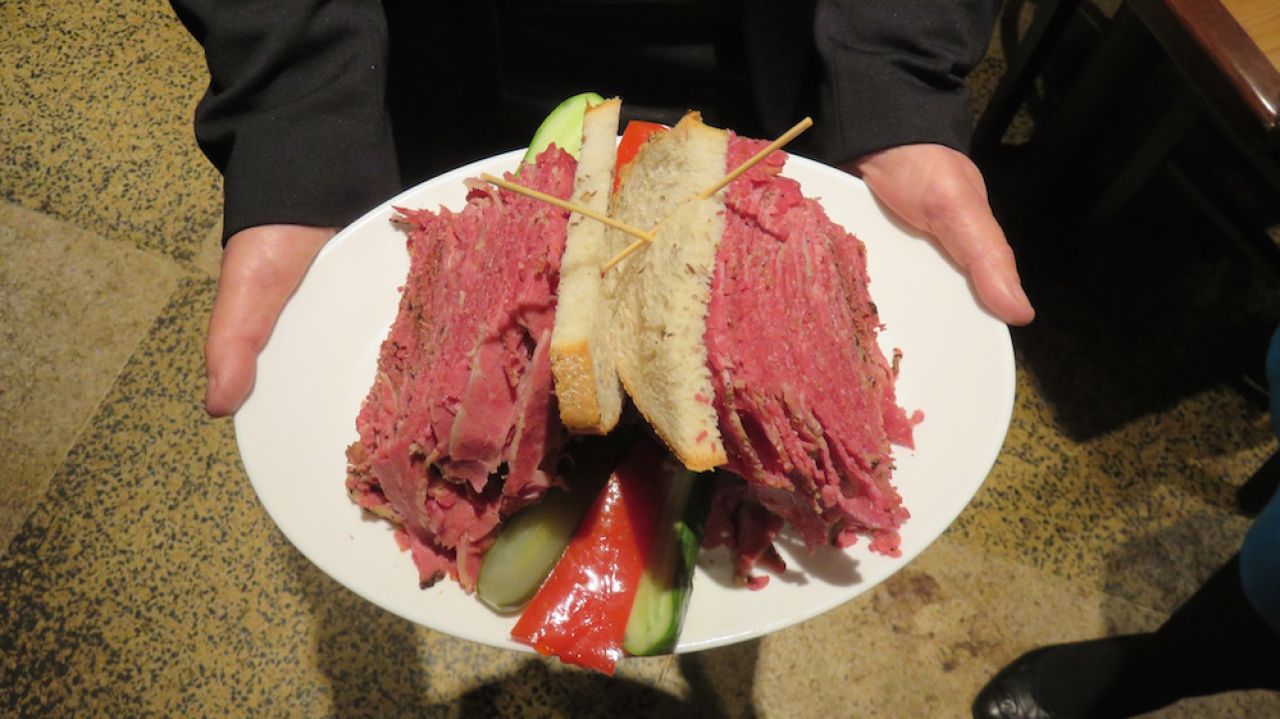
Here’s what a lot of people don’t know about New York City: at any given moment, it exists on several different geometric/time planes, it’s so dense and so massive that multiple events occur and overlap each other with a juxtaposition that can be sometimes unnerving and jarring, other times amusing and surreal.  The stream of workers passed by a sidewalk café next to our hotel and there sat a young couple, oblivious to what was going on, smoking cigarettes and drinking mimosas.  So when we opened the door of the Carnegie Deli, coming from the sunlit, empty fearfulness and panic of Broadway there was no way of knowing we would enter a darkened, lively, noisy and buzzing environment. Deli workers were cutting and serving meats behind the counter; waitresses and busboys cutting in between tables with arms full of platters and water tumblers. People were talking, there was some mild, personal laughter between some, waitresses were calling “honey” this and “sweetie” that, taking orders, cutting sandwiches, wrapping the rest, asking for more Coke, clearing tables, all the sounds and feelings of another day in pastrami paradise surrounded by TVs mounted on walls that showed a smoking ruin where tall buildings once stood. No one was really sure of exactly how many people died, we had no way to assess what we now know as the cruelty of that day. I actually was very hungry and I finished that corned beef. It may have been the best sandwich I had ever eaten.

How surreal, the tiny crumb of normalcy that everyone in that restaurant forged with each other out of a pure human need to make a small connection in the face of enormous fear and tragedy. Both the WTC and Carnegie were world famous icons; the towers gone now for 20 years, and the Carnegie now empty for 2. I can get a good pastrami in a lot of places, but I don’t think many can deliver what that deli did that afternoon.

pastrami

We made a new plan: get across the river to New Jersey. Andy and I lived there; Kevin, from California, could stay with Andy and the Baltimore guys could rent a car to get back. We would go back to the hotel, grab a cab and, hearing that the Hudson River bridges and tunnels were closed, would steer over to the Bronx and head north until one of the other upstate bridges were open. We would cross over and come back south to New Jersey to get our cars, and where the Baltimore guys could get the rental.  On our way back to the hotel, we saw a limo sitting at the curb, and in another one of those two different planes of reality moments, the driver was purchasing black socks from a corner street vendor.  In the middle of this disaster, one needs to be well dressed.  One of the Baltimore guys approaches him, they talk for a moment and he turns to us to say, “get in”.  He struck a deal: $500 in cash up front and $1000 on his American Express for a ride back to Baltimore, dropping us off in Teaneck for our cars.

We headed uptown and over to the FDR with the intent of crossing the Willis Avenue bridge to the Bronx over the East River.  But the driver heard on the radio that the George Washington Bridge had just reopened, so we kept going to the east side approach to the bridge.  This would be easier than we thought, and I made a quick phone call to my wife to let her know I was coming home soon.  As we spoke, we crossed over the upper level span of the bridge. I looked south and dropped the phone down.  On this bright, blue, beautiful, late summer day, at the tip of Manhattan in a view I took for granted just the day before, the twin World Trade Centers were gone, replaced by two white clouds that were being pulled by the wind over Brooklyn.

May we never forget.

Robin Robinson
September 11, 2XXX

Competitors and Mentors

A lot is made these days (according to the posts on FB, LinkedIn, BusinessInsider, etc) about finding a mentor, finding someone older, established, settled and wiser to guide you through life’s labyrinth. I’m gong to propose something different: find a competitor.

In high school, I was a fairly clumsy, bony and awkward teenager. I’d been cut from more sports teams than I can count. But I could at least run and in my freshman year joined the track team because they took anyone and would just wait for you to quit on your own. I stayed because I discovered the long jump and from there the triple jump and with the encouragement of some kind upper classmen, got good enough to come within only a few points from getting the vaunted “letter” in track. The next year, a guy named Chuck joined the team, one year ahead of me, and after a not so stellar attempt at discus and javelin, wandered over to the jump pit and started jumping with me. And I was a little bit peeved because he was a little bit better than me and he never jumped before. So after everyone hit the showers, my pride in the soles of my shoes, I stayed and worked on my timing and footsteps. During that season, I learned to pay a grudging respect to Chuck and he to me, because one or both of us were constantly placing 1, 2 or 3 in the competitions with other schools. We competed in both events, long and triple, and while we were inconsistent in either event, we loved them both. At the end of the year, I earned my first letter in track (in any sport). So did Chuck. I wasn’t happy about that.

As my junior year rolled around I saw Chuck constantly in the halls and somehow we started to plot out what that springtime’s meet schedule would look like. When the football or basketball team would leave the weight rooms, we would go in afterward and work out. Outside by the track there was a roughed out hill that during the season the coaches would send us to run if we were caught goofing off. Chuck and I would run up and down that hill like crazy madmen, racing each other up and back down again. He was still just a little bit faster than me., but he was such a good guy, and funny as hell, that I couldn’t place exactly why I was upset and jealous of him.

By the time the season arrived in the spring, I took the track as a lean, toned, limber and fierce competitor, at that point maybe the best physical condition I’d ever been in; as was Chuck. And during the pre-season, the coach figured it out: Robin was just slightly better at long jump while Chuck was a bit better at triple jump. And that’s how he played us that season, because everywhere we went, we took 1st and 2nd place in each event against other schools in our league; we showed up at events and while marking our places at the pit, competitor’s were off to the side talking about us, they’d heard about us; when we jumped, we noticed they watched every move we made, stayed in the pit to watch us finish. The jump pits are typically ignored at track meets as spectators mostly gravitated to the finish lines for the sprints and races that were more charged with drama. Not this year: we now had crowds of spectators like gamblers at the craps table, oohing, cheering when they would hear your last foot smack the toe line before launching you into space in front of them. At one point, Chuck and I would watch the faces for each other and later on laugh about the grimaces of pain and frustration our competitors had when our last jump of the meet blew their best out of the sand. We made it all the way to the state finals that year, and while we did respectable, were knocked out mid-event by bigger, stronger, faster competitors. But at the end of year, we both earned another letter, sat with each other at the banquet and cheered loudly for each other when we went up to receive it.

Chuck forced me to be better than I could have been because he was my competitor first and then my friend.

Every since then, I was always grateful when someone stepped in to show me the ropes, guide me through a channel or open a door and I’ve been fortunate to have many of those. But I always searched for my competitor, the one who ran on the same track and was maybe one step faster. That’s the person who I learned the most from, even when, as it mostly is, they were never the wiser. I still do and they still don’t know. But thank you anyway.

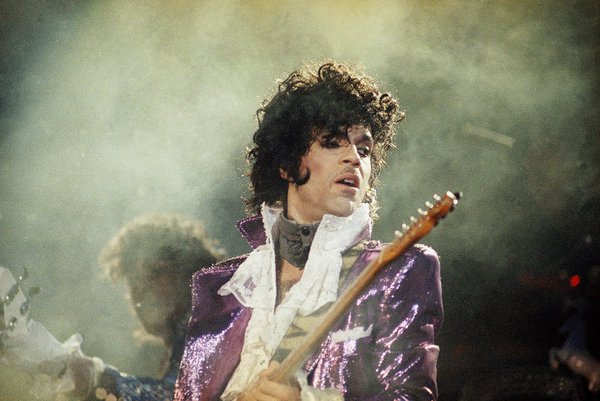
Prince: a small, weird tribute

prince-obitFor at time I was employed as a hired driver in NYC and I had a client who had a severely mentally handicapped daughter that went to a boarding school in New Jersey, I’m assuming she was somewhere in her teens. On certain Friday’s I would be sent to pick her up and bring her home for the weekend and as was custom, I would tune in to WNEW for the music (her father’s instructions) but she was always silent in the car, never speaking to me, wouldn’t meet my eyes, never saying anything the entire 2 hour drive home. We may have done 6 or 7 trips together, always the same quiet drive.
One Friday, we were stuck in traffic and we’re just sitting on the Turnpike, listening to the radio, song after song. Then, “Purple Rain” came on, and she launches into this full-throated, off key karaoke in the back seat, every word, every bent note. I’m sitting in the front seat a little freaked out because I didn’t know this behavior from her and I’m not really sure what to do. Then from nowhere she yells, “Robin, sing it, sing it” and next thing I know we’re belting the chorus, “purple rain, pur-r-ple rain” together at the top of our lungs.
After it was over, she went back into her quiet world. I looked at her in the rear view mirror and for the first time, she met my eyes and had a funny, indecipherable smile on her face.
I think Prince would have liked that.


On whiskey shortages and age statements

There has lately press been given to the recent phenomenon of shortages of whiskey.

We first have an issue of false equivalency here as I believe the age statement conundrum is at the bottom of the shortage alarm.  There is an “out of industry”  bemoaning of whiskey shortage (from whiskey collectors) at the same time of an in-house controversy (from whisky writers, aficionados and passionate consumers) over no age statements (NAS).  The false equivalency is based on the assumption that “age” equals a better product but that hasn’t really been the case for over 25 years, well past the average age of most of consumers and certainly longer than the current whisky craze.  Fifteen years ago, this wasn’t even a topic of conversation, relevance or concern.

The facts are easy to mis-construe.  There is certainly a boom in whisky drinking and purchases, cutting across all sectors and currently being led by bourbon.  (Rye, for all the hype, is still a sub-segment of whisky purchases and doesn’t yet post huge numbers).  Scotch whisky and Canadian are coming up right behind bourbon and in the wings are Irish and Japanese.  But the age statements that were predicated by a depressed market in blended Scotch whisky marketing a quarter century ago have drifted into American whiskey as well.  Age statements on bourbon?  An absolute rarity until recently (for years, Old Fitzgerald was the only Bottled-in-Bond (BiB) bourbon being marketed) and now its an absolute must to have a BiB in any bourbon line extension).  And while BiB concerns itself with other factors beside age, its primary value in the marketplace is its age statement.  We are long past the days of turpentine colored with tobacco and prune juice that predicated the BiB act in the first place in 1894.
The fact of the matter is this: there is more knowledge and science in whiskey making the world over than ever before.  That’s because its a bigger business than it ever was and with any large business, eliminating unknowns within your supply chain is paramount. With that comes better wood management, warehousing and maturation techniques, arguably the best it ever has been in the industry on both sides of the Atlantic and beyond.  This undermines the premise that age is the primary arbiter of quality.  Is there anyone out there telling that feels Black Art or Hedonism or Artein are inferior whiskies because they don’t state an age? Kilchomen continues to rack up major awards and it was first released as a 4yr old.  And the current Elijah Craig Small Batch is every bit as good as the dearly departed 12yr on the price/value axis.  The problem begins when you state an age on the label where the youngest is the legal age statement and you’ve sold through your current stock of your stated youngest.  You’ve painted yourself into a marketing corner, not a supply corner.  No matter how sophisticated we think we are, I almost defy 97 out of 100 testers to discern the difference between a 12 yr and a 11yr, with all other things being equal from a distillery known for quality.  And good blenders are good blenders for a reason: they know how to make an adjustment to the resultant product to maintain a quality standard.  But if marketing has tied their hands with an age statement, they’ve got nowhere to go from a product perspective.  And the resultant label change puts consumers on the defensive, conjuring up conspiracy paranoia.
What’s interesting in the current shortage scare is that its being predicated by investors and its in an investor’s interest to drive up the price of something based on scarcity.  But they’re seeing only the part of the industry that the marketers want them to see, the luxury market of rare whiskies.  There are millions and millions of barrels of whiskey all over the world aging and getting ready for bottling.  But the reality that there are less and less 40 year whiskies going for tens of thousands of dollars has no correlation on the market running out of whiskey.

On Transparency in the Whiskey Industry

Two interestingly different sides of the same coin appeared on both sides of the Atlantic this past week on the issue of transparency in whisk(e)y. To put this in perspective, 10 or so years ago, not only was transparency not an issue, but there was so little knowledge about what’s inside your bottle that no one even knew how to ask the question, or even to care. But with the advent of smartphones, increasingly ubiquitous internet searches, Edward Snowden and the craft distilling boom, what was once opaque and esoteric has become the stuff of fevered social media conversations.

Last week, Compass Box Whisky Co, the boutique blending company led by John Glaser, issued a challenge to the Scotch Whisky Association (SWA) by starting an online petition to force them into adjusting their stringent labeling laws. In the world of Scotch whisky blending, the whole (the “brand”) is made up of many parts (the source, or distillery), none of which have been traditionally included on the label or in advertising. The closest one got to this was in adverts of old where a brand like Dewars would disclose that “40” different whiskies when into their blend. They didn’t name them and frankly, no one cared, because consumers bought the value and quality of the brand, not the individual components. In consumer products world, the equivalent would have been buying a car by Ford without caring who made up the individual components. The trust was in the brand.

The 2000s and the ubiquity of the internet changed that in every area of consumption (i.e., drug company ads, “Intel Inside”, etc) and Compass Box was from its outset at the forefront in making clear its production methods, i.e., component whiskies, lack of post production methods like caramel coloring or chill filtration, etc. Along with this was lack of age statements, something that Scotch whisky companies drove into the consumer mind as equating with quality.

In their latest releases of “This is Not a Luxury Whisky” and “Flaming Heart”, Compass Box skirted around the edge of the 2009 SWA labeling laws by listing the individual components and their respective ages. The current regulations state that only the youngest whisky in the blend shall have its respective age listed on the labeling. The reasons behind this are gist for another article, but in short, your 12 yr old Scotch can include older whiskies, but they’re not allowed to say how old they are. Compass Box has been a “non-age statement” (NAS) whisky from its inception and while they did not post age statements on their bottles, this time they included them in their marketing material and website. Apparently, another distillery “turned them in” and the SWA stepped in and forced them to remove any publicly displayed information. To their defense, the SWA was formed as a trade organization to protect Scotch whisky from counterfeiting and cannibalization, but they are also caught in the vortex of their own inertia, not to mention enough back-stage intrigue with the multi-national conglomerates to rival “House of Cards”.  So far, Compass Box is winning the hearts and minds of the whisky community with their petition campaign, which you can find on their website: http://www.compassboxwhisky.com.

For the flip side, an interview on Liquor.com with distilling consultant Dave Pickerell, the force behind brands like Hillrock and WhistlePig, revealed another take on transparency. In this case, its about American whiskies like bourbon and rye, where brands like Bulleit, High West, Templeton, Redemption and his own WhistlePig began their lives by sourcing their whiskies from huge, established ethanol facilities in Indiana or Alberta, Canada. These brands are hugely successful because, like their older generational counterparts, consumers bought into the idea of the brand, not the components. To be sure, there is a scrutiny placed on these makers as well, and one of the first things many of them understood was that if you’re going to claim something like “artisinal” or hand-crafted, you’d better be able to show provenance (Mast Bros, are you listening?). But they wised up fast and most quickly gave up the sourcing even before being asked.

However, because of this common bond in origin, the knock on them was that they’re all the same in taste. This is a natural assumption when you don’t understand anything about the scores of individual decisions and subjective evaluations that go into creating a flavor profile, from mashbill to production to maturation.

Pickerell does a good job of delineating through these distinctions but also gets to the heart of the matter in each case: is what’s in your glass good enough for you to drink a second one? Its not necessary to go into the details to enjoy what you’re drinking. Because in the age of information, we can often put the cart before the horse and make buying decisions against our own tastes: I may not like it, but I like the way it was made (non-GMO, great origin story, etc) and so I’ll spend money based on things beside my own gustatory pleasure. The story sells the spirit, as the industry maxim goes and when powered by a smartphone, you’re drinking the story as well as what’s in your glass, even while you’re experiencing cognitive dissonance about it.  The article can be found here:.http://bit.ly/1oDzjSJ


In the case of Compass Box, this is a new tack in their ongoing tussle with the SWA who once threatened to sue them over barreling methods. So while their David v. Goliath duel with them is the stuff of legend that turned Glaser into an iconoclastic star, it seems a little forced in its argument of “right to know”, due to the fact that what they want you to know is that there’s some really old whisky in the bottle. As a high end blender, Compass Box had in the past stressed the end result, the creative process behind the blend, the mouthfeel and pleasure of the moment, not the components, even though they were transparent about them when asked. Now it seems while they question “what makes a luxury whisky”, they at the same time want the right to inform you that their blends contain some pretty luxurious whiskies.

Pickerell makes the stronger argument: If you like it, drink it, if it fits into your budget, drink more of it and calls out the bartender community to put away its collective distaste for “big liquor” in favor of small brands solely on that criteria. Learn a little about how its made if you want to understand some distinctions, but if you’re letting that take the lead on why you drink it, you may be drinking it for the wrong reasons. And if that’s the case, then you’re subject to any new magic incantations that can come your way from the next new brand that has something more local, more transparent and more whatever than the one in your hand.

On Transparency in Writing: The author was once employed to act for Compass Box Whisky as its US representative.