Here’s a thought for the day: in 1439 (or thereabouts) Gutenberg introduced the printing press. It made everyman a reader for the first time in history. Prior to that, in the western world especially, the act of reading and writing was not necessary to living one’s life, most cultures on earth lived by oral tradition and these special esoteric arts were kept secret and passed down mostly along the religious orders where power was concentrated. The monks and priests were the keepers of all knowledge and utilized it, with the reigning monarchs, to hold onto power in a top-down hierarchy to keep the masses in order. This is not a dissimilar scenario in Vedic and Eastern cultures, religion and power were equally co-concentrated.
Gutenberg’s disruption spawned two movements that realigned the face of culture forever: one was the Renaissance and the other was the Reformation.
With the Renaissance, western epistemology was now cracked wide open and not only made available but subject to revision by everyone. The horizons of every individual were broadened beyond their eyelids and own individual labor. The world became large for the first time in human history: there was now a visible past that spurred speculation of the future and the rush of thinking, invention, philosophy and commerce changed the world. It was the blossoming of humankind.
But the Reformation had the most immediate and consequential effect. It broke the hegemony of the Church and busted up the power hierarchy by pulling their God out of the hands of a few and placing him in the hands of the many. You no longer had to gather at a communal focal point to receive its message and blessings through the hands of the chosen select, a place where they could continue to exercise power as well. Consequently, the influence of those that held that power was diminished and when a disruption is this severe it spurs a defense. And so the wars of the Reformation lasted close to 100 years and with it realigned power, land, titles, holdings and creeds. It fragmented society into broad camps, into larger tribes now held together not by their relationship to a monarch or title, but by a common bond of thought in how one relates to the supernatural. “I think this way and you think that way and that’s where our fences are built”. Where the promise of the Renaissance would bring us together, the factionalism of the Reformation kept us apart.
In the 1980s (or thereabout), we created the Internet, the 2nd great disruptor after Gutenberg. Now, everyman is an encyclopedia, a single container of the world’s knowledge, a holder of individual epistemology that can be arranged and re-arranged as fits that person’s needs. There is now no longer a need for communal affirmation and with that, no space for communal regulation: “I, alone, make the decision what reality is and what it is to become. I, alone, interpret history and I alone create the future. I am bonded to you only by your affirmation of my reality. And that can change at any time.”
The individualism that was curried by the Renaissance but also created the factionalism of the Reformation has now been hyper-realized. The Renaissance created the friction of the “marketplace of ideas”, where human progress was spurred by a Darwinian competition of competing ideas with a common good. It recaptured the ancient Greek notions of beauty for the sake of itself, allowing art to flow. The Reformation huddled us into ideological camps, constricted creativity as it pressed it into service to whichever ideology it served. Both of these movements took place simultaneously and over hundreds of years.
And so the internet carries the same twin competing forces but in virtual time with no obligation to chronology. Its ability to unite us and its ability to fractionalize us are being carried out simultaneously, but this time globally and at a speed that our primitive brains are unable to comprehend. It has favored our individualism and as a result has created our boundaries, as the only collective trait we share is a mutual cognitive dissonance, the feeling that our perception does not meet reality.
So if you’ve read this far, here’s my plea: shut down your computer and go out and start a conversation with someone. Don’t talk about your job or your friends. Talk about art, music, or a crazy idea you had. Talk about a place in the world you’ve never been to and ask that person to speculate on it. Re-enact the promise of the Renaissance.
This is the last ride out. Its said that the chronometer, or the modern clock, was invented by ancient monks to keep track of their prayer cycle. Before that, the earth made its way around the sun as it spun on its own axis and ancient observers broke the long arc of life into years and days. The Greeks tracked the sun’s shadows and the Romans split the shadows into quarters, but throughout, time was fungible. It was manipulated around our human activities whether they be legal, cultural or social. In effect, we controlled what time did to our lives. But the monks changed that: as time became trackable, as the quarters were dissected down to hours and minutes and seconds, time became secular, agnostic and in a very real way, in control of us.
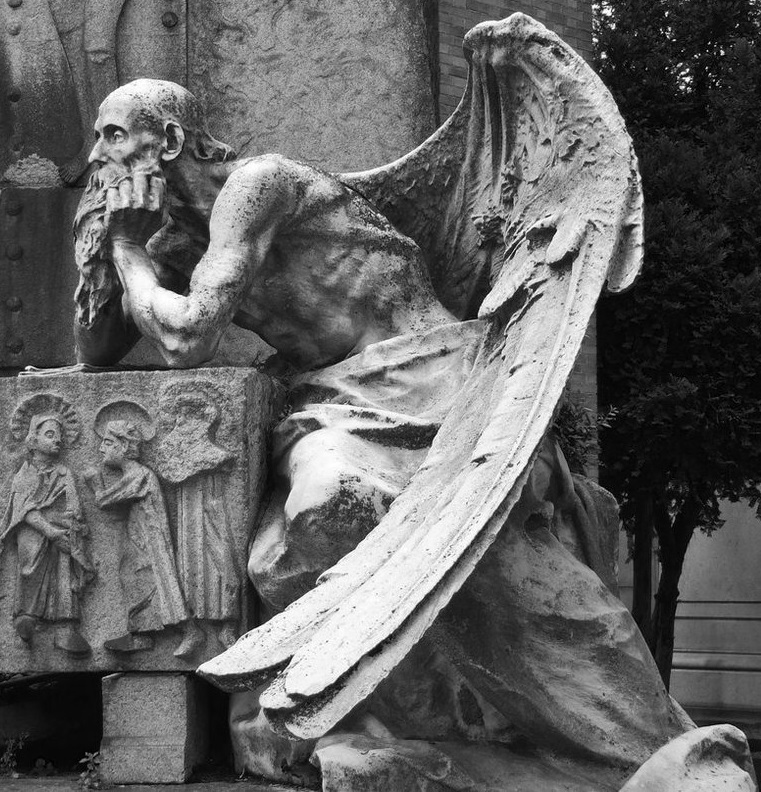
Chronos contemplating your destruction
As humans, we are split between living our lives in kairos time or chronos time. Inevitably, chronos time is imposed upon us or mostly, we impose it upon ourselves. We are pushed and punished and rewarded by the chronometer, we look back at the chapters of our own chronology and make assessments on our worth and invite others to join in: at this point I did this, at that point I did that. We impose deadlines, mark appointments and coordinate our calendars in an effort to meet expections determined or undetermined, expecting reward or fearing punishment for the slightest adherence or disobedience to the artificiality of it. But it is for naught. In Troilus and Cressida, Shakespeare says: “time hath, my lord, a wallet at its back, wherein he puts alms for oblivion, a great sized monster of ingratitudes. Those scraps are good deeds past; which are devour’d as fast as they are made, forgot as soon as done.” Hundreds of years later, Roger Waters of Pink Floyd at the tender age of 29 writes preciently: “…you are young and life is long, and there is time to kill today. And then one day you find, 10 years has got behind you, no one told you when to run, you missed the starting gun.” And we run and we run to catch up with the sun but its sinking. Certainly John Lennon understood this futility when he said, “Life is what happens to you while you were making other plans”. Chronos time is road rage and impatience with others: you’ve interrupted my race with the clock and you are now my enemy.
The other part of time then is kairos time. This is the ancient time, the time of the Jews and early Christians, the time of the ancient Chinese lords, the Vedic shaman and sub-Saharan tribes. It is the time that is fashionably being recreated amongst the cognoscente as “mindfullness” (which in reality is a great business plan to separate people from their money by teaching them to sit still). But it is not that. Kairos is the space of time where lovers gaze, where mother and child become one, where you can hear your own heartbeat and in that, your own destiny. It is your silent vigil during the agony of a friend’s loss or your constantcy next to a loved one’s triumphful moment. It is the contemplation of your own mortality as a strategy for being alive. As Jerzy Kosinski knew of Chance the gardner, it is simply “Being There”, whether its sitting in the car with your child next to you or actively participating in play with your friends. Children live in kairos time because kairos makes the most out of the time that we are in: not the minute that just passed, not the day that is to come, but that exact moment we are living in, not peeking away at a smartphone, not responding to a bell, not allowing a gnat’s distraction to interrupt a meaningful conversation. Kairos time is its own reward, it doesn’t need likes or stars or the glowing embers of someone else’s clock. Actors are trained to “be in the moment”, open and receptive to immediate stimuli that allows them to respond in an appropriate way to find their way to a truth. If not, they’re caught “faking it”. An athlete must live in kairos or else she will falter.
In Fight Club, Tyler Durden spends hours dragging driftwood logs into position on a beach in a seemingly futile action until: “What Tyler had created was the shadow of a giant hand. Only now the fingers were Nosferatu-long and the thumb was too short, but he said how at exactly four-thirty the hand was perfect. The giant shadow hand was perfect for one minute, and for one perfect minute Tyler had sat in the palm of a perfection he’d created himself. One minute was enough, Tyler said, a person had to work hard for it, but a minute of perfection was worth the effort. A moment was the most you could ever expect from perfection.”
Personally, I need to reclaim the kairos in my life and to better understand the work that goes into living and appreciating those perfect moments. I always tried to live in the balance, but to be honest the last few years in the face of social media have been too much, not only for me, but for those I’ve seen and heard around me. I believe with everything that’s in me that there is little inherent value in Facebook or Twitter on a personal level, but I’ve allowed myself to succumb to the mythology created by a 23-year old nerdy kid who just wanted to score with girls, I’ve let him convince me that I should sell him my soul to do so. I bought into it.
But now as I prepare to go through the pangs and spasms of withdrawal, I’ll invite you to do the same. There’s value in finding ways to communicate and keeping abreast of each other’s lives, but in reality, I don’t really deserve to have 1,335 friends. I’ve done nothing to earn that friendship other than to post some witty sayings, re-post NYT articles and rant about things I dislike. I’m a person who has always believed in the value and beauty of people, but Facebook especially has showed me sides I wish to no longer view as it has weakened my love for you all. There is a place in business for FB and other social media and I have to navigate that as best as possible, but from a personal level, I believe its more destructive than positive.
So, this is the last FB farewell, at the peak of the sun on the last day of the year. May your next chronological trip around the the glowing ball be filled with kairos; that you gather and fill as many perfect moments as possible and that each of those moments are shared with those who enhance your life. As William Saroyan instructs us, “In the time of your life, live — so that in that wondrous time you shall not add to the misery and sorrow of the world, but shall smile to the infinite delight and mystery of it”.
In the Gilded Age, the then powers of industry – Gould, Morgan, Mellon, Rockefeller, Ford, Carnegie, Vanderbilt – consolidated the means of the industrial economy into the hands of an oligarchy who controlled the actual wealth of the United States. The means at that time were steel, oil, railroads, transportation and banks. Wealth has nothing to do with being rich, it has everything to do with the power to bend the arc of history to one’s desired end point. For the first time in human history, non-royal entities, these Robber Barons, were able to consolidate and use wealth to affect the outcome of ordinary lives, not only in this country, but around the world, without ever having fired a shot or burned a village. To provide justification and prevent a natural backlash from those who were conquered, and this was indeed a conquering, they utilized an ancient method of control: mythology. They created the mythology of the self-made man, the Walter Mitty, the rise-from-the-gutter-into-the-penthouse kind of person, who through their own pluck and persistence, hard work and sacrifice, were able to pull themselves by their bootstraps into a position of dominance over their own meager environment. It was one of Aristotle’s classic dramatic constructs from ancient times: man against the world, now writ large and in real time, but this time married with the freedoms granted by this new country, only 100+ years old, that insisted that all men were created equal.
To assuage the victims of their economic dominance, to keep them in voluntary compliance, and to ease their own consciences (because no matter their province, they were still men of their times), they created philanthropic institutions dedicated to the virtues of this mythology: educated mind, healthy body, uplifted soul. They established trusts and charities, erected grand cultural temples, endowed their names on educational and athletic structures to give the people new gods to worship: knowledge, culture, chastity and fidelity all in the pursuit of one thing: wealth. In doing so, they enlisted the energies of the conquered to maintain their position of wealth, because the underlying message of the myth was: you can do this too. If you follow in my footsteps, you can get here, you will have arrived. If you sacrifice, save, stay sober, be industrious you too can get to the top.
The entirety of the 20th century is based on these ideals, where the arc of human history is either an acceptance of these principals (Wall Street, enterprise, diligent capitalism) or a rejection of them (Marxism, communism, despotism, socialism).
But in the 21st century we find ourselves faced with a sadder truth: that this mythology was indeed a lie, that the system was rigged from the very beginning. We found there is no real equality, we are just playing out a 1000 year old class system that was written anew in the mountains and prairies of a new world. When we add the negative values of racial, ethnic and gender discrimination, values that are not uniquely American but are magnified through the prism of wealth, we find the system is rigged to promote inequality, to make sure that the vast majority of the people stay in voluntary servitude, bound to their rocks like Prometheus, baring open their chests so that the wealthy can rip out their hearts again and again.
There was one chance to change things, one opportunity to balance out an imbalance. It was a game changer like the world had never seen, a huge wave of egalitarian opportunity that was initially open to everyone who could find the keys to its access, in spite of their station, regardless of their country of birth. It was called the internet and in its short life, it created ripples from a small pool that had the power to capsize ocean liners across the globe. It was the equalizer that the ancient and modern world had never seen before, because even those who didn’t access it directly were indirectly affected by its use in ways they were unaware of. It moved through our lives in the way the slippery bonds of spider’s web eases itself into its host environment. It was ubiquitous, unusually so. Its price of access was small in comparison to the benefits that could be gained from it. Its power was in its virtual unfathomable depth, an endless world where new discoveries were made, where the promise of more was inherent in its use.
And even though we infantilized it, even though it grew so fast and we embraced it so quickly that we easily took it for granted; even though we mis-used it and abused it, it was the one gift, the one key to lay power bare and truly make the world flat, to even out centuries of wealth dominance.
But we lost it. And even worse, we didn’t know and most of us didn’t care.
That’s what the end of Net Neutrality means. Now, instead of names like Rockefeller and Ford and Carnegie, which in spite of their excesses and human failings, were at least human; we have the faceless, ever-hungry maws of AT&T, Verizon, Comcast and a few other Oligarchs of the New Age, buffeted by their stock price and over-stuffed executive boards made of the wealthy few. With 75 years of wealth-generation, starting from the end of WWII, the tiny faces behind these global entities will now dictate, through supply-side economics, our ability to navigate through the world of the future. The toll roads of the New Jersey Turnpike have been moved into our living rooms and in our pockets and handbags, patrolled by an unseen paramilitary force that will prevent access or determine your route through economic means.
Let’s all re-read the myth of Pandora’s Box to understand the age we’re living in. Pandora was warned that once the box is open, there are things that once escaped can never be returned. The current occupant of the White House, a person afflicted with one of the worst social diseases of all, sociopathy, is our modern day Pandora and has allowed the dark forces that have been crawling around for over 200 years under the fabric of this country to escape into the zeitgeist.
Hate, ignorance and envy are the bane of mankind, the cause of our falling from grace, the triple threat to our mortality. Systems of laws have developed over the course of our histories to mitigate these failures. When those laws over-reach, they reflect the Hobbesian dystopia that requires the Leviathan to press its overarching rule on our daily lives, resulting in authoritarianism. Ironically, when these laws are ignored or distrusted, we rush past Rousseau’s freedom of nature and descend into anarchy and chaos, thereby justifying the Leviathan’s existence and methods. Each extreme now seems to be meeting up in the current zeitgeist. The multiple evils from the corners of the dark box are now in the air and we take them in with every breath; once in our lungs, they emerge with every out-breath.
The results are catastrophic: we are up to our necks in a poisoned stew of distrust and lies, anxiety over what is real and what is not. And because our cortexes are still under development, because as a species we are still afflicted with the curse of atavistic barbarism, because anxiety overload can fell the tallest tree and shake the mightiest mountain, we escape into smaller and smaller bubbles, descending into tribalism as a means of defense. The further you are from my tribe, the less I can trust you, the more of a threat you pose to me. In the modern, post-Freudian world, its less of a threat to my physical self as it is to my psychological persona, my spiritual life, my individual identity. The bubble shrink wraps itself to include only me and through the miraculous curse of social media, I can curate a reality that feeds my tiny self interest precisely in the format I desire while fooling myself that others, trapped in their own, have my back. They…we, don’t. We’re too frightened for our own selves.
And when we get to that point, the Leviathan wins, because our self-Balkanization forbids the loose interaction and flexibility necessary to lubricate the natural friction of allies to the same cause. We view those who might align with us as not worthy of our trust, as a threat to our psychic being: if not now, then potentially. As we turn away possible allies to a cause, as we dis-allow ourselves the possibility of new partnerships for new challenges, we unwittingly ratchet up our anxieties, tightening up our bubbles, causing them to cut off all air.
And then we’re vulnerable because we’re alone. And that’s just how the Box wants it: Leviathan awaits to take advantage of our post-existential crisis.
Thanksgiving Day, somewhere in the mid-1980s: Making a living as an actor in NYC during the time of Andrew Lloyd Webber is a daunting task, especially if you’re gawky looking and not much of a song-and-dance man. Other than the actual living you’re making as a waiter/bartender/cabbie, you take some interesting side jobs just to keep your acting chops sharp.
I fell into a circuit of party performers, folks in and out of show-biz who hit on the private/corporate party circuit during the time of Wall Street’s crazy years. We would take on personas and make crazy costumes and perform all manner of carny tricks – fortune telling, fire eating, tightrope walking, juggling – at bar mitzvahs, sales meetings, corporate holiday parties, you name it. We were paid crazy amounts of cash and many of the performers abandoned their “legit” pursuits of acting and jumped into this area full time. Not me, I was trying to keep my purity. But money is money and the rent is always due.
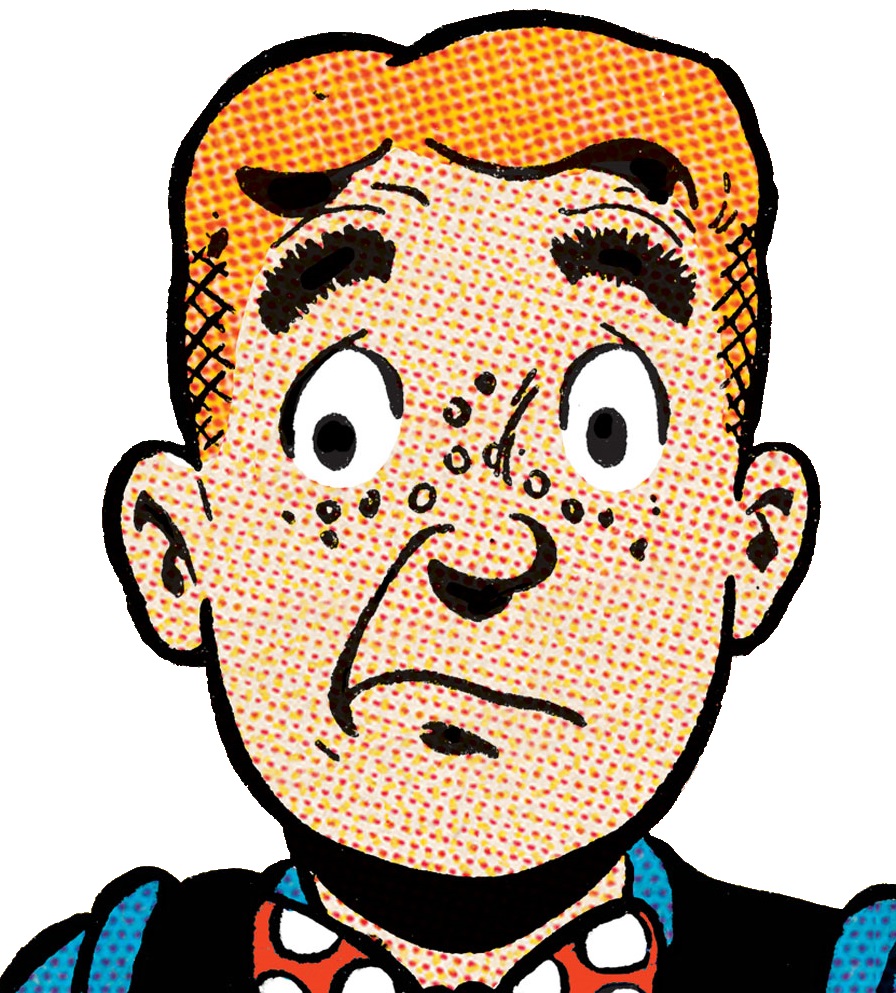
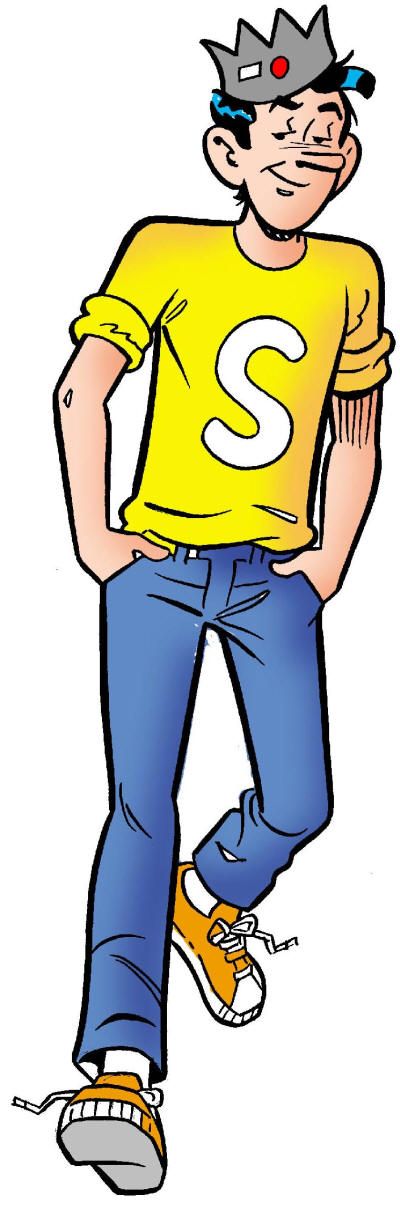
So I got a call from a guy from the circuit the week before Thanksgiving who said that he had the rights to the Archie Gang of Riverdale and they typically march in the Macy’s Parade, but this year, neither his Jughead or Reggie could make it and was I interested in being Jughead? Ok, I’m curious, am I holding one of the balloons? Am I doing something like the Renaissance Festival and interacting with the crowds? I had just scored a good agent and we’re trying to put a career together, I don’t want to jeopardize my chance to play Hamlet for Joe Papp by bouncing down Broadway dressed up like, well…Jughead. But I found we’d be wearing these huge rubber heads of the characters and dressed similarly as them: Archie would have a pullover sweater with an “R” on the front (for Riverdale). And he had a sweater for me to wear, Jughead’s signature long-sleeve grey pull over mounted with a big “S” (for Stupid?). We’d be joined by Betty and Veronica and all we had to do is walk in line with each other the entire length of the parade route and wave to the crowd. The money was right, cash at the end of the parade, and no one knows that its me? I’ve been following this group of teen sensations since I learned to read. Hell yeah, I’m gonna march in the Macy’s Thanksgiving Day Parade, bitches! I AM JUGHEAD.
Like any good actor, I do my prep work and research. I stopped by the local bodega and picked up a couple Archie comic books, carefully scanning them first to make sure Jughead had a healthy role in each (Reggie had a way of taking over in those days) and spent a few hours understanding Jughead: besides eating, what did he like? What was his upbringing, did he have siblings? Did he really not like Ethel or was he just playing her? What was his relationship to his father? Was that slouch because of his personality or was it a physical limitation? An actor needs to know these things if he is to really be that character. Also, I had done a fair amount of mask and mime work in commedia dell’ arte, clowning and Greek drama, so wearing a face covering was a different form of performance, much more about matching the body to the limitations of the mask in a more physically demanding style. Like any acting job, I’m both excited and nervous the night before and make a few quick calls to family and friends to alert them to watch before resting up.
I arrive on Columbus and 96th about 7:30 that morning and its a party, hundreds and hundreds of musicians, dancers, marchers, balloon wranglers stretching over to Central Park West where the parade route begins. I’m wearing a pair of Chuck Taylors on my feet and black jeans and I’m introduced to “Betty” and “Veronica”, each dressed in their doppelganger’s signature style, and “Archie” has those crazy orange plaid pants on. Apparently, he couldn’t cop a Reggie this late in the game, so its going to be just the four of us. Archie is really Bill, the owner of the rights to the costume heads. I met Bill a few times on the circuit, he’s an okay guy, not much of a personality and, I found out later, not actually a performer. He was a business guy, saw all of this party stuff as a business opportunity: he had others make the costumes and sometimes perform in them, and he would “perform” at events that he wanted to monitor. Which explained his lackluster approach to whatever he did, truly an uninspiring guy. But right now, he’s my boss and he’s my best friend Archie and he huddles us around him prior to the start with the rules: “Listen, we keep together in a line, Jughead and Betty on the outside, Veronica and me on the inside. We make sure we stay right behind the marching band in front of us. All we do is wave, just walk and wave. We can’t talk to each other, you won’t be able to hear, so don’t try to talk to each other. Do not take off the head, you have to keep it on no matter what, so don’t sneeze. When we get past Macy’s, make a right on 32nd street and then we can take them off. When I get them back into the plastic bag, I’ll give you each a check.”
I was staring deep into Jughead’s big rubber eyes. The mask and mime work I did taught me to understand the silent “voice” behind the mask, and that voice becomes the sound coming from the rest of your body. The mask will tell you how you are to move, how to interact, whether or not you’re shy or outward, healthy or ill. Be the mask. Be Jughead. Jughead has a look about him of sincere and permanent “whatever”. He fears nothing because he is above mere human travails. Jughead is beyond irony and has little interest in what you say about him. Jughead knows everything is going to work out in the end. Jughead is the epitome of cool. I am Jughead.
We mount them up, get used to the hollow emptiness of our voices inside, and line up behind the Watchung High School Marching Band and Drum Corp. The great balloons of Macy’s parades are silently floating above our heads, tethered down by their human guides, silently waiting. Bands are tuned up and making last minute head gear adjustments, flags are being positioned just right. At precisely 9:00 am, the Master of Ceremonies, dressed like P.T. Barnum, blows his whistle. The bands begin to play and the long train of Macy’s Thanksgiving Parade begins its march down Central Park West toward its flagship store on 34th Street. I’m excited as hell.
It all goes pretty smoothly for the first few blocks, except Archie wants us all to hold hands as we walk and I’m not excited about that. Nothing I know about Jughead says he’s holding anyone’s hand and so after a few blocks I sort of casually lose connection with Archie and I can see Veronica’s done the same thing. Jughead is an absolute independent, dude, Jughead’s his own man, he does not hold hands. The crowd’s are excited to see us in the upper stretches of the Nineties and Eighties and as we get closer to Columbus Circle, I can see ahead of me the enormity of what this parade is about: even through the rubber head, I can hear the cheering and shouts of the crowd as each of the balloons passes by. Now I’m kicking into full Jughead mode and have adopted his signature lean back. I cock my head to the left and wave at the crowd, they respond back with cheers. I walk a little further, cock my head again to the crowd with a wave, and they respond in kind. I have made the connection, I know where Jughead lives: Jughead is a man of the people. The people love Jughead and Jughead loves them back.
Around 75th Street, I get a touch on my right arm. “Don’t do that”, says Archie in a small but strained voice rolling around in a big rubber dome.
“Don’t do what?”
“That, don’t do that. That walk. That’s not Jughead.”
“You’re kidding me right?”
“No, I’m not, don’t do that, that’s not Jughead.”
Alright, so this is screwed up. I’m marching down a Manhattan street in the biggest event of the year wearing a rubber head and the guy next to me says I’m not doing it correctly. I want to be a good cast member and he’s the one paying me, so for a few blocks through Columbus Circle around to Broadway, I play it straight, just walk and wave. But this is bullshit because the people are crying out for us: “hey Archie! Hey Jughead, Jughead, hey, hey!” And all they’re getting back from us is a limp wave, and actually this is becoming terrifically boring: walk, stop, wave, wait, walk some more, wave, stop, wave, wait. What the fuck. We’re heading down Broadway and the crowds are going crazy, the street is narrower and they’re packed 10 deep on top of each other, hanging out of windows, on balconies. They want us and I can’t help but to respond. I resume my non-chalant strut and head-turn-wave and the crowds are responding to it, big time. Now there’s a whole cheering group at 52nd chanting “Jughead, Jughead” over and over, so not only do I give the signature move, but I break ranks and strut over to them. The crowd comes alive, Jughead’s here, and I’m high-fiving the front row as we move forward. People are getting out of their lawn chairs to greet me and I’ve got little kids pressing their candy into my hands. Jughead is real, Jughead is their friend and they love him.
I get back into formation and Archie is furious. “Hey, what did I say back there? Cut it out, cut this shit out, stay here with us. You’re doing it wrong, quit doing that”.
But I know Archie is wrong and that’s a tough thing to admit. Archie is never wrong, Archie’s the hero, he’s my best friend and this is an existential crisis I’m having. Archie’s paying me. So I ignore him. And I keep being the only Jughead I know how to be, mixing with the crowds, high-fiving and slouching down Broadway.
By the time we hit Times Square, Archie is accomplishing the preposterous: his big rubber head is marching down Broadway with a big goofy Archie grin and a big wave but inside he’s screaming at me: “you mutherfucker, cut it out, cut it out, you fucker” all the while with his tiny little wave and his ridiculous little Archie-steps on the pavement. Betty and Veronica, having seen this for decades at Pop’s Malt Shop, know how to side-step this and stay tuned to the right side of the square and the crowds there, always keeping within the Betty and Veronica boundaries that were assigned to them. And this is the way it goes all the way down till about 39th Street where Archie is still screaming at me through his hollow rubber dome and finally I stop and yell back: “Fuck you, I’ve done Euripedes and Shakespeare, mother fucker, I’m pretty fucking sure I can fucking do Jughead”. And the crowds love Jughead.
Finally, we get to the end of the parade, turn onto 32nd Street out of the view of the crowds. Bill rips off his Archie head and starts into me. But now, I’m not just Jughead, I am the Zen of Jughead. I keep the head on, slouch back with that cavalier, devil-may-care look on my rubber face, and just allow him to yell. Its actually a beautiful scene, this mere mortal screaming red-faced at a guy in a rubber jug head. “Give me back my head” he screams. I don’t move. “Give me the fucking head”, he screams louder. I respond back: “give me my money”. He starts in again and I have to get close for him to hear, so Jughead leans in: “give me my fucking money or you don’t get your jug head back. Hand it over to Betty”. So he pulls it out of an envelope, hands it to Betty and I gently part from my dear, dear persona who’ve I’ve grown so attached to. Betty hands me the money, I hand the rubber head over to Bill, and we go our separate ways.
But I looked back as Bill was puffing furiously as he is stuffing the mask into the bag, for one last look at my new pal. And Jughead winked.
Its a time for families, but something I saw yesterday filled me with sadness and dread. Walking down 7th avenue in the middle of a rush, the sun has set and its that dusky kind of dark at rush hour. A man and woman pushing a baby carriage toward me, I notice a light inside the carriage illuminating the baby. As I get closer, I see they suspended a digital tablet near the opening for the baby to watch, its small head bathed in its weird translucent glow. Right before this, I was leaving an eatery passing a table of a young family as the father pushed his cell phone toward his toddler to play with. This was no one time thing, the child knew exactly how to manipulate the device once it got into its tiny, pudgy hands.
There’s no other way to see this: this shit is fucked up. I’m no Luddite, I’m as tech savvy as any 10 people you’ll meet. I was there at the beginning of the cyber age, I’ve witnessed the revolution and its evolution. I was the first generation to grow up in front of a television. But I also raised a child into a fantastic adult and I’m here to say that both of those incidents are as close to a futuristic version of child abuse as you’re going to get. In each case these children were robbed of an essential aspect of humanity: human interaction. And not only robbed, but replaced with a virtual one in which the value is inferred as the same. The device’s ubiquity is the real and present danger, its different than plopping a kid down in front of a TV to get a few hours of peace. We carry these with us as a personal gateway into a world of color and images that in many instances have no contextual value. In light of the current revelations regarding the sinister intent of all our online providers – from data mining for profit and propaganda to a possible realignment of access at a higher cost that benefits the few – how do we justify replacing human interaction with a transfixation to a virtual light box, a lightbox that we all know will do everything it can to steal your soul? A phone is not a passive actor, it is programmed to know you, adjust to your preferences and then lead you to where content providers want you to go.
Is it not bad enough we make conscious choices as adults or young adults to allow these devices to control our very move? But we rob our babies of the real sights and sounds of life, forcing them to experience life through only the backs of their retinas, which by the time they hit puberty will be scorched with a million images of nothing, of data that is meaningless. That baby in the carriage should have been hearing the sounds of traffic; of people and conversations in passing; seeing the blur of humans through the small opening, the shadows of buildings filtering through and the rhythmic drone of the carriage’s wheels against the sidewalk. The child in the restaurant needs to interact with its physical environment at every juncture: the tables and chairs, the smells, sounds, people; he/she needs to understand how to comport themselves, how to adjust, how to tolerate. They need to be curious. Generations of researchers, psychologists and neuro-scientists have proven to us that this is what makes the human mind grow, create new synapses to answer challenges in its environment. A baby is born with no facility for color, just contrasts of black and white, and its first interactions are in that mode. Then face-to-face contact creates the bond between the mother and child which extends to the father then the family, the neighborhood, community and the world. The kinetic world teaches the child patience, the value of boredom, the depths of the inner mind as a balm to the outside rigors and a chalice of creativity. Its the first step in becoming a citizen of their home, then community, then the world.
But when we stick a glowing brick in front of them, filled with images that we ourselves have no hand in creating, in essence trusting strangers to mollify and entertain our own children, then what do we call ourselves? Certainly not good parents. I’ll call them something worse.
Because it has now reached epidemic stages, I feel its important to re-iterate a truth: if someone became interested in whiskey in the 2000s and started a distillery as a result, they are NOT a master distiller. It doesn’t matter what type of success or failure they have, who their distributor is or how many markets they’re in, they are not a master…of anything.
To infer, or just as wrongly, let other infer on their behalf, that they’ve mastered this craft after only a few years in, is a slap in the face and a profound insult to those that actually have achieved mastery.
The test is simple: stand in the same room with Jimmy Russell, Jim McEwan, David Stewart, Maureen Robinson, Shinji Fukuyo or Richard Patterson and refer to oneself as a “master” in their presence. It would be cringe-inducing to watch and what’s more, these very same personages wouldn’t refer to themselves as such. These, and others like them, have spent the better part of their lives in the pursuit of their craft in an industry that has seen severe downturns during their tenure. We tend to anoint them now with rock-star like plaudits, but even if the whiskey industry hadn’t taken a moon-shot in the last 15 years, they would still be regarded as masters. They put in the time and they’ve lived through the pain.
True mastery is conferred on you by your peers and the industry you’re in, not self-annointed, or worse, bestowed upon you by a publicist or a blogger or a hack writer from Thrillist.
Mastery is the result of thousands of hours laboring in every part of an industry, coming from under the tutelage of others greater than you
Mastery is the great humility of learning over time what your mistakes are and understanding the thousands of permutations in the production of an end result
Mastery is understanding how to not just teach, but to guide those who come to you for direction and knowledge, a conveyance of not just facts and information, but true wisdom as a result of a deep understanding
Mastery is having the scars of failure and succeeding as a result of them
Mastery is an outward recognition that you stand above others in a pursuit of acknowledged excellence and have achieved it through your labors
Mastery is conferred upon a few. It is not a Participation Award.
There are those in this industry who after a rocket-glide to success in a few short years attach the “master” label to themselves. At the beginning of this wave, it was easy to dismiss it as youthful exuberance, but no more. It is undeserved and by stealing this honorific they rob themselves of the richness of their own process and experience. What they may be is talented, skillful and resourceful, all achievements in and of themselves. They may be lucky or someone who knew the right people at the right time; someone gifted with the time and money to pursue a task or discipline at one’s leisure without the burden of monthly bills. All of these are fine, there’s nothing wrong with them, everyone has different paths to success.
But the hyper-titling we are experiencing is not the result of any of these. It’s a combination of a number of things that are troubling in our larger culture:
The hyper-need for instant self-gratification, driven through the prism of social media
The confusion of facts with knowledge and knowledge with wisdom as a result of the hyper-reality of the internet
A service economy vs. a production economy where there are few examples of long-term effort
The commodification of titles (Manager, Director, VP, CEO, etc.) as a result of “entrepreneurial glorification”, a syndrome where anyone who starts something new on their own is considered a prodigy, a genius or brilliant simply by the act of starting, not on what they’ve achieved
Outside investment money with no historical investment in the industry, seeing a distillery or a brand as just another commodity and titles as a marketing edge over the competition
This sense of entitlement is enabled by the wholesale showering of diluted “awards” from the huge number of competitions that have sprung up as a cottage industry, many of them coming from the organizations that purport to help grow and guide these young craftsmen into industry leaders.
One cannot demand transparency if one is not going to live it. If the craft movement is going to grow up to fulfill the destiny that is waiting for it, the capacity to re-arrange how hard spirits are made, marketed and consumed for a generation, it needs to start by looking inward at its practitioners and demanding a truthful accountability of their capabilities: not just to create, but to lead and guide, to pass their wisdom onto a new generation. Right now, I’m not seeing that happening enough to make me hopeful that it can.
Its 2030 and our long national nightmare is behind us.
Tiffany and Ivanka reunite after the latter’s messy divorce to Jared after his conviction that landed him, coincidentally, in the same cell occupied by his father, who’s now out on bail and working as a groundskeeper at a golf club in Bedminster, NJ. The sisters appear with Jimmy Fallon on the taping of his last show before retirement, reminiscing about how they completely ignored each other their entire lives until just last year when Tiffany was in line at a local Pinkberry and saw Ivanka changing the pour spout of the Blood Orange and Blueberry dispenser. After an awkward silence caused by Ivanka’s inability to make change at the register, they both burst into tears of regret and relief, hugged each other over the counter and accidentally broke the serving spoon container that stood between them. There’s rumor of an album and a clothes line in the works. Not clothing line, clothes line. Some are worried.
Barron left public life when he turned 21 and is reportedly on some kind of mission on a boat in the south of France. It is widely believed he’s had plastic surgery and changed his name, but no one really cared enough to find out.
After her line of FloodMe Pumps failed on Amazon, Melania returned to Eastern Europe and was appointed to the cabinet of the Prime Minister of Moldova, where she oversees relief work for victims of cyber-bullying, Stockholm Syndrome and bad lighting. She’s spotted every Thursday evening at the shore of a Black Sea resort, throwing what appears to be a bottle with a note in it into the water in the direction of the south of France.
Don Jr. launched a successful podcast from his private dacha in St. Petersburgh called “First Born: Second Rate” which is produced by the oldest son of his chief sponsor and adopted father, Vladimir Putin. He still has trouble pronouncing “security threat” in Russian but has developed a prickly sense of humor when it comes to idea of term limits at the Politboro.
Eric continues to pursue life as a touring country singer under the stage name of “Gummy” Phillips. He released a self-published travel book, “Change for a Dollar: A Critical Look at Motel 6” with proceeds going to an unnamed charity in the south of France.
Steve Bannon’s body was never found after it was reportedly trampled to death by a marauding pack of elk in N. Dakota’s Black Hills. Bannon was lured there on a phony recruitment trip, thinking it was the last bastion of white holdouts in the west, when he encountered a unity meeting of every single minority living in the US, including gays, women, POC, Native Americans, accountants who know what an adding machine is, Y2K programmers, the key grips from the original “Airplane” movies, Amazon greeters and women who purchased Ivanka’s and Tiffany’s clothes lines. A plaque is in the works.
The whereabouts of the former 45th President are still a mystery. There have been sightings from Paraguay and Uruguay to Vladivostok, but all have been unconfirmed. Except the south of France. He’s not there, believe me.
In the middle of my acting career, I took two years out and committed to learning a new technique (for me) named after its founder, Sanford Meisner. He, along with Lee Strassberg and Stella Adler, studied with the Russian genius Stanislavski, the father of modern acting, and returned to train 2 generations of American actors that changed the art form forever. During my 2-year stint, I was not allowed to pursue any work in the industry: no films, plays, commercials, voice overs, nothing. It was harsh but they demanded the commitment from you. Robert Duvall called his time learning the technique “worse than my time in the Korean War” because it is emotionally brutal. It is brutal in that it does not allow the bullshit tricks and shortcuts that actors fall into during their career, things that got them work in the past; things they’re known for in the industry; little bits of business they use over and over again: the eyebrow raise, the cocked smile, the walk or strut. It had one goal, emotional truth, played truthfully in the moment from your own imagination. You learn to listen actively, be in the moment and serve the script and your fellow players.
In the first year you never work with a script; for an actor, this is madness. It’s nothing but exercises designed to strip you of your ego, to strip you of your pride and strip you of any falsity you may harbor: all the enemy of truth. These are exercises based on repetition: 2 students facing each other, and one repeating what the other one says. Its madness and that was the point. The repetitions were designed to evoke a true response from you: not one you think might work, not one that seemed funny or dramatic (indeed, there was no “acting” going on at all here), but what was true based on your response to your partner. It was always 2 things: frustration and anger. One quarter of the class dropped out in the first year and in the commission of the exercises, you could tell who would be next: the ones who actively resisted, the ones who put up the walls, that clung tight to a reverie of themselves in the past, that tried to pull out their safety net of tricks. One by one, we all got called on it and it infuriated us, it made no sense why we were being castigated and harangued by our teacher. It was humiliating because each one of us was being stripped down to our emotional core in front of the entire class, we were being called on our bullshit, our insincerity, our falseness, our ruses that we all use in our everyday life to shield us from the harshness of it. There’s no place for that in the theatre, in the service of a character you may play. There is only truth. We would have rather shown up disrobed and naked (which happened a few times) than to be robbed of the persona mask we wore as protection and have the real us shown glaring in a spotlight. And yet that was what the work demanded. Our fragility was being exposed, each one different than the other. We, the class as a whole and guided by our teacher, came face to face with each other’s weaknesses, neuroses and secrets.
And here’s the secret you learn, the one you take with you your whole life after its revealed: that when you get stripped of the layers of sophistication that you adopt to hide your insecurities, you get angry, very, very angry, sometimes a rage. Its the first line of defense, the first impulse, its very primal, the engagement of fight/flight at a higher level. I’ve seen nuclear bursts of rage coming from the tiniest of people that made me frightened in that moment: it was real, it was enormous and it was locked inside them their entire lives before this exercise released it. Its why there is a mattress hanging on the wall of every Meisner studio in the country, because in the course of the exercises when that anger got so big and had to be exorcised, the teacher would yell, “go to the mattress” and you would leap at it flailing, crying, screaming, pounding and kicking until the anger was purged like a toxin from your blood. Then you would return to your partner and continue the exercise. And what happened in that moment, over and over, with each person in their own unique way, was why I was committed to being an actor, to pursuing art in this form for what I thought would be the rest of my life. You saw an almost transcendent human transformation happen in front of your eyes. With the anger purged, the emotional truth of that person was revealed, and I’m not kidding, as if it came down from heaven. You saw into that person’s soul, in the context of this repetitive dialogue, and you could not believe it transpired in front of you. It was scary, sexy and huge, it attracted us like flies to sugar in that we all wanted it, we all wanted what we saw to happen to us. So we came back day after day, week after week, filled with the homework assigned to us, ready to go to the mattress for our art. I did not go to war like Duvall did, but I have a sense of what he was talking about. At the end of 2 years, I was forever changed as an artist. And not surprisingly, its when I began to actually make a living at it.
I teach sales techniques to spirits industry salespeople and brand narratives to small brands. I’m bringing a lifetime of content mastery and methodologies I learned through 3 different businesses: acting, technology and liquor. But what I’m really doing is a modified Meisner technique. Sales is difficult, its one of the most demanding careers anyone can pursue, and as a result, its easy to fall into a host of tiny traps that prevent you from growth that end up as a barrier to sales. What I’m hoping to do is challenge each person to purge those habits from themselves, to re-educate themselves as to what the customer and the brand may need, and in turn, what they may need. With the narrative work, I’m hoping to strip away the ego from the entrepreneur to get to that transcendent light inside their brand, the unique glow that separates it from other similar ones on the shelf. They have to commit to some time with me to do it, but I think it pays off for them.
Let me know if you have any leads: robin@robinrobinsonllc.com
I come from a small steel town in western Pennsylvania outside of Pittsburgh who’s very name conjures up the history of steel in America: Homestead. A plot of land on the Monongahela River that was home to a glass factory but grew a facility owned by a poor immigrant, Andrew Carnegie, managed by a wealthy elitist, Henry Clay Frick, and eventually transformed into US Steel by an emperor, J.P. Morgan. Every time I see pictures in books of WWII Navy Destroyers or mid-century Buicks and Chevys; or look up at the Empire State Building or glimpse the Verrazano Narrows Bridge, I see the steel that came from my hometown. The first graphic picture I remember is a circle containing the letters “USS” that evolved into the three star symbol that adorns the helmets of my beloved Steelers and was on the mill gates I passed every day on my bike. I inhaled the smoke from those smokestacks that produced it, briefly worked in the belly of the beast that churned it and grew up in a time that benefited from it. For a while the Homestead Works was the largest steel making facility in the world and it was also the site of one of the most significant labor strikes in history in 1892. We knew a lot about steel in Homestead. We knew a lot about rich guys in Homestead and we knew a lot about being star-struck and let down by them as well.
In my family, I was the kid that showed promise, that read early and often, that had the dazzling vocabulary and wit not typical of the mill household. I had interests in art and music and the science that sent men to the moon and my Dad once told me, “you ain’t going into the mill with the rest of those hunks”. And by “hunks”, he didn’t mean centerfolds with six-packs and dreamy eyes. He meant “mill hunky” a term of derision so vile it could provoke a saloon fight. My mother re-iterated the same thing: “you’re not going to be a mill hunky, you’re going to college and become someone important”.
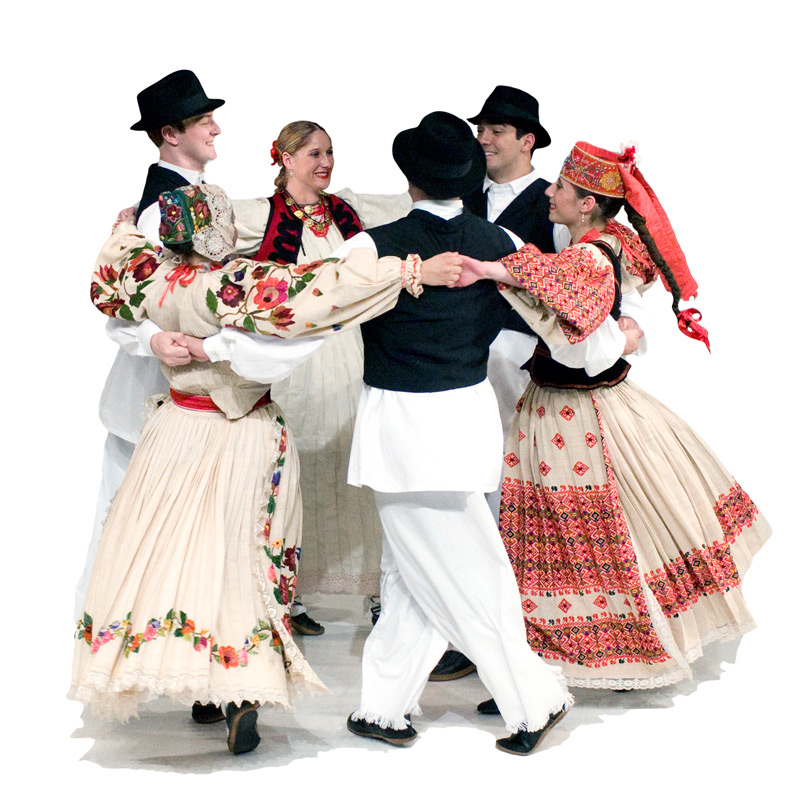
Mill hunky. Chances are you never heard this word but I heard it a million times. While the mill hunkies built the industry, they were forever castigated as the ruffians and underclass, the unwashed hordes that landed on the banks of the Mon’ and forever changed America. They were the vast majority of workers in the mills – in Homestead, South Side, McKeesport, Rankin, Braddock, Duquesne, and Clairton – that were recruited from the declining Austro-Hungarian and Ottoman Empires of Europe during the early years of steelworking in America. Andrew Carnegie first established a meritocracy of artisans to create steel from pig iron and coke in the 1880s, pulling them from the Northern European countries of England, Scotland, Wales and Germany. They looked like and for the most part acted like him, a native Scot. But as steel making progressed -from the old open hearth Bessemer furnaces of the 19th century to the blast furnaces of the early 20th -it became more complex and steel became more in demand. More workers were needed to fill in the heavy labor jobs that these new “artisans” now felt were beneath them: ditch digging, flume-cleaning and the hundreds of other dirty and dangerous jobs that attended the manufacturing process. So Frick opened the mill up to immigrants from Eastern and Southern Europe that were fleeing the region in the throes of political and cultural upheaval, areas we now know as Slovakia, Czech Republic, Poland, Croatia, Ukraine, Hungary, Romania, Greece, Macedonia, Turkey and Syria. Their names ended in “-ski”, and “-vitch” and “-stan” and “-ko”, and all manner of strange spellings with too many consonants and not enough vowels. These men would be recruited as a cheap labor force and would fill in the labor pool of a now expanding steel empire, while at the same time undercut the growing union movement spurred by the existing “white” workers. These new immigrants were mostly illiterate, unschooled and backwards rural dwellers, many of them brown and tawny castoffs looking for a better life in a promised land. The Austro-Hungarian empire was the largest area of recruitment, so they and their families were all thought to be “Hungarian”, with their strange languages, odd foods and clothing and bizarre cultural rituals, dances and religions. It wasn’t long until “those Hungarians” who cleaned the scrap pits, dug the ditches, worked for low wages, who lived low and bred like rabbits in the tenement flatlands next to the expanding mill became objects of derision, defamation and fear. Those Hungarians soon became “those hunkys” and the class-divide in working class Pittsburgh now had a vocabulary, imagery and social order that fit in with the rest of America in the denigration of “the other”. The “mill hunky” was born.
The events that led up to the Homestead Strike pull all this together. Carnegie’s steel making artisans were getting increasingly frustrated with the 24/7 schedule demands of Frick (Carnegie at this point became an absentee landlord and spent most of his time hunting pheasant in Scotland) and had pressed for guild organization. They had joined forces with these “hunkys” to gain a larger force to aid in negotiations for these trade unions, and in 2 separate instances, had prevailed in winning better conditions and wages. But it all came to a head when Frick countered to use these new immigrants as a wedge to shut down negotiations. He followed this with an attempt to lock the workers out of the mill and bring in hired Pinkerton security goons to take it over in the dead of night.
These actions caused the events of July 6, 1892. The townspeople and workers learned of the plan to float the guards up the Monongahela River in the middle of the night to effect the takeover and instead met them on the banks, and the next 12 hours were a barrage of gunshots and rioting. The Pennsylvania militia was eventually called in to put down the “rebellion”, and the unions were banished from the American labor landscape for the next 40 years. But the role of the “hunky” was burnished as a divisive group that, while being caught in the middle, were blamed for the poor fortunes of workers from that time on.
As the decades of the 20th century rolled into the second world war with the wartime expansion of the mill, the hunky became institutionalized. They mixed uneasily at first with the rural blacks of the Great Migration of the 1920s and then settled into a grudging respect as the economy grew enough to provide all of them with meat on their tables. All through this time their understanding of second class status was also embedded in their psyches and by the time I was born the word hunky could cause a fist fight and break open old wounds. It was always delivered behind someone’s back like a curse, with a curled lip and twisted face, while at the same time it inspired camaraderie among those who wore it. In some ways, it was as bad or worse than the “n” word, and I often heard older black men curse each other with it. Like the black man, the hunky occupied a solid place in the economic fortunes of Pittsburgh while at the same time brought a strange cultural identity that integrated itself in similar ways. At one point in time in the 60s and 70s, before the industry fell in on itself, there was a brief convergence, where we all danced to Motown, ate pierogies and dressed like Ziggy Stardust; and affected the latest Afro-inspired clothing while dancing to “Roll Out the Barrel” in 3/4 time. At the same time we felt these were both somehow forbidden in mixed adult company.
The mills all but closed down in the eighties because of collusion between management and unions: both of them fattened by the pre and post-war building boom, failed to upgrade the technology and the processes to keep them competitive. After WWII, America rebuilt the Japanese and German mills with the latest in both and ironically they put us out of business. Many of the once bustling towns along the river fell into the ruin that they find themselves in today: Homestead, Munhall, Braddock, Rankin are all a mix of uneasiness, despair and methadone. The mills of Homestead are the one bright spot and the miles of river flatland where blast furnaces once prevailed have been replaced by an upbeat mix of retail, commercial, entertainment and residential development. They catch bass in the same rivers that were once a parent’s caution for skin rashes and dissolved flesh if you touched it. Pittsburgh as a whole has shown the world what vision and commitment from the duality of government and private industry can build and is surprising us daily with its technological innovation, cultural savvy and educational leadership.
Tamburitzens
The word hunky has now softened to a kind of self-referential badge of honor, a way to memorialize and honor your immigrant roots and the sacrifices of your forebearers. Pittsburgher’s all wear that badge in the same way we all wear green on St. Patrick’s Day. In Pittsburgh, everyone’s a hunky in the same way that we’re all Yinzers, eat Primantis and bleed black and yellow during the fall while waving a Terrible Towel above our heads.
Except one time. In 1990 the commissioners of Pittsburgh’s Three Rivers Arts Festival had commissioned a statue to commemorate the city’s place in the industrial history of America. The winning proposal was from Mexican-American sculptor Luis Jimenez. Everyone was excited about its unveiling on the first day of the festival. When the tarp was pulled from the 15 foot tall full-body statue of a steelworker, in full steel-making garb, the audience was thrilled with power it conveyed. Then they noticed the title: “The Hunky-Steel Worker”. The whole town erupted into arguments and meetings, and reluctantly, after a year of litigation, the word “hunky” was ground off the base of the statue and the statue itself was eventually moved to its current location on the U of Mass campus in Boston.


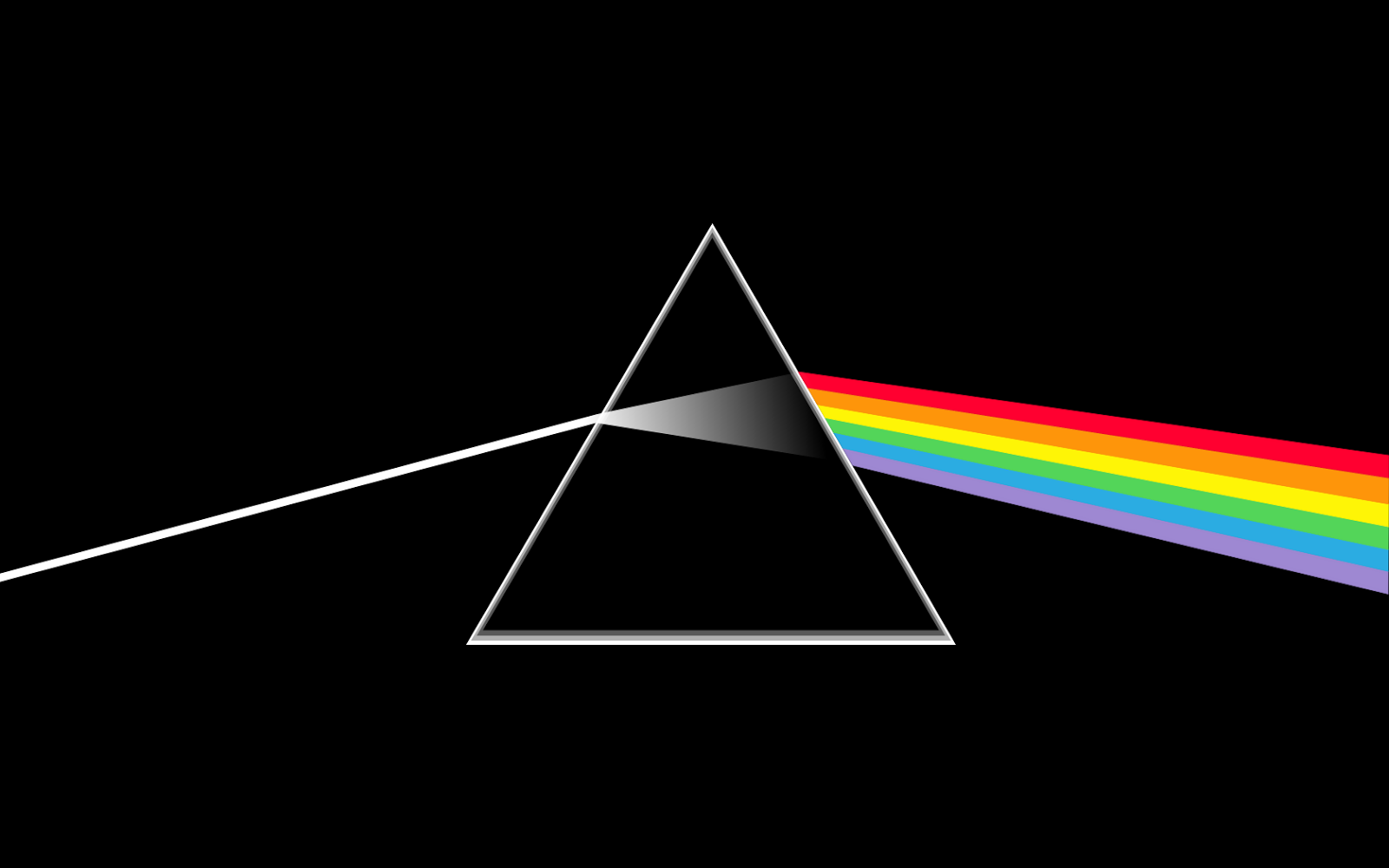 Hundreds of years later, Roger Waters of Pink Floyd at the tender age of 29 writes preciently: “…you are young and life is long, and there is time to kill today. And then one day you find, 10 years has got behind you, no one told you when to run, you missed the starting gun.” And we run and we run to catch up with the sun but its sinking. Certainly John Lennon understood this futility when he said, “Life is what happens to you while you were making other plans”. Chronos time is road rage and impatience with others: you’ve interrupted my race with the clock and you are now my enemy.
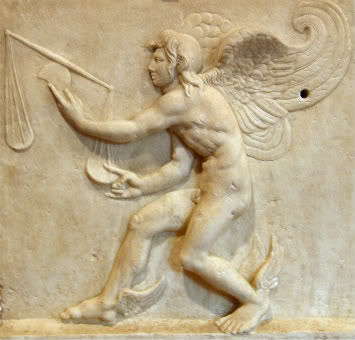 The other part of time then is kairos time. This is the ancient time, the time of the Jews and early Christians, the time of the ancient Chinese lords, the Vedic shaman and sub-Saharan tribes. It is the time that is fashionably being recreated amongst the cognoscente as “mindfullness” (which in reality is a great business plan to separate people from their money by teaching them to sit still). But it is not that. Kairos is the space of time where lovers gaze, where mother and child become one, where you can hear your own heartbeat and in that, your own destiny. It is your silent vigil during the agony of a friend’s loss or your constantcy next to a loved one’s triumphful moment. It is the contemplation of your own mortality as a strategy for being alive. As Jerzy Kosinski knew of Chance the gardner, it is simply “Being There”, whether its sitting in the car with your child next to you or actively participating in play with your friends. Children live in kairos time because kairos makes the most out of the time that we are in: not the minute that just passed, not the day that is to come, but that exact moment we are living in, not peeking away at a smartphone, not responding to a bell, not allowing a gnat’s distraction to interrupt a meaningful conversation. Kairos time is its own reward, it doesn’t need likes or stars or the glowing embers of someone else’s clock. Actors are trained to “be in the moment”, open and receptive to immediate stimuli that allows them to respond in an appropriate way to find their way to a truth. If not, they’re caught “faking it”. An athlete must live in kairos or else she will falter.
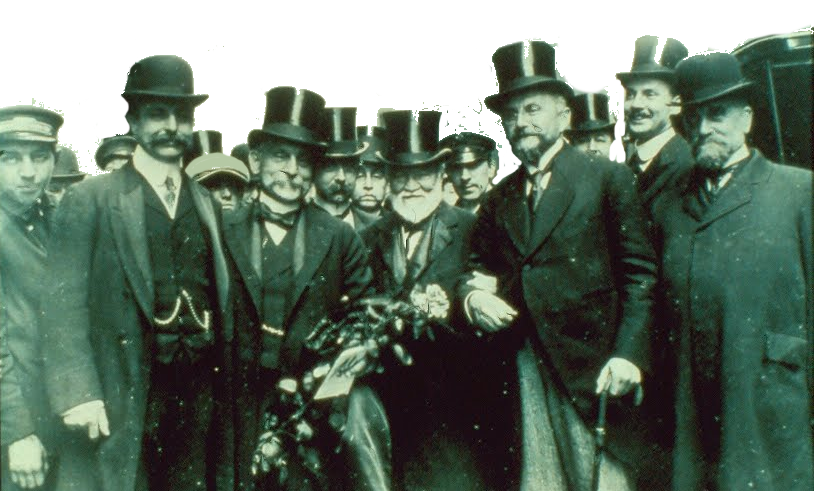 In the Gilded Age, the then powers of industry – Gould, Morgan, Mellon, Rockefeller, Ford, Carnegie, Vanderbilt – consolidated the means of the industrial economy into the hands of an oligarchy who controlled the actual wealth of the United States. The means at that time were steel, oil, railroads, transportation and banks. Wealth has nothing to do with being rich, it has everything to do with the power to bend the arc of history to one’s desired end point. For the first time in human history, non-royal entities, these Robber Barons, were able to consolidate and use wealth to affect the outcome of ordinary lives, not only in this country, but around the world, without ever having fired a shot or burned a village. To provide justification and prevent a natural backlash from those who were conquered, and this was indeed a conquering, they utilized an ancient method of control: mythology. They created the mythology of the self-made man, the Walter Mitty, the rise-from-the-gutter-into-the-penthouse kind of person, who through their own pluck and persistence, hard work and sacrifice, were able to pull themselves by their bootstraps into a position of dominance over their own meager environment. It was one of Aristotle’s classic dramatic constructs from ancient times: man against the world, now writ large and in real time, but this time married with the freedoms granted by this new country, only 100+ years old, that insisted that all men were created equal.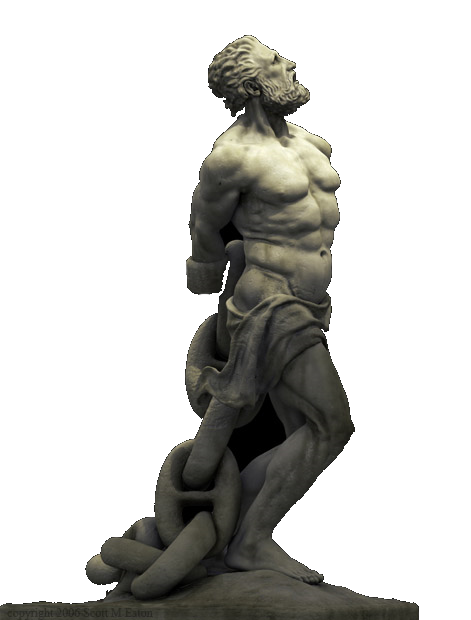

 Let’s all re-read the myth of Pandora’s Box to understand the age we’re living in. Pandora was warned that once the box is open, there are things that once escaped can never be returned. The current occupant of the White House, a person afflicted with one of the worst social diseases of all, sociopathy, is our modern day Pandora and has allowed the dark forces that have been crawling around for over 200 years under the fabric of this country to escape into the zeitgeist.


 Its a time for families, but something I saw yesterday filled me with sadness and dread. Walking down 7th avenue in the middle of a rush, the sun has set and its that dusky kind of dark at rush hour. A man and woman pushing a baby carriage toward me, I notice a light inside the carriage illuminating the baby. As I get closer, I see they suspended a digital tablet near the opening for the baby to watch, its small head bathed in its weird translucent glow. Right before this, I was leaving an eatery passing a table of a young family as the father pushed his cell phone toward his toddler to play with. This was no one time thing, the child knew exactly how to manipulate the device once it got into its tiny, pudgy hands.
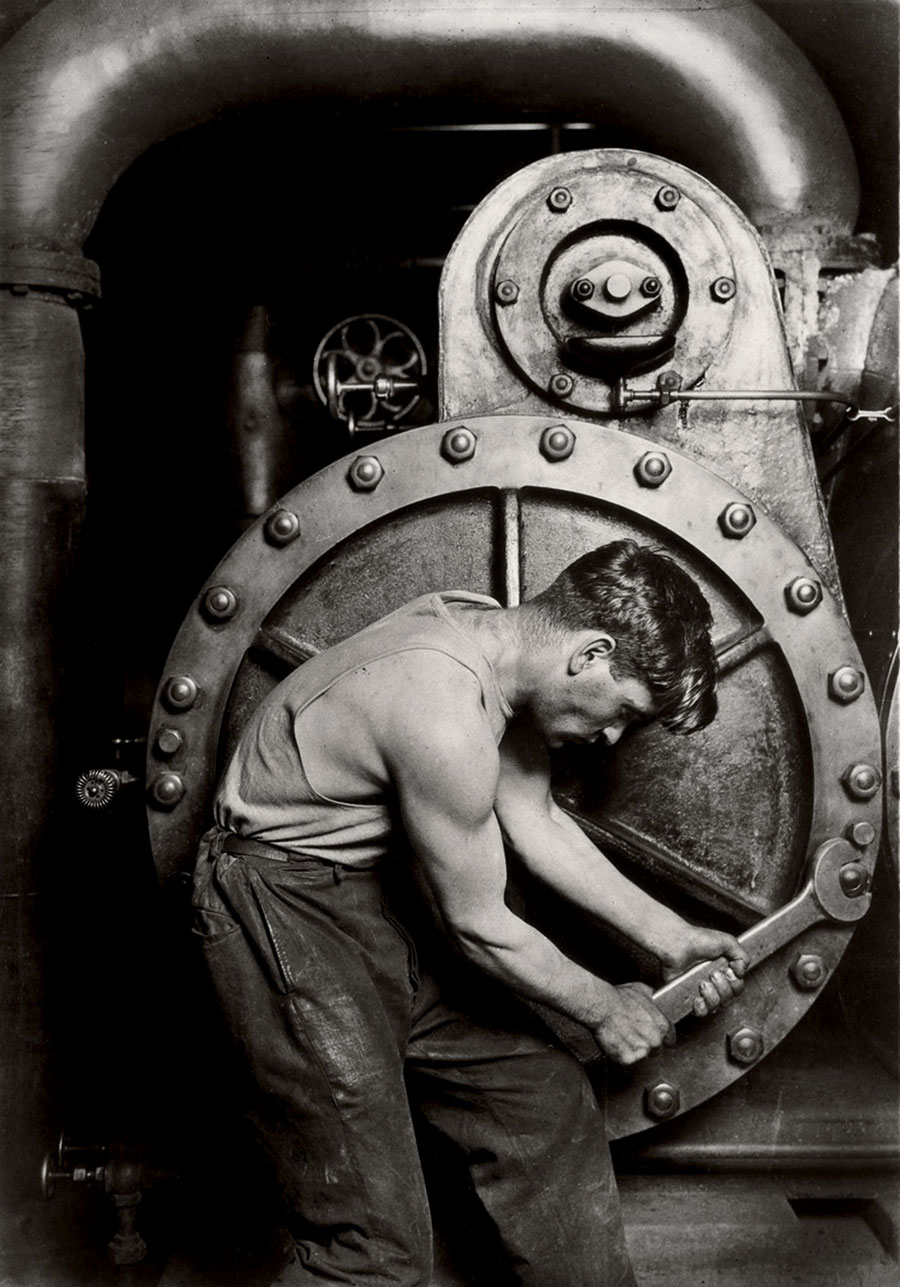 Because it has now reached epidemic stages, I feel its important to re-iterate a truth: if someone became interested in whiskey in the 2000s and started a distillery as a result, they are NOT a master distiller. It doesn’t matter what type of success or failure they have, who their distributor is or how many markets they’re in, they are not a master…of anything.
 During my 2-year stint, I was not allowed to pursue any work in the industry: no films, plays, commercials, voice overs, nothing. It was harsh but they demanded the commitment from you. Robert Duvall called his time learning the technique “worse than my time in the Korean War” because it is emotionally brutal. It is brutal in that it does not allow the bullshit tricks and shortcuts that actors fall into during their career, things that got them work in the past; things they’re known for in the industry; little bits of business they use over and over again: the eyebrow raise, the cocked smile, the walk or strut. It had one goal, emotional truth, played truthfully in the moment from your own imagination. You learn to listen actively, be in the moment and serve the script and your fellow players.
 aled: that when you get stripped of the layers of sophistication that you adopt to hide your insecurities, you get angry, very, very angry, sometimes a rage. Its the first line of defense, the first impulse, its very primal, the engagement of fight/flight at a higher level. I’ve seen nuclear bursts of rage coming from the tiniest of people that made me frightened in that moment: it was real, it was enormous and it was locked inside them their entire lives before this exercise released it. Its why there is a mattress hanging on the wall of every Meisner studio in the country, because in the course of the exercises when that anger got so big and had to be exorcised, the teacher would yell, “go to the mattress” and you would leap at it flailing, crying, screaming, pounding and kicking until the anger was purged like a toxin from your blood. Then you would return to your partner and continue the exercise. And what happened in that moment, over and over, with each person in their own unique way, was why I was committed to being an actor, to pursuing art in this form for what I thought would be the rest of my life. You saw an almost transcendent human transformation happen in front of your eyes. With the anger purged, the emotional truth of that person was revealed, and I’m not kidding, as if it came down from heaven. You saw into that person’s soul, in the context of this repetitive dialogue, and you could not believe it transpired in front of you. It was scary, sexy and huge, it attracted us like flies to sugar in that we all wanted it, we all wanted what we saw to happen to us. So we came back day after day, week after week, filled with the homework assigned to us, ready to go to the mattress for our art. I did not go to war like Duvall did, but I have a sense of what he was talking about. At the end of 2 years, I was forever changed as an artist. And not surprisingly, its when I began to actually make a living at it.

 Bile
Bile 