“You’re funny, keep it up”

A memorial tribute to Jerry Stiller: 5/11/2020
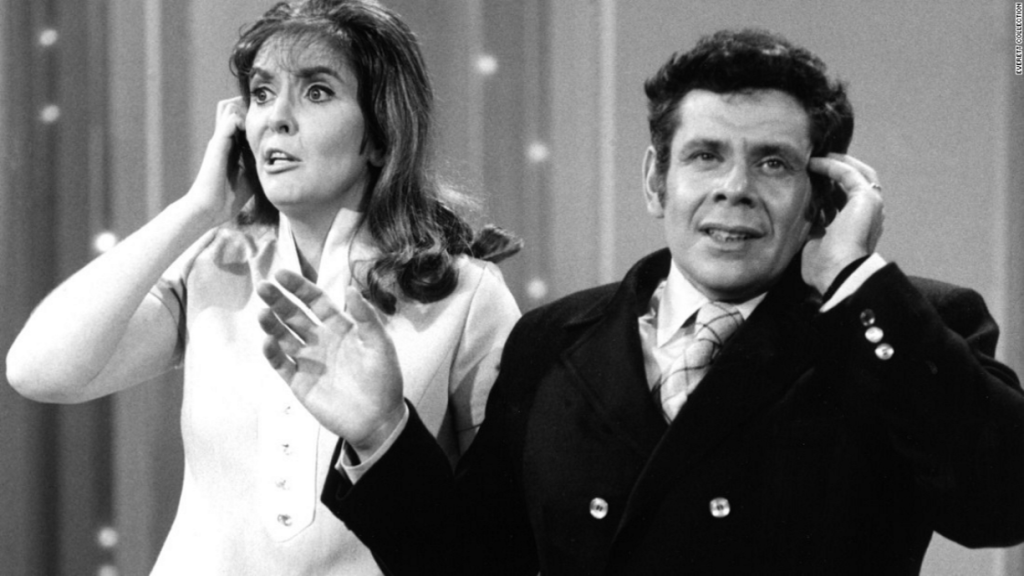
Stiller and Meara “on the phone”

In the years before Seinfeld, I was performing a strange little comedy off-off-Bway called “Erpingham Camp” by Joe Orton. In the cast was Amy Stiller, Jerry’s daughter. One night her entire family showed up in support of her. We met them all in the dressing rooms afterwards and Jerry graciously invited me along for drinks afterwards with one or two fellow actors, Amy, her mom Anne Meara and her brother Ben. Ben mostly glowered at the table until he left early. He had just achieved a bit of stardom on Broadway in “House of Blue Leaves” by John Guare and maybe he didn’t like sharing attention with his sister; or maybe he considered off-off-Bway actors too low rent to be seen in public with. Mom Anne Meara was a bit cold to me and I think she thought I was interested in her daughter (I was not) and was already giving me the once over. But I got to sit next to Jerry at a big round table and it was one of the great experiences of my career. He was expansive, animated, interested in everyone’s story (and every actor has an extended version of it) and genuinely excited to be with us.

I grew up watching the comedy team of “Stiller and Meara” on TV, watched their countless appearances on the Ed Sullivan Show and other variety programs. Like Nichols and May (and before them Burns and Allen & Lucy and Desi), they were the vanguard of domestic comedy routines; where Nichols and May were intellectually ironic and biting, Stiller and Meara was closer to The Honeymooners, with working class domestic issues, a running gag of mis-interpretations and man/woman differences in POV. They were masters of timing, the double take, the frustrated long burn, but most importantly, progenitors of the form of comedy at that time, ala Borscht Belt: quick, to-the-point, a predictable arc that was always buttoned up at the end. Its how I learned the form.

Throughout the evening I questioned Jerry about the early days in Greenwich Village, sharing the stage with Lenny Bruce, Mort Sahl, Lord Buckley, Bob Dylan and peers like George Carlin, Richard Pryor and Woody Allen. They played the Cafe Wha? on MacDougal, Folk City on W. 4th, Top of the Gate down the street from it and other venues that are long gone from the scene. It was an exhilarating walk through the time period that drew me to New York and I was laughing and drinking with the royalty that spawned it. The world of comedy had gotten sharper and younger at this point and Stiller and Meara weren’t seen as often as they were just a few years ago, perhaps they were considered corny and old school by comparison to Robin Williams’, Carlin’s and Pryor’s edgy push of the envelopes. So they were in a middle zone, with Frank Costanza waiting in the wings to emerge in just a few short years.

Of course the evening always comes to an end. Anne warmed up a little but was anxious to usher Jerry out of there lest we eat up his entire night. As we said goodbye, he gave me a quick look and said, “you’re funny, keep it up”.
If you play golf, you know that there’s one stroke you do in 18 holes that’s so perfect in form and movement, so exhilarating in its accuracy that you keep coming back to try to repeat it. That was the effect of those 5 words for me. I remember that look, that handshake and those words like it was yesterday and it was the psychic food I needed to keep pursuing my craft and career. The next day, before the show, Amy winked at me and said, “Dad liked you”.
See ya, Jerry, and thanks.

Not all statues are made the same

photo posted on post-gazette.com
“Hunky Steelworker” Luis Jimenez, 1990

I come from a small steel town in western Pennsylvania outside of Pittsburgh who’s very name conjures up the history of steel in America: Homestead. A plot of land on the Monongahela River that was home to a glass factory but grew a facility owned by a poor immigrant, Andrew Carnegie, managed by a wealthy elitist, Henry Clay Frick, and eventually transformed into US Steel by an emperor, J.P. Morgan. Every time I see pictures in books of WWII Navy Destroyers or mid-century Buicks and Chevys; or look up at the Empire State Building or glimpse the Verrazano Narrows Bridge, I see the steel that came from my hometown.  The first graphic picture I remember is a circle containing the letters “USS” that evolved into the three star symbol that adorns the helmets of my beloved Steelers and was on the mill gates I passed every day on my bike.  I inhaled the smoke from those smokestacks that produced it, briefly worked in the belly of the beast that churned it and grew up in a time that benefited from it.  For a while the Homestead Works was the largest steel making facility in the world and it was also the site of one of the most significant labor strikes in history in 1892.  We knew a lot about steel in Homestead. We knew a lot about rich guys in Homestead and we knew a lot about being star-struck and let down by them as well.

In my family, I was the kid that showed promise, that read early and often, that had the dazzling vocabulary and wit not typical of the mill household.  I had interests in art and music and the science that sent men to the moon and my Dad once told me, “you ain’t going into the mill with the rest of those hunks”.  And by “hunks”, he didn’t mean centerfolds with six-packs and dreamy eyes.  He meant “mill hunky” a term of derision so vile it could provoke a saloon fight.  My mother re-iterated the same thing: “you’re not going to be a mill hunky, you’re going to college and become someone important”.

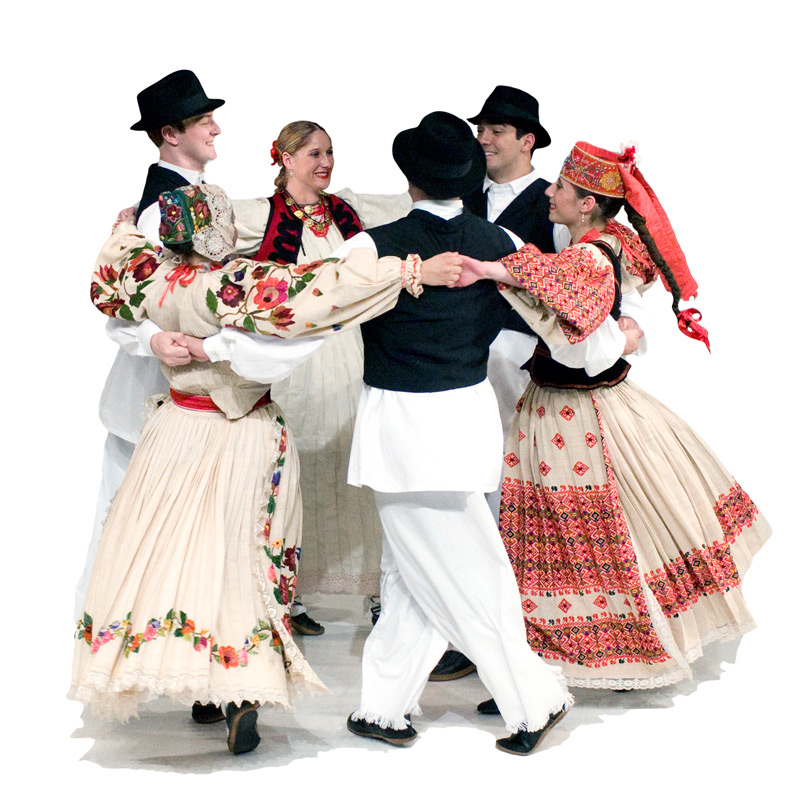
Mill hunky.  Chances are you never heard this word but I heard it a million times. While the mill hunkies built the industry, they were forever castigated as the ruffians and underclass, the unwashed hordes that landed on the banks of the Mon’ and forever changed America.  They were the vast majority of workers in the mills – in Homestead, South Side, McKeesport, Rankin, Braddock, Duquesne, and Clairton – that were recruited from the declining Austro-Hungarian and Ottoman Empires of Europe during the early years of steelworking in America.  Andrew Carnegie first established a meritocracy of artisans to create steel from pig iron and coke in the 1880s, pulling them from the Northern European countries of England, Scotland, Wales and Germany.  They looked like and for the most part acted like him, a native Scot.  But as steel making progressed -from the old open hearth Bessemer furnaces of the 19th century to the blast furnaces of the early 20th -it became more complex and steel became more in demand. More workers were needed to fill in the heavy labor jobs that these new “artisans” now felt were beneath them: ditch digging, flume-cleaning and the hundreds of other dirty and dangerous jobs that attended the manufacturing process.  So Frick opened the mill up to immigrants from Eastern and Southern Europe that were fleeing the region in the throes of political and cultural upheaval, areas we now know as Slovakia, Czech Republic, Poland, Croatia, Ukraine, Hungary, Romania, Greece, Macedonia, Turkey and Syria.  Their names ended in “-ski”, and “-vitch” and “-stan” and “-ko”, and all manner of strange spellings with too many consonants and not enough vowels.  These men would be recruited as a cheap labor force and would fill in the labor pool of a now expanding steel empire, while at the same time undercut the growing union movement spurred by the existing “white” workers.  These new immigrants were mostly illiterate, unschooled and backwards rural dwellers, many of them brown and tawny castoffs looking for a better life in a promised land.  The Austro-Hungarian empire was the largest area of recruitment, so they and their families were all thought to be “Hungarian”, with their strange languages, odd foods and clothing and bizarre cultural rituals, dances and religions.  It wasn’t long until “those Hungarians” who cleaned the scrap pits, dug the ditches, worked for low wages, who lived low and bred like rabbits in the tenement flatlands next to the expanding mill became objects of derision, defamation and fear.  Those Hungarians soon became “those hunkys” and the class-divide in working class Pittsburgh now had a vocabulary, imagery and social order that fit in with the rest of America in the denigration of “the other”.  The “mill hunky” was born.

The events that led up to the Homestead Strike pull all this together.  Carnegie’s steel making artisans were getting increasingly frustrated with the 24/7 schedule demands of Frick (Carnegie at this point became an absentee landlord and spent most of his time hunting pheasant in Scotland) and had pressed for guild organization.  They had joined forces with these “hunkys” to gain a larger force to aid in negotiations for these trade unions, and in 2 separate instances, had prevailed in winning better conditions and wages.  But it all came to a head when Frick countered to use these new immigrants as a wedge to shut down negotiations. He followed this with an attempt to lock the workers out of the mill and bring in hired Pinkerton security goons to take it over in the dead of night.

These actions caused the events of July 6, 1892.  The townspeople and workers learned of the plan to float the guards up the Monongahela River in the middle of the night to effect the takeover and instead met them on the banks, and the next 12 hours were a barrage of gunshots and rioting.  The Pennsylvania militia was eventually called in to put down the “rebellion”, and the unions were banished from the American labor landscape for the next 40 years. But the role of the “hunky” was burnished as a divisive group that, while being caught in the middle, were blamed for the poor fortunes of workers from that time on.

steelmills

As the decades of the 20th century rolled into the second world war with the wartime expansion of the mill, the hunky became institutionalized.  They mixed uneasily at first with the rural blacks of the Great Migration of the 1920s and then settled into a grudging respect as the economy grew enough to provide all of them with meat on their tables. All through this time their understanding of second class status was also embedded in their psyches and by the time I was born the word hunky could cause a fist fight and break open old wounds.  It was always delivered behind someone’s back like a curse, with a curled lip and twisted face, while at the same time it inspired camaraderie among those who wore it.  In some ways, it was as bad or worse than the “n” word, and I often heard older black men curse each other with it.  Like the black man, the hunky occupied a solid place in the economic fortunes of Pittsburgh while at the same time brought a strange cultural identity that integrated itself in similar ways.  At one point in time in the 60s and 70s, before the industry fell in on itself, there was a brief convergence, where we all danced to Motown, ate pierogies and dressed like Ziggy Stardust; and affected the latest Afro-inspired clothing while dancing to “Roll Out the Barrel” in 3/4 time.  At the same time we felt these were both somehow forbidden in mixed adult company.

The mills all but closed down in the eighties because of collusion between management and unions: both of them fattened by the pre and post-war building boom, failed to upgrade the technology and the processes to keep them competitive.  After WWII, America rebuilt the Japanese and German mills with the latest in both and ironically they put us out of business. Many of the once bustling towns along the river fell into the ruin that they find themselves in today: Homestead, Munhall, Braddock, Rankin are all a mix of uneasiness, despair and methadone.  The mills of Homestead are the one bright spot and the miles of river flatland where blast furnaces once prevailed have been replaced by an upbeat mix of retail, commercial, entertainment and residential development.  They catch bass in the same rivers that were once a parent’s caution for skin rashes and dissolved flesh if you touched it.  Pittsburgh as a whole has shown the world what vision and commitment from the duality of government and private industry can build and is surprising us daily with its technological innovation, cultural savvy and educational leadership.

tamburitzens
Tamburitzens

The word hunky has now softened to a kind of self-referential badge of honor, a way to memorialize and honor your immigrant roots and the sacrifices of your forebearers.  Pittsburgher’s all wear that badge in the same way we all wear green on St. Patrick’s Day.  In Pittsburgh, everyone’s a hunky in the same way that we’re all Yinzers, eat Primantis and bleed black and yellow during the fall while waving a Terrible Towel above our heads.

Except one time.  In 1990 the commissioners of Pittsburgh’s Three Rivers Arts Festival had commissioned a statue to commemorate the city’s place in the industrial history of America.  The winning proposal was from Mexican-American sculptor Luis Jimenez. Everyone was excited about its unveiling on the first day of the festival.  When the tarp was pulled from the 15 foot tall full-body statue of a steelworker, in full steel-making garb, the audience was thrilled with power it conveyed.  Then they noticed the title: “The Hunky-Steel Worker”.  The whole town erupted into arguments and meetings, and reluctantly, after a year of litigation, the word “hunky” was ground off the base of the statue and the statue itself was eventually moved to its current location on the U of Mass campus in Boston.

This was one case where they should have kept it.