Gutenberg’s Disruptor

Here’s a thought for the day: in 1439 (or thereabouts) Gutenberg introduced the printing press. It made everyman a reader for the first time in history. Prior to that, in the western world especially, the act of reading and writing was not necessary to living one’s life, most cultures on earth lived by oral tradition and these special esoteric arts were kept secret and passed down mostly along the religious orders where power was concentrated. The monks and priests were the keepers of all knowledge and utilized it, with the reigning monarchs, to hold onto power in a top-down hierarchy to keep the masses in order. This is not a dissimilar scenario in Vedic and Eastern cultures, religion and power were equally co-concentrated.

Gutenberg’s disruption spawned two movements that realigned the face of culture forever: one was the Renaissance and the other was the Reformation.

With the Renaissance, western epistemology was now cracked wide open and not only made available but subject to revision by everyone. The horizons of every individual were broadened beyond their eyelids and own individual labor. The world became large for the first time in human history: there was now a visible past that spurred speculation of the future and the rush of thinking, invention, philosophy and commerce changed the world. It was the blossoming of humankind.

But the Reformation had the most immediate and consequential effect. It broke the hegemony of the Church and busted up the power hierarchy by pulling their God out of the hands of a few and placing him in the hands of the many. You no longer had to gather at a communal focal point to receive its message and blessings through the hands of the chosen select, a place where they could continue to exercise power as well. Consequently, the influence of those that held that power was diminished and when a disruption is this severe it spurs a defense. And so the wars of the Reformation lasted close to 100 years and with it realigned power, land, titles, holdings and creeds. It fragmented society into broad camps, into larger tribes now held together not by their relationship to a monarch or title, but by a common bond of thought in how one relates to the supernatural. “I think this way and you think that way and that’s where our fences are built”. Where the promise of the Renaissance would bring us together, the factionalism of the Reformation kept us apart.

In the 1980s (or thereabout), we created the Internet, the 2nd great disruptor after Gutenberg. Now, everyman is an encyclopedia, a single container of the world’s knowledge, a holder of individual epistemology that can be arranged and re-arranged as fits that person’s needs. There is now no longer a need for communal affirmation and with that, no space for communal regulation: “I, alone, make the decision what reality is and what it is to become. I, alone, interpret history and I alone create the future. I am bonded to you only by your affirmation of my reality. And that can change at any time.”

The individualism that was curried by the Renaissance but also created the factionalism of the Reformation has now been hyper-realized. The Renaissance created the friction of the “marketplace of ideas”, where human progress was spurred by a Darwinian competition of competing ideas with a common good. It recaptured the ancient Greek notions of beauty for the sake of itself, allowing art to flow. The Reformation huddled us into ideological camps, constricted creativity as it pressed it into service to whichever ideology it served. Both of these movements took place simultaneously and over hundreds of years.

And so the internet carries the same twin competing forces but in virtual time with no obligation to chronology. Its ability to unite us and its ability to fractionalize us are being carried out simultaneously, but this time globally and at a speed that our primitive brains are unable to comprehend. It has favored our individualism and as a result has created our boundaries, as the only collective trait we share is a mutual cognitive dissonance, the feeling that our perception does not meet reality.

So if you’ve read this far, here’s my plea: shut down your computer and go out and start a conversation with someone. Don’t talk about your job or your friends. Talk about art, music, or a crazy idea you had. Talk about a place in the world you’ve never been to and ask that person to speculate on it. Re-enact the promise of the Renaissance.

Why They Served, Fought and Died

We have come upon Memorial Day 2020 in the age of corona. Its the traditional first day of summer, and across the country, people are in an argument as to whether or not they should be allowed to go to the shore and get their nails done. We, as a country, have long forgotten the exact reason we celebrate this holiday, other than to parade old men holding flags down our main streets as a form of honor and reverence; followed by the mass consumption of burnt meat. And on the Tuesday following we return to subjecting these heroes to the indignities of old age, to live in their own memories alone and away from us. What did they leave behind for us to hold onto? What was flying above them as they hit the beaches of Normandy, Anzio and Iwo Jima? It wasn’t a flag I can assure you. It was an idea that all of us bear a responsibility to each other to participate in the idea of a democracy to achieve the idea of freedom. And ideas, being non-corporeal and mutable, have the most difficult time taking hold if they aren’t universally acknowledged and practiced.

Soldiers participate with the highest risk and each individual service carries with it the most potent form of this idea: a human being risking harm for an ideal. There’s no second guessing the nature of the participation: if you’re in a uniform, it carries mortal risk. When we vote, we participate as well, and perhaps the voting polls would swell if there was something more physically tangible at risk if we neglected to do so. But there isn’t which is why so many of us rationalize our neglect of this exercise.

The one form of participatory democracy that gets routinely ignored is jury duty. It is derided by many as “already rigged”, “boring”, “a waste of my time” and in terms of avoidance ranks lower than voting only because you are legally mandated to answer the summons of duty. But if your local community did not send out a summons, no one would serve and the jury box would be routinely empty. While I did not choose to serve in the armed forces, and while I strive to make sure my vote is counted, the biggest civics lesson of my adult life was learned sitting in the jury box. I served on 2 separate juries, one criminal, one civil; one in Brooklyn and one in Los Angeles. And in each case, the lesson administered by the judges, was the same, simple and supremely valuable: be sure to listen and be careful how you speak.

When charging the jury with the case, each judge (a woman in Brooklyn, a man in Los Angeles) gave the us the same instructions. After the first time I realized I’d heard parts of it in countless plays, TV shows and movies over the years, truncated to fit the time constraints of drama. After the second time, I realized how critical it was not just in the deliberation room but to every interaction we have with each other.

In a manner of words, as I paraphrase, each judge instructed us similarly: “there is a reason we don’t allow jurors to take notes: the individual perception you have of the proceedings in court is what makes the strongest collective agreement to the outcome of justice. Each of you heard the same words but perceived it differently according to your own backgrounds and biases. So in acknowledging our differences, it becomes critical that you intently listen to your fellow jurors and consider with gravity what each has to say. The words you form to express your perceptions made here have meaning and consequences in the deliberation room. Therefore, do not leave this jury box with your mind made up, for if you speak that decision too early in the deliberation, and new evidence is put before you in the form of someone else’s recollection of the same events, you will, because of pride, be reluctant to change your mind, fearing that you will have lost credibilty. And then justice will not have been served. Truth is not secondary here, but truth is dependent on justice being first, and justice is best served when people of different perceptions come together in full agreement.”

I don’t think I’ve come across wiser words ever spoken to me. When I put those words together in the everyday practice of life, I can think of no more beneficial way to interact with other people; no better form of communication skill, no more constant form of persuasion, no better way to honor the sacrifice of those we raise a flag to once a year. Everything from our personal relationships to our business affairs to our participation in various govenmental forms depends on carrying out the wisdom of these words.

But many of us never get the chance to know this wisdom first hand: not just the hearing of the words, but the opportunity (and duty) to put them immediately into practice. It takes patience, empathy, humility and a lot of self-control, qualities that have slowly evaporated in the public life we share with each other. If we don’t know this wisdom then we can’t claim full participation in this idea we all share. Every loud protestation of our “rights” in the public arena will ring hollow inside our heads, causing a cognitive dissonance that keeps us agitated. And when that agitation finds its normalcy in you, we become ripe for the plucking from any grifter that promises to take that agitation away.

Memorial Day. Full of more honor and lessons that lie deeper than just waving a flag.

Enjoy your hot dogs. Wear a mask in public. And don’t scream about your rights being taken away if you’re not protecting someone else’s.

Apple admits they’re stealing from you

I’ve been involved with technology since the early 80s and in all this time I’ve never owned an Apple product except for an iPod, which I admit I really liked. While I appreciate and admire the elegance and usability built into their products, I have deep-seated philosophical differences with Apple and its founder Steve Jobs. Apple touts the integration between platform, software and hardware as its chief design difference; the elegant and artful way it approaches the user experience from the machine’s curves to the smooth fonts; and indeed, it has led the world in innovations that no one can deny has changed our lives for the better, in so much that technology is a mainstay of our lives.
But as a former technologist, IT professional, software solutions salesman and all around technophile, this current revelation gets to the heart of my distrust and antipathy towards the company and its products.
There was a reason Job was fired from Apple by Skelley and the Apple board, and those of us in the industry at the time have read through the lines of Isaacson’s excellent biography and the subsequent movie from it. In truth, Jobs suffered from the same personality disorder that our current Oval Office occupant suffers from: megalomania and narcissistic disorder and these qualities were built into every product he built: just ask Steve Wozniak. Attendant upon this was the culture of paranoia and class-ism that fueled Silicon Valley then and continues today. There’s certainly a hagiography and mythos of the driven tech visionary that sees beyond the horizon of mere mortals and God knows SV was built on just that. But this is no longer the 80s and it is evident that we are now in full assessment mode of what’s behind power and how it can be abused. And where better to start than that square of glass and metal in your pocket.
Jobs was essentially an elitist masquerading as everyman and underneath his supposed “everyman” design spec was nothing more than complete control ceded over to him by all those that fell in line with his products. The products offered to set your creative engines free but what it did instead was built a class structure of creative elites that willingly followed him like a pied piper to whatever end he chose, using the tools that he designed to reflect the control he needed to have. You can fault Bill Gates and Microsoft for a variety of dicey business moves, have antipathy towards the weaknesses of his OS and consider Microsoft some sort of evil empire, but I believe Gates had the right business/technology idea from the beginning, which in a weird way, reflected a sense of humility: don’t control the whole experience, create the platform and allow the agnosticism of the hardware to drive the market adoption. He didn’t care who built the machine and together, he and the hardware manufactures would create a shared experience that allowed market diversification and cost control. That is the essence of the egalitarian “machine for everyone” that could connect the world, not the high-priced “brand” that allowed only the moneyed cognoscenti to revel in its simplicity and elegance of design. There’s many reasons business adopted the PC model and not the Mac and one of them was more transparency. It made the PC more rife to intrusion than the closed shop of Apple, but it also gave the user the freedom to control their own experience as opposed to the other way around. In the end, I’d much rather deal with someone’s ineptitude than be complicit in their subjugation of me.
This current revelation of forced battery life is the last thread of Jobs’ legacy that needs to undo the fabric. He lied to you and you bought into it, because it tickled a thing that you needed to have tickled, in just the same way SCROTUS lied to his “constituency” in order to get elected. When someone’s stroking our bellies, we don’t really notice the hand in our pockets and the sucking out of our souls. Remember the “1984” commercial introducing the Macintosh? That’s Jobs’ face up on the screen.
Fuck these guys and the Apple cart they rode in on

Surviving Stand-up Comedy

When I performed standup comedy decades ago, working for drinks and coffee and taking a mic anywhere that would put up with me for 20 minutes, comedy was different. At minimum, it was rough-around-the-edges but at full-bore it was an all-out attack on the audience, who for the most part, showed up just for that. Don Rickles popularized attack comedy and made a name for himself when, allegedly, Frank Sinatra walked into his act in a Vegas lounge and Rickles remarked, “Frank Sinatra, make yourself at home, punch somebody”. Watching him on the old Sullivan show, he became my distant mentor.

In all, comedy was club-specific and viral: The Comedy Cellar, Dangerfield’s, The Comic Strip and The Comedy Store spawned thousands of laugh-venues across the country, from Bananas in Hackensack to The Tickle Room in Omaha to someone’s kitchen in their mom’s house. The material, in those first years when freedom of speech was an open court challenge to be the raunchiest and foulest, was no-limit verbal assault. There were some who went in an opposite direction, and many people today will be surprised to know that in his early years, Bill Cosby was the cleanest, funniest and most thoughtful storyteller in America, the inheritor of the the jazz-story riffs of Lord Buckley in the 1950s. Ellen DeGeneres came out of that tradition as well (a female Bob Newhart) and Carlin, Pryor and Cheech and Chong, while totally scatalogical, were also fully immersed in deep socio-political analysis as the roots of their art. But the overall theme was that comedy was prejudiced against everyone and by being so, it represented a street-level democracy, a “realness”.

Of course, the reality of it was white-male dominated and the targets were mostly women – “take my wife…please”- and gays, both of whom were coming into their own as a political force as news of the ERA, birth control and gay pride were in the headlines daily to challenge their 2nd class status. And most comics, in their effort to be the relevant savants of the public consciousness, used that news as the grist to ferment their deepest-felt eccentricities and insecurities. So the “realness” was self-realized and one-sided, but since we were playing to “our own”, we created an echo chamber. The social order was being upended for the first time in 2 generations and comics, the Grand Fools of the working class, were there to comment on its follies, but in doing so, inadvertently exposed our own “in-the-bubble” prejudices.

There seemed to be an almost universal ban on taking on Jews (unless you were one), maybe because we inherited our craft from the scores of Catskill comics who were the ‘godfathers’ of modern comedy; and black people were equally off-limits because of the vaunted respect for Pryor, Cosby, Dick Gregory, Redd Foxx and Pigmeat Markham, but mostly due to the commonly held notion that comedy heals and most everyone out there with a few years under their belt was in tune with the social inequalities that were present every day. But in the envelope of our privelege, we still managed to pop off at least one or two thinly veiled comments and oblique stereotypes. In our minds, we thought we were being “with it”. We weren’t, unless we were Andrew “Dice” Clay, who for some bizarre warp in in the fabric of time, became an international star by being a dick.

The bad news about this democritization of humor is that suddenly, everyone’s a comedian, and that’s when it started to go off the rails. That’s when a lot of the assholes showed up and without respecting any type of tradition, their sets filled with a set of preconceived expectations and a sense of entitlement of their opinions. That’s when the creeping sense of “me” started to take over and with it, I heard vile racism, sexism and homophobia being spewed as “a sense of humor” regularly. There were still funny men (and now, more women) coming to the mic stand, but the vast majority were just plain awful, unfunny and perhaps, sociopathic. I remember playing a coffee-house outside of Houston and one white comic was so over-the-top racist that I had to walk out. Standing in the parking lot chain-smoking Merits, I ran through my entire act in my head, squeegeeing out as many racial references in my set as possible. I bombed that night because I had knocked the rhythm out of the set (all you need to do sometimes is change one word) and I was faced with the daunting challenge of reconstructing what I thought was funny. It is not fun to suddenly realize that what you thought was funny is indeed not funny.

The second change that happened to comedy was HBO. As the first premium cable channel it needed content to fill a 24 hour hungry maw (much like Netflix and Amazon today) and hit on the magic formula of standup comedy as an inexpensive funnel-system-to-stardom with “Live at the Comic Strip” and other comedy specials. Comedians and TV have been walking hand-in-hand since the early days of the tube, but suddenly, you really didn’t have to pay any dues to get booked on TV. No multiple appearances on Carson’s “Tonight Show” or other late-night TV; no years of touring the shit-hole Ramada Inns, dive bars and vacuous suburban clubs honing your act. You could now “fit the profile” of what the bookers felt was in the zeitgeist and you could be off to a new career in no time. The change it brought to comedy was real: it became homogenized. You had breakouts like Roseanne, Seinfeld, Paul Reiser and a few others that bucked the trend, but the acts were now constructed to fit the national spectrum of humor and I knew a lot of guys who hired themselves out as “comedy coaches” to help newbies create the perfect set: 8 minutes of well-constructed, easy-to-consume material. It was a dark time.

Thank god people like Chris Rock, Dave Chappelle and Lisa Lampanelli brought back the edge, setting the stage for the immense variety of feminist, gay, transgender and POanyC comics that abound now. They’re not all funny, some of them are more agenda driven than others, but there’s a variety like never before.

So that’s why its fulfilling to see a guy like Dave Attell still out there in the trenches, who worked through the decades of change at the club level and while adapting, kept the old-school vibe. The best thing that this article says about him is that the jokes are so good, not needing verbal nuance, that they read as funny on paper as they do coming out of his mouth. That’s comedy.

Caruso, the Ayatollah and Me: February 11, 1979

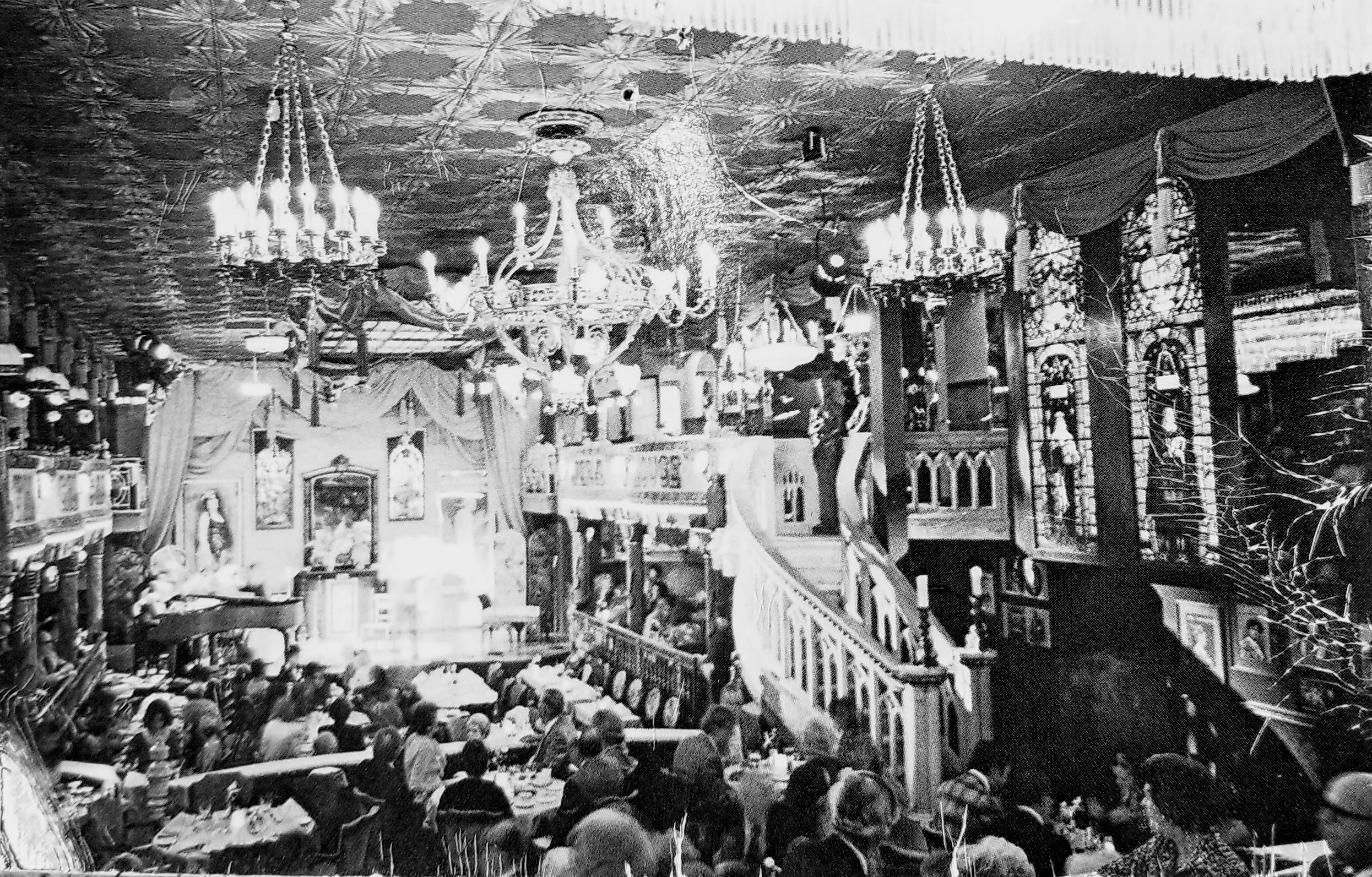
The Great Caruso, one of the “seven wonders of the modern world”: Houston, 1979

In 1979 I was the very young dining room manager of Houston’s premier entertainment-focused restaurant, The Great Caruso, a 235 seat palace of ostentation that featured live entertainment (including the waitstaff) with a house band and an array of local musical talent.  It was fashioned with architectural oddities and treasures from around the world (a massive, 2 story white marble circular staircase graced the center of the room) and a FOH staff of 30 including 18 busboys all from Iran, all under my inexperienced management.  The Great Caruso was a white tablecloth venue of the old school with an excellent menu (we still cooked a few dishes at the table in those days), a top notch wine list for that time (heavy on the French as CA had not come into its own yet) with a full time wine steward (one of the waiters replaced me when I was promoted).  We hosted political royalty and celebrities on a daily basis and anyone who walked in here knew they were in for a special evening.  The wait staff was primarily women and a mix of straight and gay men (all of whom taught me how to dance at the gay discos after the shifts), the busboys were Persian and there was me in the middle.  It was one of the most exhilarating times of my life as all of us were bonded by an esprit de corps that hospitality workers can really appreciate.

The busboys all attended an engineering college nearby and the restaurant was like their second home.  We would all get together and play Texas Hold-em on Sunday nights after the shift (they were incredibly aggressive bettors) where they would teach me words in Persian and I reciprocated with American idioms. I was ok with a few of them doing a few “slides” of a specific hallucinogen from their home country upstairs near the lockers after shifts. If they were caught doing it at school they would be expelled and returned home, a great shame to their families.  So they came to work to get high.

So many of them were named “Ali” that they were assigned numbers which they took great pride in – Ali 1 through 6. It started as a joke but they completely owned it.  One time, when Ali 2 had graduated and went back to Iran, we had a council on whether or not a new Ali could claim his number or go to #7.  In this case, Ali 2 was held in great esteem so it was determined that Ali 7 would be created.  A few days later, a few of them approached me before a shift with something in their hands wrapped in tissue paper: a beautiful scrimshaw etching of an ancient Persian polo match, framed in a handmade frame of Persian design, proof of their cultural contribution to the world.  “Mr. Robin” had gained their respect.  Being so young and inexperienced in the real world, I was touched beyond belief and it remains one of the lasting treasures that I have near my desk in my office.

Hand-etched on scrimshaw with handmade frame: the origins of Polo in ancient Persia

Over a period of a few weeks, I began to see a pattern emerge…many of them weren’t coming to work on Sunday nights.  I always took great care to manage the work schedule around their studies and tests, religious observances and trips back home, but I was now getting hammered by the GM, the maitre d’, the owners and the waitstaff.  Even though Sundays were the lightest nights of the week, our level of service was rigorous and the lack of busboys was causing seams to show.  When they came in for service, I approached them in the locker room and made a general announcement that we needed them to show up for their assigned shifts and made a vague threat that their jobs were at risk.  They all nodded in agreement but it was obvious something was going on and the following Sunday, I had 2-3 no-shows.  Ali 5 did show up and after the shift I asked him what was going on.

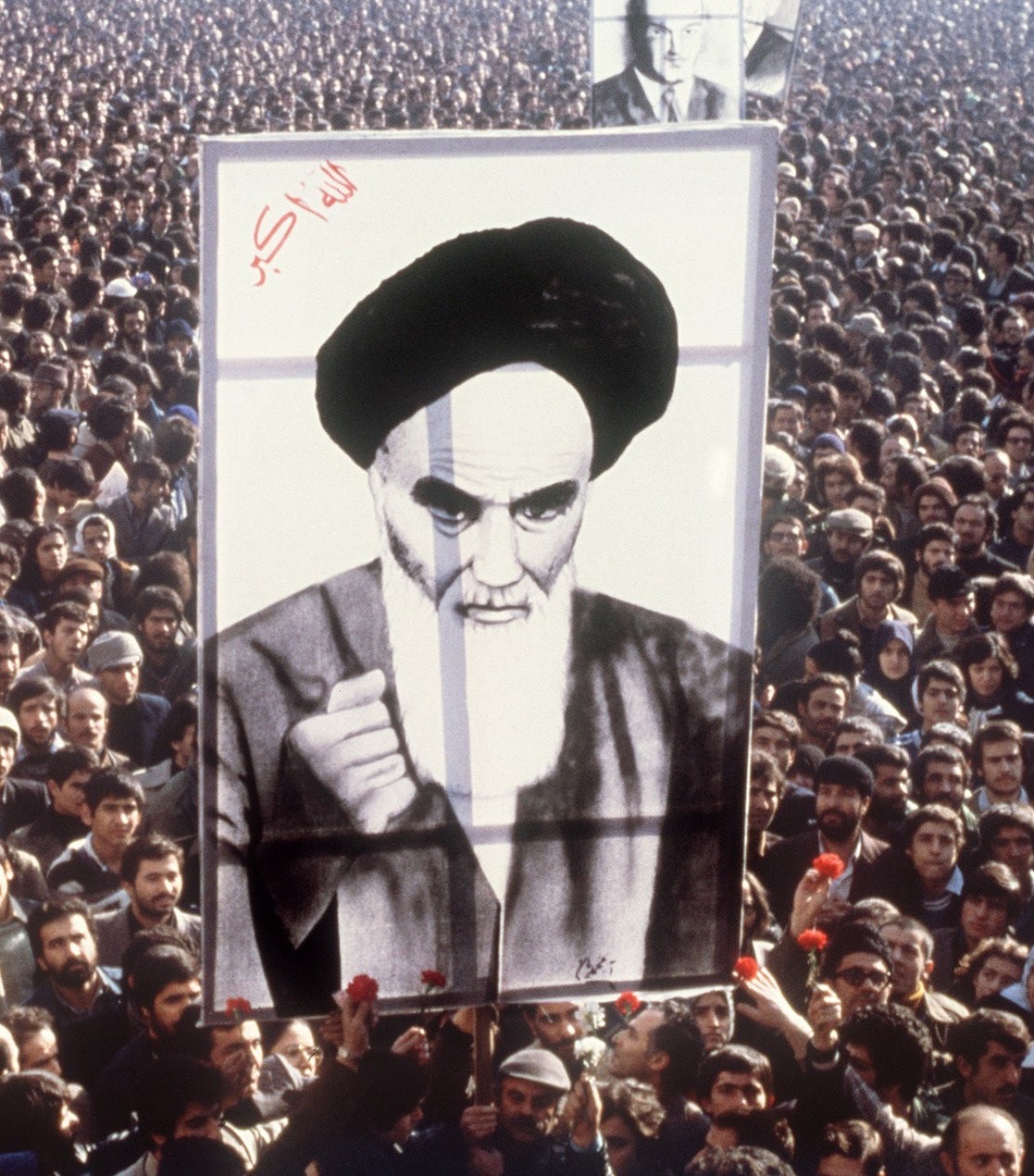
He explained to me that all the others were at the mosque praying.  I wasn’t aware that Sunday evenings were now part of their prayer cycle but he said this was something special.  “We are praying for our deliverance”, he said, “for the return of our beloved Ayatollah Khomeni”.  He went on to explain who this man was, about his exile in Paris and how all Persians hated the current Shaw of Iran, who was a tyrant and blasphemer in their eyes.  The Ayatollah, an honorific bestowed upon the upper echelon of holy men, was a prophet and would lead the current Iran to its proper place as it was in ancient times, when it was once called Persia.

Over the next few weeks I was torn between my affection for them, my curiosity for their prophet and my duties as a manager. I was reading small articles in Time magazine about this man and the excitement he caused by all these young students.  I remember having some difficult interactions with the busboys and the wait staff over the constant absenteeism.  At one point, Bassam, who was definitely the coolest of them all (probably because he exhibited the most Western behaviors) stood up at a staff meeting and demanded a higher cut of the tips.  The other busboys all agreed, and I realized this was a planned insurrection.  I could see the headwaiter slowly shaking his head and knew that I would soon be over my head.  In the next few weeks it turned into a shit show with the GM and owners pressing me to “solve the problem” which I clearly did not have the experience to do.  I think at one point I had the whole staff, front and back, pissed off at me. 

The drum beats of revolution were now pounding heavily in far-off Iran, it was a constant staple on the evening news and Chronicle headlines.  A noticeable change came over the entire bus staff, they were solid on their demands for more money and they were staging a kind of “blue-flu”: chronic absenteeism, reluctance to do any extra work, surly on personal interactions.  Not all of them, but most.  Mike, one of the older waiters who was an Iranian/American, pulled me over one night and said, “Robin, this ain’t going away.  They’re fired up over this Ayatollah guy and you’re either going to have to fire them all or find some other money for them”.  It was a Hobson’s choice, no choice at all.

Deliverance came for me when the GM called me up to his office at the end of a Thursday evening shift and told me that this wasn’t working out and my last day as a manager would be Sunday night, after I locked up.  I could either come back as a waiter or find another job.  They wouldn’t be hiring anyone to take my place for a while and he was going to assume my duties.  On Sunday evening, after I locked up, I went out to my car and the entire wait staff was waiting for me in the parking lot.  They said, “get in your car, we’re heading to a bar to celebrate your last night” and when I turned, it looked pretty weird.  Jeff Sherrill, the MC who ran the show at the restaurant from an overhead  booth and one of my better friends there, filled my entire car with popcorn, the entire interior.  I opened the door and it fell out into the parking lot and the staff pulled out a couple cases of beer and we celebrated.

Within a month, the Shaw of Iran fled the country to the US as Ayatollah Khoumeni returned from exile and started the Islamic Revolution. It was February 11, 1979.  By November that year, the US Embassy was attacked and American hostages were held until 1980 after Reagan took his oath of office.  The anti-Islam sentiment had come to America and took root and I heard that one by one each of the busboys was fired from the Great Caruso.  All except for Bassam, who had “converted” to Westernism and denied his Iranian heritage.  The next few months I was glued to the TV, magazines and newspapers, looking intensely at the pictures of the crowd of young “students” staging marches, holding and parading the hostages and chanting “Death to Carter” and “Death to America”.  I think at one point I saw Ali 5.

Tehran, Iran: 1979

The Reason Why Your Whiskey Can and Should Come from Pot Stills, Column Stills, Chamber Stills, Alquitars, Pots with Dephlegmators, Coffee Stills, Pots with Retorts, and Hybrids. Or, how arguing pot vs. column will never broach the complexity of the distilling arts.

A super-intense rundown between the pluses and minuses of column, Coffey and pot distillation.

bishopshomegrown's avatarThe Alchemist Cabinet

640px-Coffey_Still.JPG

Back in October Max Watman posted an article to the Daily Beast (https://www.thedailybeast.com/the-reason-why-your-whiskey-should-come-from-a-pot-still) titled “The Reason Why Your Whiskey Should Come from a Pot Still”. As a Pot Still, devotee and specialist I certainly appreciated his take on the subject, however there were some technical mistakes in the perception of “Column Still” distillation. Max Watman’s mistakes were based on the fact that he simply took the word of Irish distilling giant John Powers from his testimony that was recorded in the infamous “The Final Report of the Royal Commission on Whiskey and Other Potable Spirits” in the late 1800’s and Power’s subsequent “damnation” of the continuous column to mean that Powers was damning all types of column stills (he most certainly was! However, he likely didn’t fully understand their capabilities) and subsequently Max Watman simply didn’t make the distinction that “All Coffey Stills are columns but not all columns are…

View original post 4,432 more words

Stage Mishaps: Part II

While rummaging through old memories of life in amateur and semi-pro theatre, I stumbled upon a collection of half-forgotten moments when the actions on stage didn’t follow the script:

During a performance of “Of Mice and Men” and playing the role of George: in the first scene, Lenny and I are camped by the river sharing a can of cold beans.  First, I had to learn how to open a can with a pocketknife, which was tricky enough to do in real life, let alone in front of an audience.  But one night, one of us knocked over the beans as we laid out our blankets and Lenny had to lie in it until the lights went down.  The picture of passive, simple-minded Lenny glowering at me in the wings is still priceless.

Later on in that same run: the final scene is one of the most shocking moments in modern drama, when George, out of a skewed sense of mercy, shoots Lenny in the back of the head.  Lenny’s on his knees looking out over the audience toward the land of milk and honey and rabbits and I stand behind him, pointing the gun at the back of his head.  The lights cut out and the shot is immediately heard, followed by a slump of a body.  I was using a starter’s pistol as the prop.  But one performance, the pistol either wasn’t loaded with caps or it misfired. The lights cut out only to be followed by a “click” of the gun.  The stage manager realized what was happening and quickly yelled “Bang!” from the wings.  The horrified Lenny slumped, probably wishing he could stay there and not get up for the curtain call.  I, of course, wished I could blow my own brains out.  There’s nothing like actor’s humiliation as a leveling force.

chaplinOne performance during a dramatic interpretation of Franz Kafka’s “The Trial” I was in the role of eccentric artist Titorelli that the character Joseph K visits to get insight on his dilemma and ordeal of false accusation.  We were in a black box theatre composed of metal Unistrut and wooden planks and had constructed a small cubicle raised 10 feet off the ground to simulate Titorelli’s tiny atelier.  I was playing him as sort of a crazed Dali, very physical and a bit clownish.  I had conceived of a bit that had me flying backwards onto a high stool next to an easel as I answered one of his questions, plopping perfectly on its seat.  The stool was right at the edge of the platform and one night I misjudged the leap and felt the stool leaning backwards.  I screamed and grabbed onto one of the Unistruts, saving me from tumbling down to the floor.  I’m still not sure if the audience realized what was going on, as the actor playing K didn’t have time to react and just stood there.  Or did he?  We finished the scene undeterred, working the fall into our dialogue, but I decided to cut that bit out of the rest of the performances.  The director agreed.
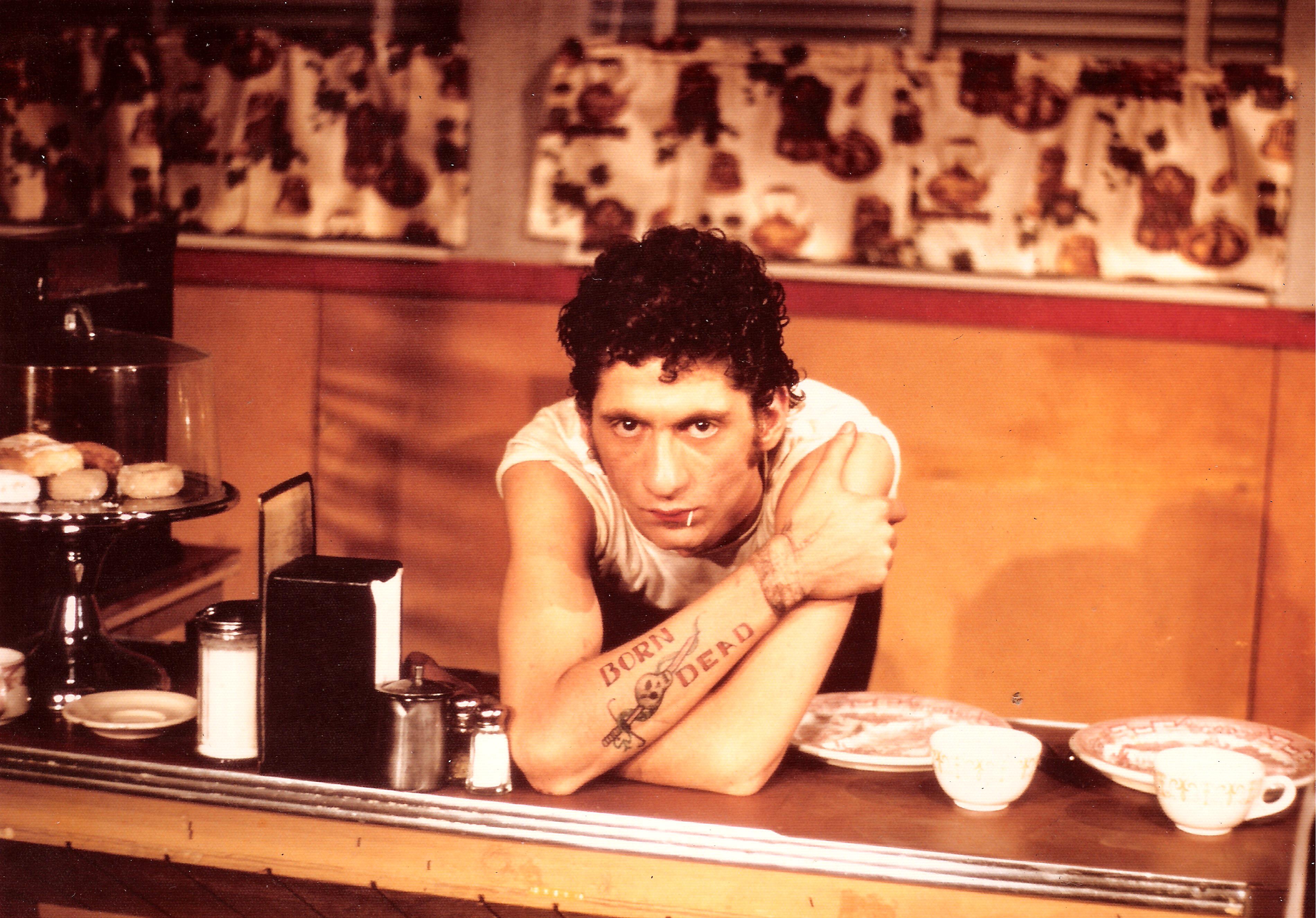
In a scene from “Winter Chicken” at a dinner theatre in Slidell, LA, I played the young romantic interest to the daughter of the protagonist, and again, being a physical actor, had conceived of a pratfall over the sofa on an entrance.  I think I was “Kramer” before there was a Kramer.  The director loved the bit and it was as well rehearsed as any scene in amateur dinner theatre (meaning not very much).   One performance, I tripped before the fall and instead of the controlled tumble that always got a laugh, I produced a body slam off the sofa onto the stage.  I saw 2 people get up from their tables to check if I was alright.  The director decided to cut the fall out, I disagreed.

During the same run, my romantic interest and I had a scene where we’re making out on the sofa (in dinner theatre, there’s always a sofa) right when her father walks in and glowers at us for a laugh.  We had conceived of some stage bits while we’re kissing, a bit of physical wrangling to break up a long stage kiss.  Since I’m lip-to-lip with her, I’m too close to see that her breast had popped out of her blouse right when her father walks in so I had no idea why this scene was eliciting screams of laughter when most of the nights it was just a little titter.  I pulled away just in time to see her push the errant flesh back into her blouse and was too shocked to say my next line.  Maybe I was waiting for the stage manager to yell “Bang!” from the wings.

Stage Mishaps: Part 1

I was reminded of this event after reading an article in the NYT by Dick Cavett about the humor of what can go wrong on stage in live theatre, “Oh No, Live Drama and Unwritten Humor”.

RedRyder 1976In college, I played the title character in the play “When You Comin’ Back, Red Ryder”. Red was a young, ineffectual loser trapped in a dead end job in a money-losing diner in the desert on Rt. 66 after the interstate opened. One of the subplots concerned a tourist couple on their way to Baton Rouge and the woman, Clarise, was a concert violinist carrying a very expensive violin with her. My goal is to get out of the diner and hitch a ride with them. In a key dramatic moment at the end, the husband, in anger, raises the violin above his head to smash it. I run up behind him, grab his arm while yelling “No!”, cradle the instrument in my hands then gently hand it back to Clarise; immediately after, I grab my jacket and head out the door with them to Baton Rouge. After a life of being a loser, its my one heroic moment and saving grace.
During one performance, I rush up behind him, yelled “No!” and grabbed his arm. But I had unwittingly torqued it, causing a chain reaction down to the neck of the violin where it snapped in two. It’s supposed to be a stunningly dramatic moment in and of itself, the climax of the play, so we all stood there a bit stunned. Not knowing how to save the moment, I simply took the violin as usual, gently cradled it and while handing it back to Clarise, announce “well, I guess I ain’t going to Baton Rouge now”. The actress playing Clarise, in a brilliant moment of improvisation, reaches out to my face and gently, lovingly strokes my cheek and says, “grab your jacket and let’s get out of here”. I’m not sure what author Mark Medoff would have said if he had witnessed that performance as we had re-written then entire ending of the play. Afterwards, we and the cast considered ourselves heroes and our director heartily congratulated us afterwards, further adding that if we thought that’s how the rest of the performances were going to go we were dead wrong and ordered a steel plate be installed inside the violin to make sure it never happened again.

Master this…

LaborerBecause it has now reached epidemic stages, I feel its important to re-iterate a truth: if someone became interested in whiskey in the 2000s and started a distillery as a result, they are NOT a master distiller. It doesn’t matter what type of success or failure they have, who their distributor is or how many markets they’re in, they are not a master…of anything.
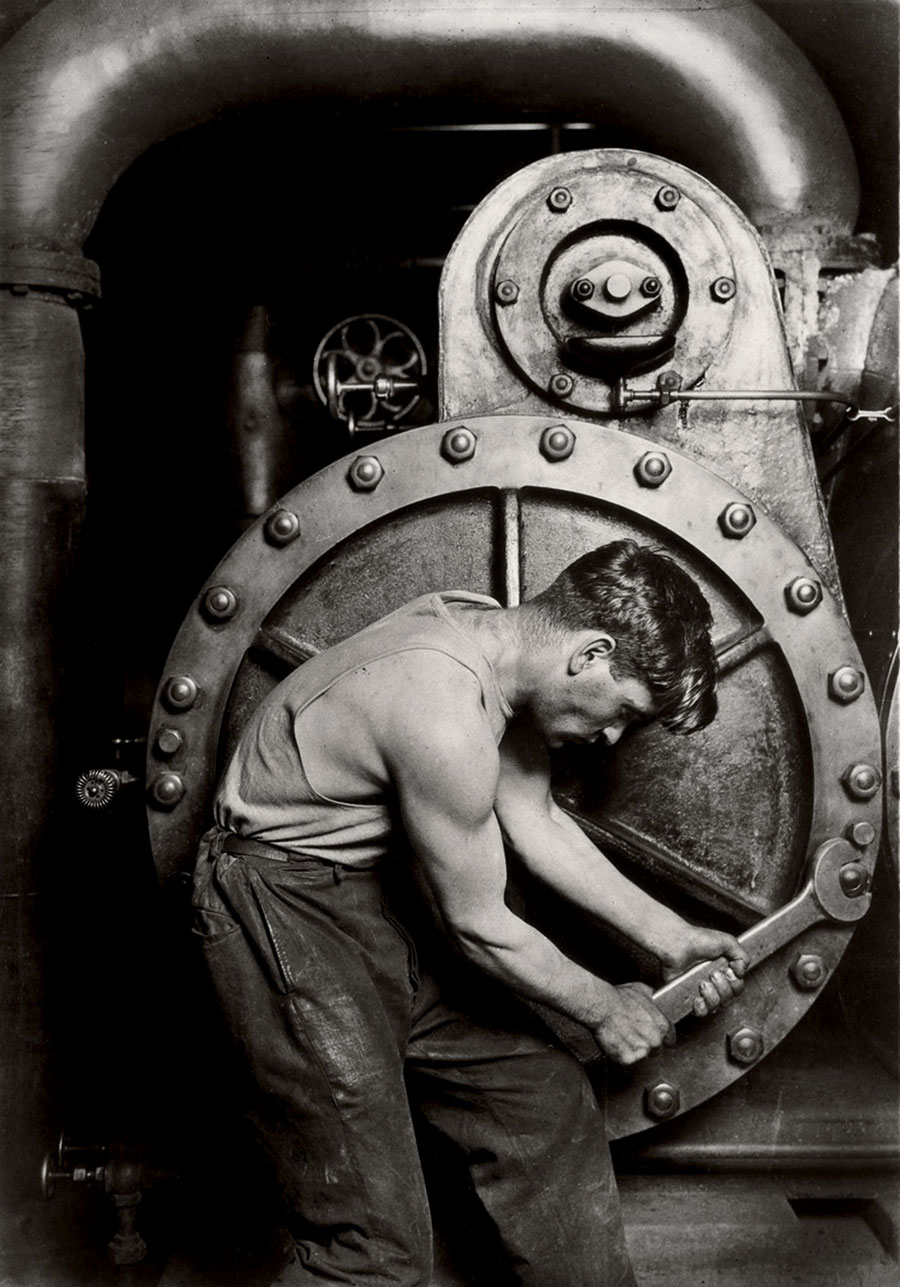
To infer, or just as wrongly, let other infer on their behalf, that they’ve mastered this craft after only a few years in, is a slap in the face and a profound insult to those that actually have achieved mastery.
The test is simple: stand in the same room with Jimmy Russell, Jim McEwan, David Stewart, Maureen Robinson, Shinji Fukuyo or Richard Patterson and refer to oneself as a “master” in their presence. It would be cringe-inducing to watch and what’s more, these very same personages wouldn’t refer to themselves as such. These, and others like them, have spent the better part of their lives in the pursuit of their craft in an industry that has seen severe downturns during their tenure. We tend to anoint them now with rock-star like plaudits, but even if the whiskey industry hadn’t taken a moon-shot in the last 15 years, they would still be regarded as masters.  They put in the time and they’ve lived through the pain.

True mastery is conferred on you by your peers and the industry you’re in, not self-annointed, or worse, bestowed upon you by a publicist or a blogger or a hack writer from Thrillist.

  • Mastery is the result of thousands of hours laboring in every part of an industry, coming from under the tutelage of others greater than you
  • Mastery is the great humility of learning over time what your mistakes are and understanding the thousands of permutations in the production of an end result
  • Mastery is understanding how to not just teach, but to guide those who come to you for direction and knowledge, a conveyance of not just facts and information, but true wisdom as a result of a deep understanding
  • Mastery is having the scars of failure and succeeding as a result of them
  • Mastery is an outward recognition that you stand above others in a pursuit of acknowledged excellence and have achieved it through your labors
  • Mastery is conferred upon a few.  It is not a Participation Award.
There are those in this industry who after a rocket-glide to success in a few short years attach the “master” label to themselves.  At the beginning of this wave, it was easy to dismiss it as youthful exuberance, but no more. It is undeserved and by stealing this honorific they rob themselves of the richness of their own process and experience.  What they may be is talented, skillful and resourceful, all achievements in and of themselves. They may be lucky or someone who knew the right people at the right time; someone gifted with the time and money to pursue a task or discipline at one’s leisure without the burden of monthly bills. All of these are fine, there’s nothing wrong with them, everyone has different paths to success. 
But the hyper-titling we are experiencing is not the result of any of these.  It’s a combination of a number of things that are troubling in our larger culture:
  • The hyper-need for instant self-gratification, driven through the prism of social media
  • The confusion of facts with knowledge and knowledge with wisdom as a result of the hyper-reality of the internet
  • A service economy vs. a production economy where there are few examples of long-term effort
  • The commodification of titles (Manager, Director, VP, CEO, etc.) as a result of “entrepreneurial glorification”, a syndrome where anyone who starts something new on their own is considered a prodigy, a genius or brilliant simply by the act of starting, not on what they’ve achieved
  • Outside investment money with no historical investment in the industry, seeing a distillery or a brand as just another commodity and titles as a marketing edge over the competition

This sense of entitlement is enabled by the wholesale showering of diluted “awards” from the huge number of competitions that have sprung up as a cottage industry, many of them coming from the organizations that purport to help grow and guide these young craftsmen into industry leaders.

One cannot demand transparency if one is not going to live it. If the craft movement is going to grow up to fulfill the destiny that is waiting for it, the capacity to re-arrange how hard spirits are made, marketed and consumed for a generation, it needs to start by looking inward at its practitioners and demanding a truthful accountability of their capabilities: not just to create, but to lead and guide, to pass their wisdom onto a new generation.  Right now, I’m not seeing that happening enough to make me hopeful that it can.

Flake’s a Fake

Before we start lionizing the short sellers in the GOP because they’re stepping up to the plate in the 8th inning, let’s remember a basic, simple fact: THEY PUT THAT MOTHERFUCKER IN THE WHITE HOUSE. All of a sudden, it got hot in the kitchen for them and their “civility” got bruised: Fuck&You. How about the rest of us who saw this turd floating down the Hudson for the last 35 years, heading for Chesapeake Bay and the Tidewater? Where where you then? I see no honor at all in them coming forward other than to ask the question: where the fuck where you in November? Where the fuck where you during the 8 years of screaming at Obama because he passed a key piece of legislation that your sorry asses did nothing but talk about? Where were you during the never-ending Benghazi investigation, the email-server investigation: I’ll tell you where you were: front and fucking center with a .45 in your hand. Flake’s got a lot of godam nerve writing his bullshit book “Conscience of a Conservative” when his and Corker’s party was responsible for Nixon’s “southern strategy” that ripped the whole nation apart; he talks about Reagan’s “city on the hill” as if were of equal import to “I have a dream”….I have news for you, fucktart, Reagan was a pig who opened the doors to the racist, ignoramus evangelical-hypo-fucking-critical religious right, NRA dick-sucking shitheads that think Jesus is a blow up doll that rides shotgun in their pickups and spits tobacco juice at the poor schmuck in the Honda next to them. EatShit. Who do you think the 45 voters are? Reaganites, poor-ass Reaganites. Shining City on the Hill, my ass, it was shiny after he declared war on the poor (“welfare queens”); the sick (AIDS? What’s that?), the middle-class (trickle-down, voodoo economics) and economic upheaval (rampant, unbridled deregulation).tar_and_feather
The pathetic fuckchild of Satan sitting in the Oval Office is the culmination of decades of Republican and conservative think-tank fuckery. Everyone of these hypocrite “flakey-come-lately” pricks who think their glory speeches gets them air-time on CNN and some sort of pass from Chuck Schumer can come over here and let me ram their shriveled balls backwards up their asses.
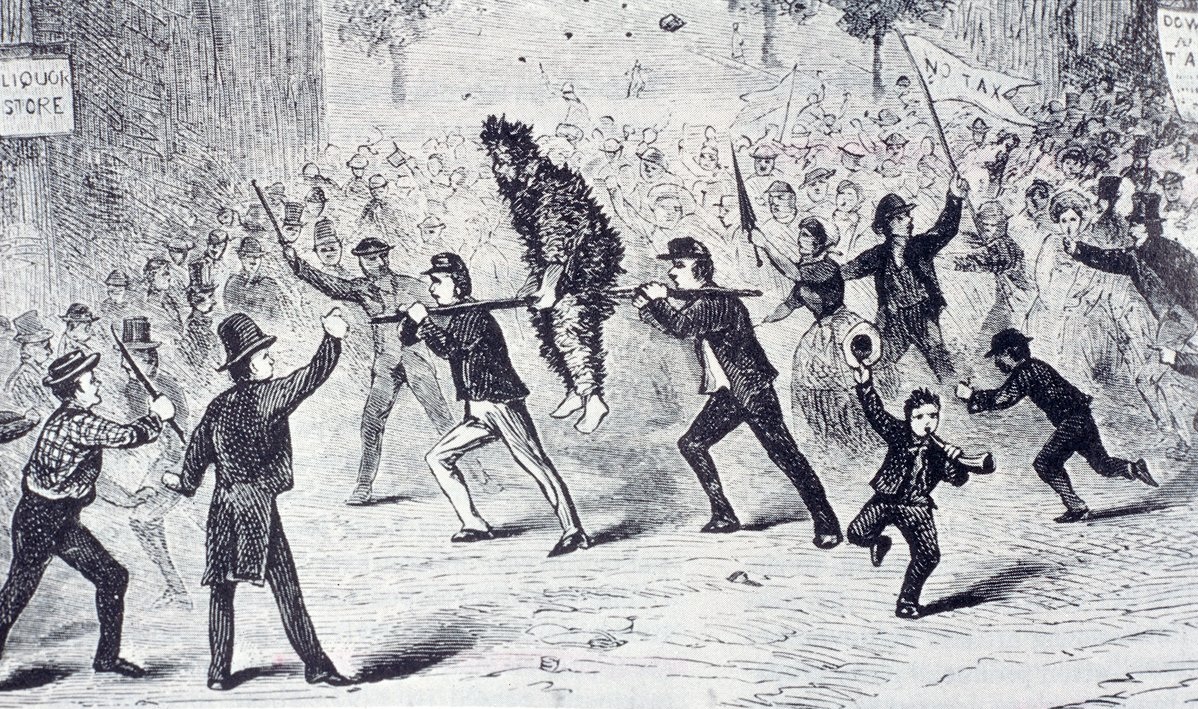
You want a pass from me? Get him out of there. Tie up McConnell in the broom closet, distract Ryan with a Rubic’s cube and a free pass to SoulCycle, and get a majority of your equally repugnant peers to put him on trial, tar and feather both The Turd and the Vice Turd, run them out on a rail and give John McCain the shallow victory of coasting out the rest of the term.
Flake and Corker get no godam support from me, not until they start their own revolution and renounce their bullshit war on the rest of the country.