Dive Bars

Dive bars: If you frequent a dive bar now, you are drinking in a disney-fied version of one: it has all the low-cut trappings of a real one, but it probably has a “program”, mixing glasses and spoons from Cocktail Kingdom, a copy of PDT Drink manual next to a huge selection of agave or whiskey on the back bar and plenty of other people who look like you sitting around having dignified conversations with each other drinking well made Manhattans and Palomas. That’s not a dive bar.

A dive bar is when all eyes are on you and it ain’t cause they know you from Facebook.
A dive bar is where you’re a little bit afraid when you walk in and the relief from fear comes only after your first shot of VO served in one of those bottom heavy shot glasses that can also serve as an effective and deadly missile if thrown correctly.
A dive bar is the clack of pool balls being smacked around a beer-stained felt by 3 guys with cigarettes tucked behind their ears, who casually stand far enough away from the pool table to partially block your way to the rest rooms so that you’ll have to interact with them in a low-level form of intimidation.
A dive bar is not feeling around under the bar for a hook for your jacket.
A dive bar always has that guy at the end of the bar, staring into his beer in a slow-simmering quake of anxiety and menace. He’s the owner.
A dive bar has characters, like the guy who sits uninvited at your table with the big smile and offers you to bet that he can eat the beer glass he has in his hand in such a way that you’d be a fool not to throw down $20 to see it; not because you want to, but because he wants you to.
A dive bar is watching him take that first bite and casually chew it while looking into your eyes.
A dive bar is when a bar fight actually breaks out and the only image you leave with is of the post-wedding bride, still in white and grimacing with anger, who comes running past you with a half-filled pitcher of beer, cocked at her shoulder like a revolver before she takes a spill from slipping on spilled beer in front of the jukebox.
A dive bar is where the jukebox plays both Gershwin’s “Rhapsody in Blue” and Marlene Dietrich singing “Puff the Magic Dragon”.
A dive bar is where the bartender pulls a $20 out of the register for you because he knows you’re broke and doesn’t expect you to spend it there. Then he pours you both a shot of VO.
A dive bar has a jar of pickled eggs on the bar next to the SlimJims.
A dive bar is where all whisky is Canadian and all Canadian is rye.
A dive bar has old ladies sitting dignified at the bar wearing boufants and too much makeup, sipping a beer or having a whiskey sour with extra fruit, lipstick stains on the ends of their half-smoked Chesterfields. They always insist on a clean ashtray.
A dive bar has gravity taps for the Guinness with the barrels on the second floor, delivered through sweating cold copper pipes, where it takes the bartender a full 4 minutes to fill a pint that has a head you can float a half-dollar on.
A dive bar has a steam table with corned beef, cabbage, potatoes, noodles and that other thing you can’t identify but looks like its sweet; its always hot, its always clean and its the best food you’ve ever had in your life.
A dive bar has squeeky floors, squeeky doors and a cash register that rings.
A dive bar has loud guys with loud jackets drinking Dewars on the rocks, sales guys with extended bellies holding court, shifting their weight from one foot to the other like a bantamweight fighter who heard the bell from the previous fight above the locker room and is trying to psyche himself out his own fear.
A dive bar was Johnny White’s on St. Peter St in the French quarter across the street from Pat O’Briens, where the guys who came off the oil platforms in the Gulf sat by the window and stared down the Tulane kids who sucked up too many Hurricanes.
A dive bar was McCann’s on 10th Avenue in the last throes of the Westies, where Mickey Featherstone’s goons would come to plot, to wash the blood from the cuts on their knuckles, to celebrate or to just have a shot of Paddys and a Harp.
A dive bar was that place in Weirton, WVA that stunk of Formica, the place in Butler County with chronically overflowing sink, the place outside of Austin that had swinging doors opening up to a raised, wood-covered sidewalk.
A dive bar lasts the test of time.
Go to the mattress and get the sale

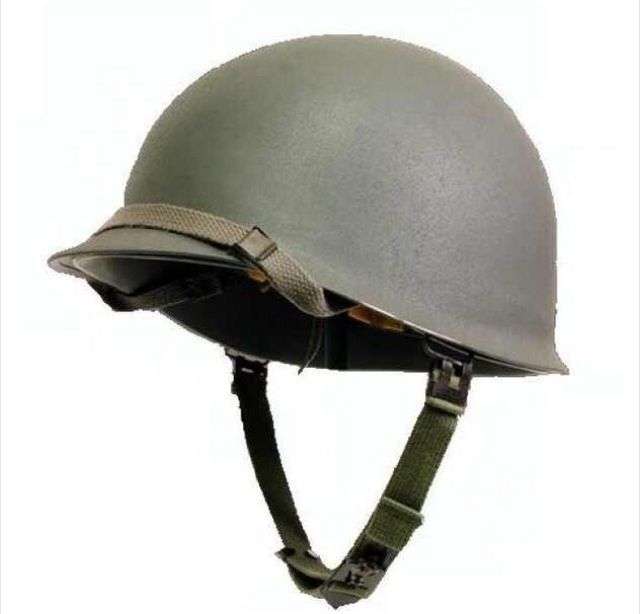
In the middle of my acting career, I took two years out and committed to learning a new technique (for me) named after its founder, Sanford Meisner. He, along with Lee Strassberg and Stella Adler, studied with the Russian genius Stanislavski, the father of modern acting, and returned to train 2 generations of American actors that changed the art form forever. helmetDuring my 2-year stint, I was not allowed to pursue any work in the industry: no films, plays, commercials, voice overs, nothing. It was harsh but they demanded the commitment from you. Robert Duvall called his time learning the technique “worse than my time in the Korean War” because it is emotionally brutal. It is brutal in that it does not allow the bullshit tricks and shortcuts that actors fall into during their career, things that got them work in the past; things they’re known for in the industry; little bits of business they use over and over again: the eyebrow raise, the cocked smile, the walk or strut. It had one goal, emotional truth, played truthfully in the moment from your own imagination. You learn to listen actively, be in the moment and serve the script and your fellow players.
 
In the first year you never work with a script; for an actor, this is madness. It’s nothing but exercises designed to strip you of your ego, to strip you of your pride and strip you of any falsity you may harbor: all the enemy of truth. These are exercises based on repetition: 2 students facing each other, and one repeating what the other one says. Its madness and that was the point. The repetitions were designed to evoke a true response from you: not one you think might work, not one that seemed funny or dramatic (indeed, there was no “acting” going on at all here), but what was true based on your response to your partner. It was always 2 things: frustration and anger. One quarter of the class dropped out in the first year and in the commission of the exercises, you could tell who would be next: the ones who actively resisted, the ones who put up the walls, that clung tight to a reverie of themselves in the past, that tried to pull out their safety net of tricks. One by one, we all got called on it and it infuriated us, it made no sense why we were being castigated and harangued by our teacher. It was humiliating because each one of us was being stripped down to our emotional core in front of the entire class, we were being called on our bullshit, our insincerity, our falseness, our ruses that we all use in our everyday life to shield us from the harshness of it. There’s no place for that in the theatre, in the service of a character you may play. There is only truth. We would have rather shown up disrobed and naked (which happened a few times) than to be robbed of the persona mask we wore as protection and have the real us shown glaring in a spotlight. And yet that was what the work demanded. Our fragility was being exposed, each one different than the other. We, the class as a whole and guided by our teacher, came face to face with each other’s weaknesses, neuroses and secrets.
 
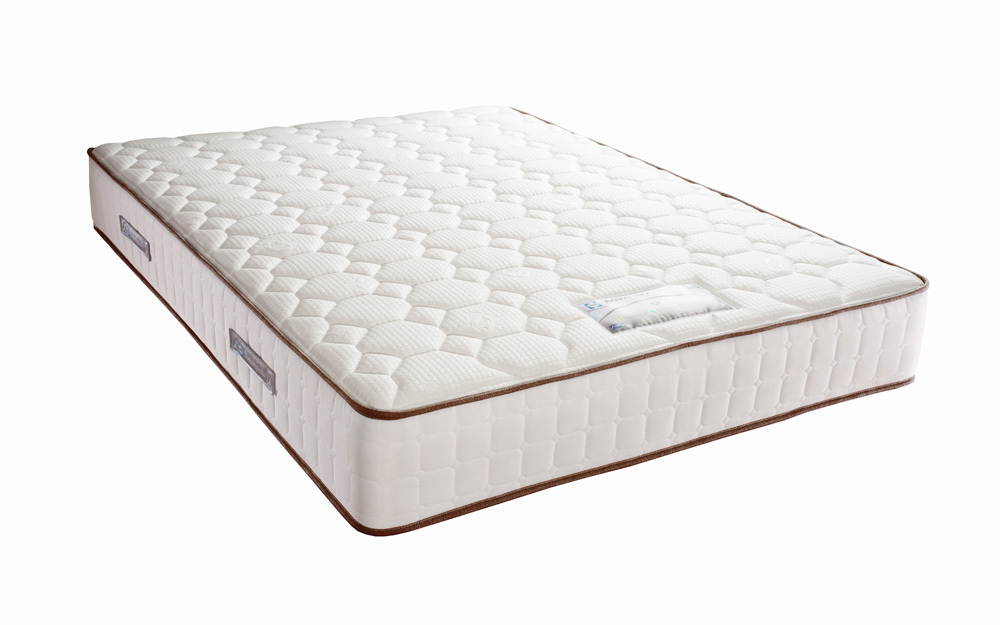
And here’s the secret you learn, the one you take with you your whole life after its revemattressaled: that when you get stripped of the layers of sophistication that you adopt to hide your insecurities, you get angry, very, very angry, sometimes a rage. Its the first line of defense, the first impulse, its very primal, the engagement of fight/flight at a higher level. I’ve seen nuclear bursts of rage coming from the tiniest of people that made me frightened in that moment: it was real, it was enormous and it was locked inside them their entire lives before this exercise released it. Its why there is a mattress hanging on the wall of every Meisner studio in the country, because in the course of the exercises when that anger got so big and had to be exorcised, the teacher would yell, “go to the mattress” and you would leap at it flailing, crying, screaming, pounding and kicking until the anger was purged like a toxin from your blood. Then you would return to your partner and continue the exercise. And what happened in that moment, over and over, with each person in their own unique way, was why I was committed to being an actor, to pursuing art in this form for what I thought would be the rest of my life. You saw an almost transcendent human transformation happen in front of your eyes. With the anger purged, the emotional truth of that person was revealed, and I’m not kidding, as if it came down from heaven. You saw into that person’s soul, in the context of this repetitive dialogue, and you could not believe it transpired in front of you. It was scary, sexy and huge, it attracted us like flies to sugar in that we all wanted it, we all wanted what we saw to happen to us. So we came back day after day, week after week, filled with the homework assigned to us, ready to go to the mattress for our art. I did not go to war like Duvall did, but I have a sense of what he was talking about. At the end of 2 years, I was forever changed as an artist. And not surprisingly, its when I began to actually make a living at it.
 
I teach sales techniques to spirits industry salespeople and brand narratives to small brands. I’m bringing a lifetime of content mastery and methodologies I learned through 3 different businesses: acting, technology and liquor. But what I’m really doing is a modified Meisner technique. Sales is difficult, its one of the most demanding careers anyone can pursue, and as a result, its easy to fall into a host of tiny traps that prevent you from growth that end up as a barrier to sales. What I’m hoping to do is challenge each person to purge those habits from themselves, to re-educate themselves as to what the customer and the brand may need, and in turn, what they may need. With the narrative work, I’m hoping to strip away the ego from the entrepreneur to get to that transcendent light inside their brand, the unique glow that separates it from other similar ones on the shelf. They have to commit to some time with me to do it, but I think it pays off for them.
Let me know if you have any leads: robin@robinrobinsonllc.com
 

Competitors and Mentors

A lot is made these days (according to the posts on FB, LinkedIn, BusinessInsider, etc) about finding a mentor, finding someone older, established, settled and wiser to guide you through life’s labyrinth. I’m gong to propose something different: find a competitor.

In high school, I was a fairly clumsy, bony and awkward teenager. I’d been cut from more sports teams than I can count. But I could at least run and in my freshman year joined the track team because they took anyone and would just wait for you to quit on your own. I stayed because I discovered the long jump and from there the triple jump and with the encouragement of some kind upper classmen, got good enough to come within only a few points from getting the vaunted “letter” in track. The next year, a guy named Chuck joined the team, one year ahead of me, and after a not so stellar attempt at discus and javelin, wandered over to the jump pit and started jumping with me. And I was a little bit peeved because he was a little bit better than me and he never jumped before. So after everyone hit the showers, my pride in the soles of my shoes, I stayed and worked on my timing and footsteps. During that season, I learned to pay a grudging respect to Chuck and he to me, because one or both of us were constantly placing 1, 2 or 3 in the competitions with other schools. We competed in both events, long and triple, and while we were inconsistent in either event, we loved them both. At the end of the year, I earned my first letter in track (in any sport). So did Chuck. I wasn’t happy about that.

As my junior year rolled around I saw Chuck constantly in the halls and somehow we started to plot out what that springtime’s meet schedule would look like. When the football or basketball team would leave the weight rooms, we would go in afterward and work out. Outside by the track there was a roughed out hill that during the season the coaches would send us to run if we were caught goofing off. Chuck and I would run up and down that hill like crazy madmen, racing each other up and back down again. He was still just a little bit faster than me., but he was such a good guy, and funny as hell, that I couldn’t place exactly why I was upset and jealous of him.

By the time the season arrived in the spring, I took the track as a lean, toned, limber and fierce competitor, at that point maybe the best physical condition I’d ever been in; as was Chuck. And during the pre-season, the coach figured it out: Robin was just slightly better at long jump while Chuck was a bit better at triple jump. And that’s how he played us that season, because everywhere we went, we took 1st and 2nd place in each event against other schools in our league; we showed up at events and while marking our places at the pit, competitor’s were off to the side talking about us, they’d heard about us; when we jumped, we noticed they watched every move we made, stayed in the pit to watch us finish. The jump pits are typically ignored at track meets as spectators mostly gravitated to the finish lines for the sprints and races that were more charged with drama. Not this year: we now had crowds of spectators like gamblers at the craps table, oohing, cheering when they would hear your last foot smack the toe line before launching you into space in front of them. At one point, Chuck and I would watch the faces for each other and later on laugh about the grimaces of pain and frustration our competitors had when our last jump of the meet blew their best out of the sand. We made it all the way to the state finals that year, and while we did respectable, were knocked out mid-event by bigger, stronger, faster competitors. But at the end of year, we both earned another letter, sat with each other at the banquet and cheered loudly for each other when we went up to receive it.

Chuck forced me to be better than I could have been because he was my competitor first and then my friend.

Every since then, I was always grateful when someone stepped in to show me the ropes, guide me through a channel or open a door and I’ve been fortunate to have many of those. But I always searched for my competitor, the one who ran on the same track and was maybe one step faster. That’s the person who I learned the most from, even when, as it mostly is, they were never the wiser. I still do and they still don’t know. But thank you anyway.

Prince: a small, weird tribute

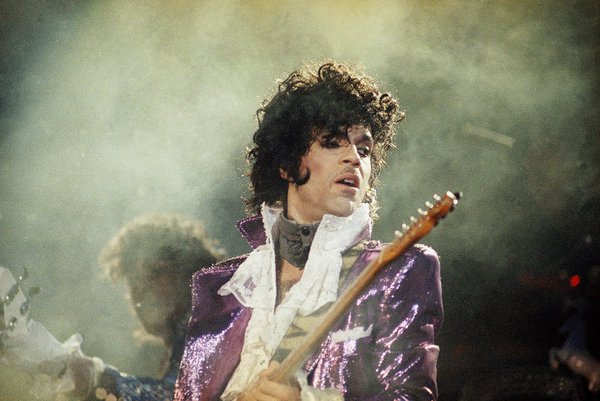
prince-obitFor at time I was employed as a hired driver in NYC and I had a client who had a severely mentally handicapped daughter that went to a boarding school in New Jersey, I’m assuming she was somewhere in her teens. On certain Friday’s I would be sent to pick her up and bring her home for the weekend and as was custom, I would tune in to WNEW for the music (her father’s instructions) but she was always silent in the car, never speaking to me, wouldn’t meet my eyes, never saying anything the entire 2 hour drive home. We may have done 6 or 7 trips together, always the same quiet drive.
One Friday, we were stuck in traffic and we’re just sitting on the Turnpike, listening to the radio, song after song. Then, “Purple Rain” came on, and she launches into this full-throated, off key karaoke in the back seat, every word, every bent note. I’m sitting in the front seat a little freaked out because I didn’t know this behavior from her and I’m not really sure what to do. Then from nowhere she yells, “Robin, sing it, sing it” and next thing I know we’re belting the chorus, “purple rain, pur-r-ple rain” together at the top of our lungs.
After it was over, she went back into her quiet world. I looked at her in the rear view mirror and for the first time, she met my eyes and had a funny, indecipherable smile on her face.
I think Prince would have liked that.


On whiskey shortages and age statements

There has lately press been given to the recent phenomenon of shortages of whiskey.

We first have an issue of false equivalency here as I believe the age statement conundrum is at the bottom of the shortage alarm.  There is an “out of industry”  bemoaning of whiskey shortage (from whiskey collectors) at the same time of an in-house controversy (from whisky writers, aficionados and passionate consumers) over no age statements (NAS).  The false equivalency is based on the assumption that “age” equals a better product but that hasn’t really been the case for over 25 years, well past the average age of most of consumers and certainly longer than the current whisky craze.  Fifteen years ago, this wasn’t even a topic of conversation, relevance or concern.

The facts are easy to mis-construe.  There is certainly a boom in whisky drinking and purchases, cutting across all sectors and currently being led by bourbon.  (Rye, for all the hype, is still a sub-segment of whisky purchases and doesn’t yet post huge numbers).  Scotch whisky and Canadian are coming up right behind bourbon and in the wings are Irish and Japanese.  But the age statements that were predicated by a depressed market in blended Scotch whisky marketing a quarter century ago have drifted into American whiskey as well.  Age statements on bourbon?  An absolute rarity until recently (for years, Old Fitzgerald was the only Bottled-in-Bond (BiB) bourbon being marketed) and now its an absolute must to have a BiB in any bourbon line extension).  And while BiB concerns itself with other factors beside age, its primary value in the marketplace is its age statement.  We are long past the days of turpentine colored with tobacco and prune juice that predicated the BiB act in the first place in 1894.
The fact of the matter is this: there is more knowledge and science in whiskey making the world over than ever before.  That’s because its a bigger business than it ever was and with any large business, eliminating unknowns within your supply chain is paramount. With that comes better wood management, warehousing and maturation techniques, arguably the best it ever has been in the industry on both sides of the Atlantic and beyond.  This undermines the premise that age is the primary arbiter of quality.  Is there anyone out there telling that feels Black Art or Hedonism or Artein are inferior whiskies because they don’t state an age? Kilchomen continues to rack up major awards and it was first released as a 4yr old.  And the current Elijah Craig Small Batch is every bit as good as the dearly departed 12yr on the price/value axis.  The problem begins when you state an age on the label where the youngest is the legal age statement and you’ve sold through your current stock of your stated youngest.  You’ve painted yourself into a marketing corner, not a supply corner.  No matter how sophisticated we think we are, I almost defy 97 out of 100 testers to discern the difference between a 12 yr and a 11yr, with all other things being equal from a distillery known for quality.  And good blenders are good blenders for a reason: they know how to make an adjustment to the resultant product to maintain a quality standard.  But if marketing has tied their hands with an age statement, they’ve got nowhere to go from a product perspective.  And the resultant label change puts consumers on the defensive, conjuring up conspiracy paranoia.
What’s interesting in the current shortage scare is that its being predicated by investors and its in an investor’s interest to drive up the price of something based on scarcity.  But they’re seeing only the part of the industry that the marketers want them to see, the luxury market of rare whiskies.  There are millions and millions of barrels of whiskey all over the world aging and getting ready for bottling.  But the reality that there are less and less 40 year whiskies going for tens of thousands of dollars has no correlation on the market running out of whiskey.

On Transparency in the Whiskey Industry

Two interestingly different sides of the same coin appeared on both sides of the Atlantic this past week on the issue of transparency in whisk(e)y. To put this in perspective, 10 or so years ago, not only was transparency not an issue, but there was so little knowledge about what’s inside your bottle that no one even knew how to ask the question, or even to care. But with the advent of smartphones, increasingly ubiquitous internet searches, Edward Snowden and the craft distilling boom, what was once opaque and esoteric has become the stuff of fevered social media conversations.

Last week, Compass Box Whisky Co, the boutique blending company led by John Glaser, issued a challenge to the Scotch Whisky Association (SWA) by starting an online petition to force them into adjusting their stringent labeling laws. In the world of Scotch whisky blending, the whole (the “brand”) is made up of many parts (the source, or distillery), none of which have been traditionally included on the label or in advertising. The closest one got to this was in adverts of old where a brand like Dewars would disclose that “40” different whiskies when into their blend. They didn’t name them and frankly, no one cared, because consumers bought the value and quality of the brand, not the individual components. In consumer products world, the equivalent would have been buying a car by Ford without caring who made up the individual components. The trust was in the brand.

The 2000s and the ubiquity of the internet changed that in every area of consumption (i.e., drug company ads, “Intel Inside”, etc) and Compass Box was from its outset at the forefront in making clear its production methods, i.e., component whiskies, lack of post production methods like caramel coloring or chill filtration, etc. Along with this was lack of age statements, something that Scotch whisky companies drove into the consumer mind as equating with quality.

In their latest releases of “This is Not a Luxury Whisky” and “Flaming Heart”, Compass Box skirted around the edge of the 2009 SWA labeling laws by listing the individual components and their respective ages. The current regulations state that only the youngest whisky in the blend shall have its respective age listed on the labeling. The reasons behind this are gist for another article, but in short, your 12 yr old Scotch can include older whiskies, but they’re not allowed to say how old they are. Compass Box has been a “non-age statement” (NAS) whisky from its inception and while they did not post age statements on their bottles, this time they included them in their marketing material and website. Apparently, another distillery “turned them in” and the SWA stepped in and forced them to remove any publicly displayed information. To their defense, the SWA was formed as a trade organization to protect Scotch whisky from counterfeiting and cannibalization, but they are also caught in the vortex of their own inertia, not to mention enough back-stage intrigue with the multi-national conglomerates to rival “House of Cards”.  So far, Compass Box is winning the hearts and minds of the whisky community with their petition campaign, which you can find on their website: http://www.compassboxwhisky.com.

For the flip side, an interview on Liquor.com with distilling consultant Dave Pickerell, the force behind brands like Hillrock and WhistlePig, revealed another take on transparency. In this case, its about American whiskies like bourbon and rye, where brands like Bulleit, High West, Templeton, Redemption and his own WhistlePig began their lives by sourcing their whiskies from huge, established ethanol facilities in Indiana or Alberta, Canada. These brands are hugely successful because, like their older generational counterparts, consumers bought into the idea of the brand, not the components. To be sure, there is a scrutiny placed on these makers as well, and one of the first things many of them understood was that if you’re going to claim something like “artisinal” or hand-crafted, you’d better be able to show provenance (Mast Bros, are you listening?). But they wised up fast and most quickly gave up the sourcing even before being asked.

However, because of this common bond in origin, the knock on them was that they’re all the same in taste. This is a natural assumption when you don’t understand anything about the scores of individual decisions and subjective evaluations that go into creating a flavor profile, from mashbill to production to maturation.

Pickerell does a good job of delineating through these distinctions but also gets to the heart of the matter in each case: is what’s in your glass good enough for you to drink a second one? Its not necessary to go into the details to enjoy what you’re drinking. Because in the age of information, we can often put the cart before the horse and make buying decisions against our own tastes: I may not like it, but I like the way it was made (non-GMO, great origin story, etc) and so I’ll spend money based on things beside my own gustatory pleasure. The story sells the spirit, as the industry maxim goes and when powered by a smartphone, you’re drinking the story as well as what’s in your glass, even while you’re experiencing cognitive dissonance about it.  The article can be found here:.http://bit.ly/1oDzjSJ


In the case of Compass Box, this is a new tack in their ongoing tussle with the SWA who once threatened to sue them over barreling methods. So while their David v. Goliath duel with them is the stuff of legend that turned Glaser into an iconoclastic star, it seems a little forced in its argument of “right to know”, due to the fact that what they want you to know is that there’s some really old whisky in the bottle. As a high end blender, Compass Box had in the past stressed the end result, the creative process behind the blend, the mouthfeel and pleasure of the moment, not the components, even though they were transparent about them when asked. Now it seems while they question “what makes a luxury whisky”, they at the same time want the right to inform you that their blends contain some pretty luxurious whiskies.

Pickerell makes the stronger argument: If you like it, drink it, if it fits into your budget, drink more of it and calls out the bartender community to put away its collective distaste for “big liquor” in favor of small brands solely on that criteria. Learn a little about how its made if you want to understand some distinctions, but if you’re letting that take the lead on why you drink it, you may be drinking it for the wrong reasons. And if that’s the case, then you’re subject to any new magic incantations that can come your way from the next new brand that has something more local, more transparent and more whatever than the one in your hand.

On Transparency in Writing: The author was once employed to act for Compass Box Whisky as its US representative.