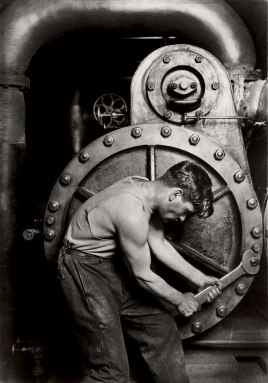
 Because it has now reached epidemic stages, I feel its important to re-iterate a truth: if someone became interested in whiskey in the 2000s and started a distillery as a result, they are NOT a master distiller. It doesn’t matter what type of success or failure they have, who their distributor is or how many markets they’re in, they are not a master…of anything.
True mastery is conferred on you by your peers and the industry you’re in, not self-annointed, or worse, bestowed upon you by a publicist or a blogger or a hack writer from Thrillist.
- Mastery is the result of thousands of hours laboring in every part of an industry, coming from under the tutelage of others greater than you
- Mastery is the great humility of learning over time what your mistakes are and understanding the thousands of permutations in the production of an end result
- Mastery is understanding how to not just teach, but to guide those who come to you for direction and knowledge, a conveyance of not just facts and information, but true wisdom as a result of a deep understanding
- Mastery is having the scars of failure and succeeding as a result of them
- Mastery is an outward recognition that you stand above others in a pursuit of acknowledged excellence and have achieved it through your labors
- Mastery is conferred upon a few. It is not a Participation Award.
- The hyper-need for instant self-gratification, driven through the prism of social media
- The confusion of facts with knowledge and knowledge with wisdom as a result of the hyper-reality of the internet
- A service economy vs. a production economy where there are few examples of long-term effort
- The commodification of titles (Manager, Director, VP, CEO, etc.) as a result of “entrepreneurial glorification”, a syndrome where anyone who starts something new on their own is considered a prodigy, a genius or brilliant simply by the act of starting, not on what they’ve achieved
- Outside investment money with no historical investment in the industry, seeing a distillery or a brand as just another commodity and titles as a marketing edge over the competition
This sense of entitlement is enabled by the wholesale showering of diluted “awards” from the huge number of competitions that have sprung up as a cottage industry, many of them coming from the organizations that purport to help grow and guide these young craftsmen into industry leaders.
One cannot demand transparency if one is not going to live it. If the craft movement is going to grow up to fulfill the destiny that is waiting for it, the capacity to re-arrange how hard spirits are made, marketed and consumed for a generation, it needs to start by looking inward at its practitioners and demanding a truthful accountability of their capabilities: not just to create, but to lead and guide, to pass their wisdom onto a new generation. Right now, I’m not seeing that happening enough to make me hopeful that it can.
 During my 2-year stint, I was not allowed to pursue any work in the industry: no films, plays, commercials, voice overs, nothing. It was harsh but they demanded the commitment from you. Robert Duvall called his time learning the technique “worse than my time in the Korean War” because it is emotionally brutal. It is brutal in that it does not allow the bullshit tricks and shortcuts that actors fall into during their career, things that got them work in the past; things they’re known for in the industry; little bits of business they use over and over again: the eyebrow raise, the cocked smile, the walk or strut. It had one goal, emotional truth, played truthfully in the moment from your own imagination. You learn to listen actively, be in the moment and serve the script and your fellow players.
 aled: that when you get stripped of the layers of sophistication that you adopt to hide your insecurities, you get angry, very, very angry, sometimes a rage. Its the first line of defense, the first impulse, its very primal, the engagement of fight/flight at a higher level. I’ve seen nuclear bursts of rage coming from the tiniest of people that made me frightened in that moment: it was real, it was enormous and it was locked inside them their entire lives before this exercise released it. Its why there is a mattress hanging on the wall of every Meisner studio in the country, because in the course of the exercises when that anger got so big and had to be exorcised, the teacher would yell, “go to the mattress” and you would leap at it flailing, crying, screaming, pounding and kicking until the anger was purged like a toxin from your blood. Then you would return to your partner and continue the exercise. And what happened in that moment, over and over, with each person in their own unique way, was why I was committed to being an actor, to pursuing art in this form for what I thought would be the rest of my life. You saw an almost transcendent human transformation happen in front of your eyes. With the anger purged, the emotional truth of that person was revealed, and I’m not kidding, as if it came down from heaven. You saw into that person’s soul, in the context of this repetitive dialogue, and you could not believe it transpired in front of you. It was scary, sexy and huge, it attracted us like flies to sugar in that we all wanted it, we all wanted what we saw to happen to us. So we came back day after day, week after week, filled with the homework assigned to us, ready to go to the mattress for our art. I did not go to war like Duvall did, but I have a sense of what he was talking about. At the end of 2 years, I was forever changed as an artist. And not surprisingly, its when I began to actually make a living at it.
 Bile
Bile 