While rummaging through old memories of life in amateur and semi-pro theatre, I stumbled upon a collection of half-forgotten moments when the actions on stage didn’t follow the script:
During a performance of “Of Mice and Men” and playing the role of George: in the first scene, Lenny and I are camped by the river sharing a can of cold beans. First, I had to learn how to open a can with a pocketknife, which was tricky enough to do in real life, let alone in front of an audience. But one night, one of us knocked over the beans as we laid out our blankets and Lenny had to lie in it until the lights went down. The picture of passive, simple-minded Lenny glowering at me in the wings is still priceless.
Later on in that same run: the final scene is one of the most shocking moments in modern drama, when George, out of a skewed sense of mercy, shoots Lenny in the back of the head. Lenny’s on his knees looking out over the audience toward the land of milk and honey and rabbits and I stand behind him, pointing the gun at the back of his head. The lights cut out and the shot is immediately heard, followed by a slump of a body. I was using a starter’s pistol as the prop. But one performance, the pistol either wasn’t loaded with caps or it misfired. The lights cut out only to be followed by a “click” of the gun. The stage manager realized what was happening and quickly yelled “Bang!” from the wings. The horrified Lenny slumped, probably wishing he could stay there and not get up for the curtain call. I, of course, wished I could blow my own brains out. There’s nothing like actor’s humiliation as a leveling force.
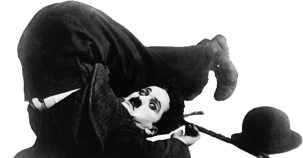
One performance during a dramatic interpretation of Franz Kafka’s “The Trial” I was in the role of eccentric artist Titorelli that the character Joseph K visits to get insight on his dilemma and ordeal of false accusation. We were in a black box theatre composed of metal Unistrut and wooden planks and had constructed a small cubicle raised 10 feet off the ground to simulate Titorelli’s tiny atelier. I was playing him as sort of a crazed Dali, very physical and a bit clownish. I had conceived of a bit that had me flying backwards onto a high stool next to an easel as I answered one of his questions, plopping perfectly on its seat. The stool was right at the edge of the platform and one night I misjudged the leap and felt the stool leaning backwards. I screamed and grabbed onto one of the Unistruts, saving me from tumbling down to the floor. I’m still not sure if the audience realized what was going on, as the actor playing K didn’t have time to react and just stood there. Or did he? We finished the scene undeterred, working the fall into our dialogue, but I decided to cut that bit out of the rest of the performances. The director agreed.
In a scene from “Winter Chicken” at a dinner theatre in Slidell, LA, I played the young romantic interest to the daughter of the protagonist, and again, being a physical actor, had conceived of a pratfall over the sofa on an entrance. I think I was “Kramer” before there was a Kramer. The director loved the bit and it was as well rehearsed as any scene in amateur dinner theatre (meaning not very much). One performance, I tripped before the fall and instead of the controlled tumble that always got a laugh, I produced a body slam off the sofa onto the stage. I saw 2 people get up from their tables to check if I was alright. The director decided to cut the fall out, I disagreed.
During the same run, my romantic interest and I had a scene where we’re making out on the sofa (in dinner theatre, there’s always a sofa) right when her father walks in and glowers at us for a laugh. We had conceived of some stage bits while we’re kissing, a bit of physical wrangling to break up a long stage kiss. Since I’m lip-to-lip with her, I’m too close to see that her breast had popped out of her blouse right when her father walks in so I had no idea why this scene was eliciting screams of laughter when most of the nights it was just a little titter. I pulled away just in time to see her push the errant flesh back into her blouse and was too shocked to say my next line. Maybe I was waiting for the stage manager to yell “Bang!” from the wings.
I was reminded of this event after reading an article in the NYT by Dick Cavett about the humor of what can go wrong on stage in live theatre, “Oh No, Live Drama and Unwritten Humor”.
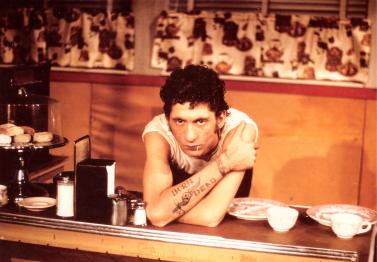
In college, I played the title character in the play “When You Comin’ Back, Red Ryder”. Red was a young, ineffectual loser trapped in a dead end job in a money-losing diner in the desert on Rt. 66 after the interstate opened. One of the subplots concerned a tourist couple on their way to Baton Rouge and the woman, Clarise, was a concert violinist carrying a very expensive violin with her. My goal is to get out of the diner and hitch a ride with them. In a key dramatic moment at the end, the husband, in anger, raises the violin above his head to smash it. I run up behind him, grab his arm while yelling “No!”, cradle the instrument in my hands then gently hand it back to Clarise; immediately after, I grab my jacket and head out the door with them to Baton Rouge. After a life of being a loser, its my one heroic moment and saving grace.
During one performance, I rush up behind him, yelled “No!” and grabbed his arm. But I had unwittingly torqued it, causing a chain reaction down to the neck of the violin where it snapped in two. It’s supposed to be a stunningly dramatic moment in and of itself, the climax of the play, so we all stood there a bit stunned. Not knowing how to save the moment, I simply took the violin as usual, gently cradled it and while handing it back to Clarise, announce “well, I guess I ain’t going to Baton Rouge now”. The actress playing Clarise, in a brilliant moment of improvisation, reaches out to my face and gently, lovingly strokes my cheek and says, “grab your jacket and let’s get out of here”. I’m not sure what author Mark Medoff would have said if he had witnessed that performance as we had re-written then entire ending of the play. Afterwards, we and the cast considered ourselves heroes and our director heartily congratulated us afterwards, further adding that if we thought that’s how the rest of the performances were going to go we were dead wrong and ordered a steel plate be installed inside the violin to make sure it never happened again.
Thanksgiving Day, somewhere in the mid-1980s: Making a living as an actor in NYC during the time of Andrew Lloyd Webber is a daunting task, especially if you’re gawky looking and not much of a song-and-dance man. Other than the actual living you’re making as a waiter/bartender/cabbie, you take some interesting side jobs just to keep your acting chops sharp.
I fell into a circuit of party performers, folks in and out of show-biz who hit on the private/corporate party circuit during the time of Wall Street’s crazy years. We would take on personas and make crazy costumes and perform all manner of carny tricks – fortune telling, fire eating, tightrope walking, juggling – at bar mitzvahs, sales meetings, corporate holiday parties, you name it. We were paid crazy amounts of cash and many of the performers abandoned their “legit” pursuits of acting and jumped into this area full time. Not me, I was trying to keep my purity. But money is money and the rent is always due.
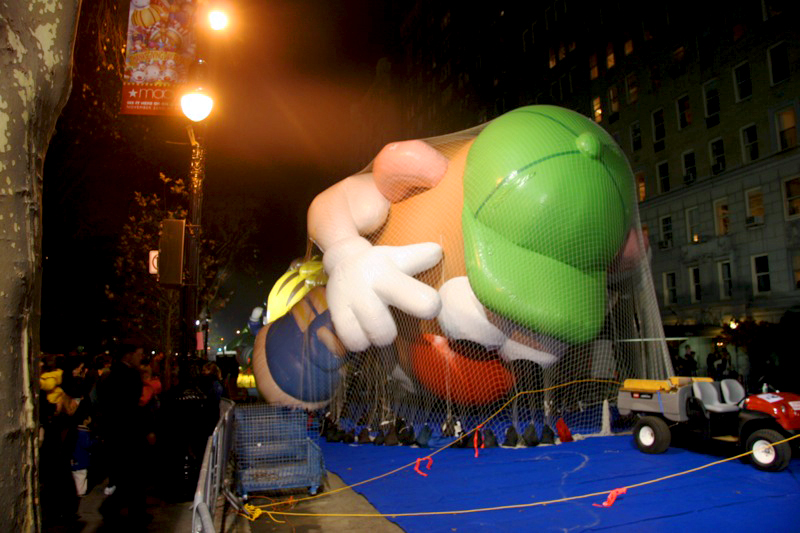
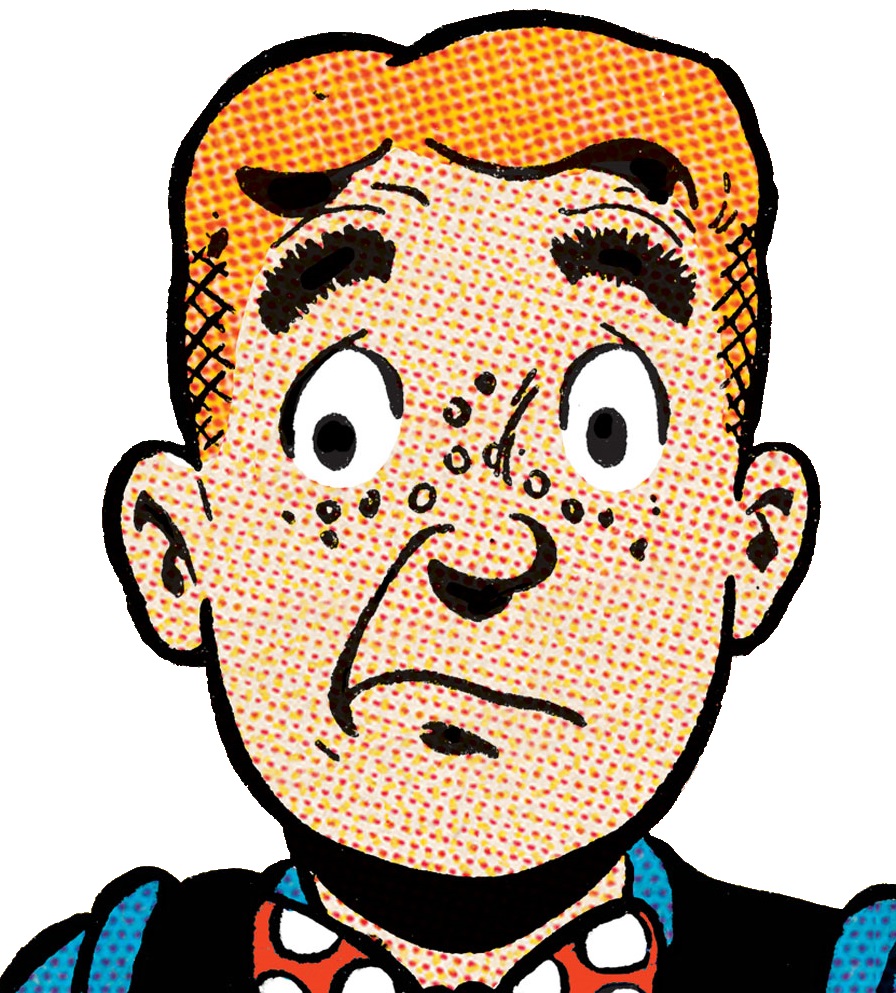
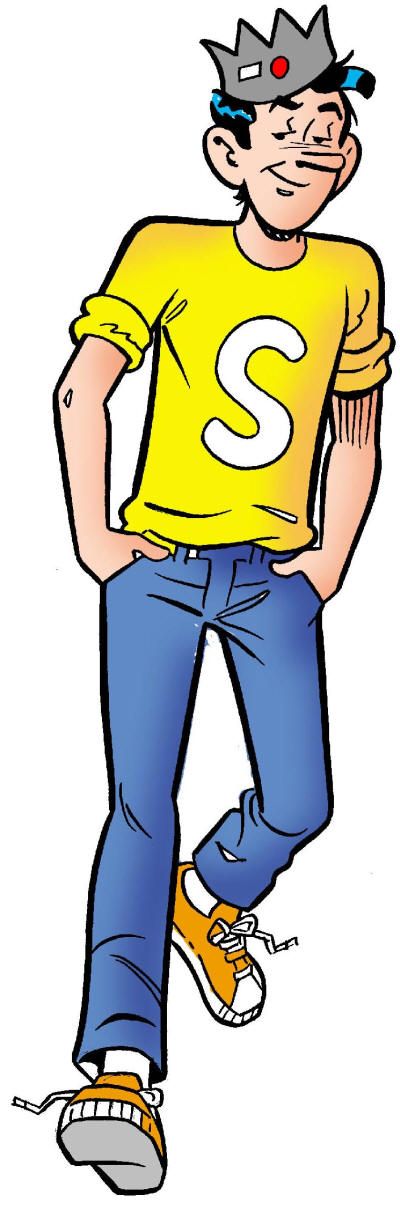
So I got a call from a guy from the circuit the week before Thanksgiving who said that he had the rights to the Archie Gang of Riverdale and they typically march in the Macy’s Parade, but this year, neither his Jughead or Reggie could make it and was I interested in being Jughead? Ok, I’m curious, am I holding one of the balloons? Am I doing something like the Renaissance Festival and interacting with the crowds? I had just scored a good agent and we’re trying to put a career together, I don’t want to jeopardize my chance to play Hamlet for Joe Papp by bouncing down Broadway dressed up like, well…Jughead. But I found we’d be wearing these huge rubber heads of the characters and dressed similarly as them: Archie would have a pullover sweater with an “R” on the front (for Riverdale). And he had a sweater for me to wear, Jughead’s signature long-sleeve grey pull over mounted with a big “S” (for Stupid?). We’d be joined by Betty and Veronica and all we had to do is walk in line with each other the entire length of the parade route and wave to the crowd. The money was right, cash at the end of the parade, and no one knows that its me? I’ve been following this group of teen sensations since I learned to read. Hell yeah, I’m gonna march in the Macy’s Thanksgiving Day Parade, bitches! I AM JUGHEAD.
Like any good actor, I do my prep work and research. I stopped by the local bodega and picked up a couple Archie comic books, carefully scanning them first to make sure Jughead had a healthy role in each (Reggie had a way of taking over in those days) and spent a few hours understanding Jughead: besides eating, what did he like? What was his upbringing, did he have siblings? Did he really not like Ethel or was he just playing her? What was his relationship to his father? Was that slouch because of his personality or was it a physical limitation? An actor needs to know these things if he is to really be that character. Also, I had done a fair amount of mask and mime work in commedia dell’ arte, clowning and Greek drama, so wearing a face covering was a different form of performance, much more about matching the body to the limitations of the mask in a more physically demanding style. Like any acting job, I’m both excited and nervous the night before and make a few quick calls to family and friends to alert them to watch before resting up.
I arrive on Columbus and 96th about 7:30 that morning and its a party, hundreds and hundreds of musicians, dancers, marchers, balloon wranglers stretching over to Central Park West where the parade route begins. I’m wearing a pair of Chuck Taylors on my feet and black jeans and I’m introduced to “Betty” and “Veronica”, each dressed in their doppelganger’s signature style, and “Archie” has those crazy orange plaid pants on. Apparently, he couldn’t cop a Reggie this late in the game, so its going to be just the four of us. Archie is really Bill, the owner of the rights to the costume heads. I met Bill a few times on the circuit, he’s an okay guy, not much of a personality and, I found out later, not actually a performer. He was a business guy, saw all of this party stuff as a business opportunity: he had others make the costumes and sometimes perform in them, and he would “perform” at events that he wanted to monitor. Which explained his lackluster approach to whatever he did, truly an uninspiring guy. But right now, he’s my boss and he’s my best friend Archie and he huddles us around him prior to the start with the rules: “Listen, we keep together in a line, Jughead and Betty on the outside, Veronica and me on the inside. We make sure we stay right behind the marching band in front of us. All we do is wave, just walk and wave. We can’t talk to each other, you won’t be able to hear, so don’t try to talk to each other. Do not take off the head, you have to keep it on no matter what, so don’t sneeze. When we get past Macy’s, make a right on 32nd street and then we can take them off. When I get them back into the plastic bag, I’ll give you each a check.”
I was staring deep into Jughead’s big rubber eyes. The mask and mime work I did taught me to understand the silent “voice” behind the mask, and that voice becomes the sound coming from the rest of your body. The mask will tell you how you are to move, how to interact, whether or not you’re shy or outward, healthy or ill. Be the mask. Be Jughead. Jughead has a look about him of sincere and permanent “whatever”. He fears nothing because he is above mere human travails. Jughead is beyond irony and has little interest in what you say about him. Jughead knows everything is going to work out in the end. Jughead is the epitome of cool. I am Jughead.
We mount them up, get used to the hollow emptiness of our voices inside, and line up behind the Watchung High School Marching Band and Drum Corp. The great balloons of Macy’s parades are silently floating above our heads, tethered down by their human guides, silently waiting. Bands are tuned up and making last minute head gear adjustments, flags are being positioned just right. At precisely 9:00 am, the Master of Ceremonies, dressed like P.T. Barnum, blows his whistle. The bands begin to play and the long train of Macy’s Thanksgiving Parade begins its march down Central Park West toward its flagship store on 34th Street. I’m excited as hell.
It all goes pretty smoothly for the first few blocks, except Archie wants us all to hold hands as we walk and I’m not excited about that. Nothing I know about Jughead says he’s holding anyone’s hand and so after a few blocks I sort of casually lose connection with Archie and I can see Veronica’s done the same thing. Jughead is an absolute independent, dude, Jughead’s his own man, he does not hold hands. The crowd’s are excited to see us in the upper stretches of the Nineties and Eighties and as we get closer to Columbus Circle, I can see ahead of me the enormity of what this parade is about: even through the rubber head, I can hear the cheering and shouts of the crowd as each of the balloons passes by. Now I’m kicking into full Jughead mode and have adopted his signature lean back. I cock my head to the left and wave at the crowd, they respond back with cheers. I walk a little further, cock my head again to the crowd with a wave, and they respond in kind. I have made the connection, I know where Jughead lives: Jughead is a man of the people. The people love Jughead and Jughead loves them back.
Around 75th Street, I get a touch on my right arm. “Don’t do that”, says Archie in a small but strained voice rolling around in a big rubber dome.
“Don’t do what?”
“That, don’t do that. That walk. That’s not Jughead.”
“You’re kidding me right?”
“No, I’m not, don’t do that, that’s not Jughead.”
Alright, so this is screwed up. I’m marching down a Manhattan street in the biggest event of the year wearing a rubber head and the guy next to me says I’m not doing it correctly. I want to be a good cast member and he’s the one paying me, so for a few blocks through Columbus Circle around to Broadway, I play it straight, just walk and wave. But this is bullshit because the people are crying out for us: “hey Archie! Hey Jughead, Jughead, hey, hey!” And all they’re getting back from us is a limp wave, and actually this is becoming terrifically boring: walk, stop, wave, wait, walk some more, wave, stop, wave, wait. What the fuck. We’re heading down Broadway and the crowds are going crazy, the street is narrower and they’re packed 10 deep on top of each other, hanging out of windows, on balconies. They want us and I can’t help but to respond. I resume my non-chalant strut and head-turn-wave and the crowds are responding to it, big time. Now there’s a whole cheering group at 52nd chanting “Jughead, Jughead” over and over, so not only do I give the signature move, but I break ranks and strut over to them. The crowd comes alive, Jughead’s here, and I’m high-fiving the front row as we move forward. People are getting out of their lawn chairs to greet me and I’ve got little kids pressing their candy into my hands. Jughead is real, Jughead is their friend and they love him.
I get back into formation and Archie is furious. “Hey, what did I say back there? Cut it out, cut this shit out, stay here with us. You’re doing it wrong, quit doing that”.
But I know Archie is wrong and that’s a tough thing to admit. Archie is never wrong, Archie’s the hero, he’s my best friend and this is an existential crisis I’m having. Archie’s paying me. So I ignore him. And I keep being the only Jughead I know how to be, mixing with the crowds, high-fiving and slouching down Broadway.
By the time we hit Times Square, Archie is accomplishing the preposterous: his big rubber head is marching down Broadway with a big goofy Archie grin and a big wave but inside he’s screaming at me: “you mutherfucker, cut it out, cut it out, you fucker” all the while with his tiny little wave and his ridiculous little Archie-steps on the pavement. Betty and Veronica, having seen this for decades at Pop’s Malt Shop, know how to side-step this and stay tuned to the right side of the square and the crowds there, always keeping within the Betty and Veronica boundaries that were assigned to them. And this is the way it goes all the way down till about 39th Street where Archie is still screaming at me through his hollow rubber dome and finally I stop and yell back: “Fuck you, I’ve done Euripedes and Shakespeare, mother fucker, I’m pretty fucking sure I can fucking do Jughead”. And the crowds love Jughead.
Finally, we get to the end of the parade, turn onto 32nd Street out of the view of the crowds. Bill rips off his Archie head and starts into me. But now, I’m not just Jughead, I am the Zen of Jughead. I keep the head on, slouch back with that cavalier, devil-may-care look on my rubber face, and just allow him to yell. Its actually a beautiful scene, this mere mortal screaming red-faced at a guy in a rubber jug head. “Give me back my head” he screams. I don’t move. “Give me the fucking head”, he screams louder. I respond back: “give me my money”. He starts in again and I have to get close for him to hear, so Jughead leans in: “give me my fucking money or you don’t get your jug head back. Hand it over to Betty”. So he pulls it out of an envelope, hands it to Betty and I gently part from my dear, dear persona who’ve I’ve grown so attached to. Betty hands me the money, I hand the rubber head over to Bill, and we go our separate ways.
But I looked back as Bill was puffing furiously as he is stuffing the mask into the bag, for one last look at my new pal. And Jughead winked.
Its a time for families, but something I saw yesterday filled me with sadness and dread. Walking down 7th avenue in the middle of a rush, the sun has set and its that dusky kind of dark at rush hour. A man and woman pushing a baby carriage toward me, I notice a light inside the carriage illuminating the baby. As I get closer, I see they suspended a digital tablet near the opening for the baby to watch, its small head bathed in its weird translucent glow. Right before this, I was leaving an eatery passing a table of a young family as the father pushed his cell phone toward his toddler to play with. This was no one time thing, the child knew exactly how to manipulate the device once it got into its tiny, pudgy hands.
There’s no other way to see this: this shit is fucked up. I’m no Luddite, I’m as tech savvy as any 10 people you’ll meet. I was there at the beginning of the cyber age, I’ve witnessed the revolution and its evolution. I was the first generation to grow up in front of a television. But I also raised a child into a fantastic adult and I’m here to say that both of those incidents are as close to a futuristic version of child abuse as you’re going to get. In each case these children were robbed of an essential aspect of humanity: human interaction. And not only robbed, but replaced with a virtual one in which the value is inferred as the same. The device’s ubiquity is the real and present danger, its different than plopping a kid down in front of a TV to get a few hours of peace. We carry these with us as a personal gateway into a world of color and images that in many instances have no contextual value. In light of the current revelations regarding the sinister intent of all our online providers – from data mining for profit and propaganda to a possible realignment of access at a higher cost that benefits the few – how do we justify replacing human interaction with a transfixation to a virtual light box, a lightbox that we all know will do everything it can to steal your soul? A phone is not a passive actor, it is programmed to know you, adjust to your preferences and then lead you to where content providers want you to go.
Is it not bad enough we make conscious choices as adults or young adults to allow these devices to control our very move? But we rob our babies of the real sights and sounds of life, forcing them to experience life through only the backs of their retinas, which by the time they hit puberty will be scorched with a million images of nothing, of data that is meaningless. That baby in the carriage should have been hearing the sounds of traffic; of people and conversations in passing; seeing the blur of humans through the small opening, the shadows of buildings filtering through and the rhythmic drone of the carriage’s wheels against the sidewalk. The child in the restaurant needs to interact with its physical environment at every juncture: the tables and chairs, the smells, sounds, people; he/she needs to understand how to comport themselves, how to adjust, how to tolerate. They need to be curious. Generations of researchers, psychologists and neuro-scientists have proven to us that this is what makes the human mind grow, create new synapses to answer challenges in its environment. A baby is born with no facility for color, just contrasts of black and white, and its first interactions are in that mode. Then face-to-face contact creates the bond between the mother and child which extends to the father then the family, the neighborhood, community and the world. The kinetic world teaches the child patience, the value of boredom, the depths of the inner mind as a balm to the outside rigors and a chalice of creativity. Its the first step in becoming a citizen of their home, then community, then the world.
But when we stick a glowing brick in front of them, filled with images that we ourselves have no hand in creating, in essence trusting strangers to mollify and entertain our own children, then what do we call ourselves? Certainly not good parents. I’ll call them something worse.
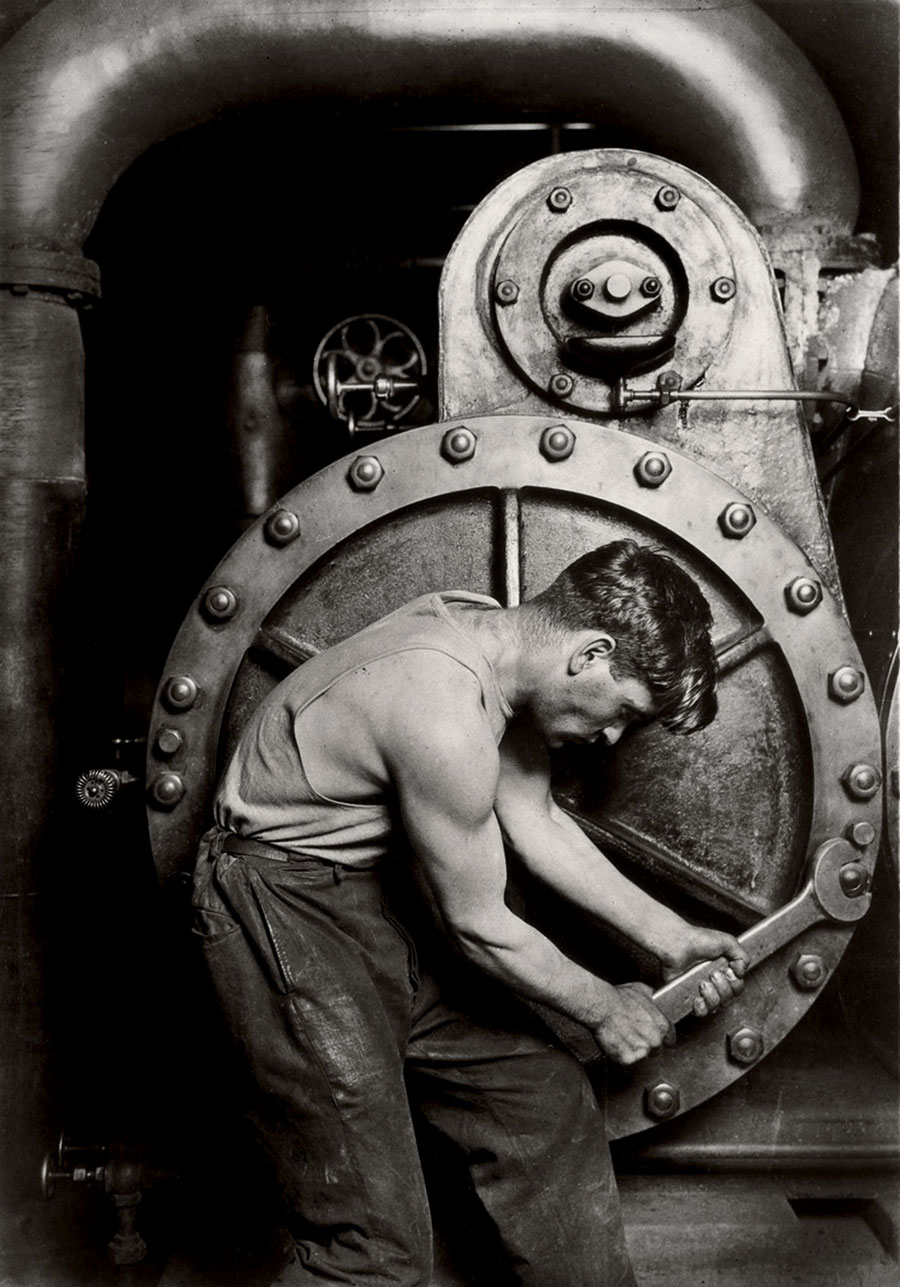
Because it has now reached epidemic stages, I feel its important to re-iterate a truth: if someone became interested in whiskey in the 2000s and started a distillery as a result, they are NOT a master distiller. It doesn’t matter what type of success or failure they have, who their distributor is or how many markets they’re in, they are not a master…of anything.
To infer, or just as wrongly, let other infer on their behalf, that they’ve mastered this craft after only a few years in, is a slap in the face and a profound insult to those that actually have achieved mastery.
The test is simple: stand in the same room with Jimmy Russell, Jim McEwan, David Stewart, Maureen Robinson, Shinji Fukuyo or Richard Patterson and refer to oneself as a “master” in their presence. It would be cringe-inducing to watch and what’s more, these very same personages wouldn’t refer to themselves as such. These, and others like them, have spent the better part of their lives in the pursuit of their craft in an industry that has seen severe downturns during their tenure. We tend to anoint them now with rock-star like plaudits, but even if the whiskey industry hadn’t taken a moon-shot in the last 15 years, they would still be regarded as masters. They put in the time and they’ve lived through the pain.
True mastery is conferred on you by your peers and the industry you’re in, not self-annointed, or worse, bestowed upon you by a publicist or a blogger or a hack writer from Thrillist.
Mastery is the result of thousands of hours laboring in every part of an industry, coming from under the tutelage of others greater than you
Mastery is the great humility of learning over time what your mistakes are and understanding the thousands of permutations in the production of an end result
Mastery is understanding how to not just teach, but to guide those who come to you for direction and knowledge, a conveyance of not just facts and information, but true wisdom as a result of a deep understanding
Mastery is having the scars of failure and succeeding as a result of them
Mastery is an outward recognition that you stand above others in a pursuit of acknowledged excellence and have achieved it through your labors
Mastery is conferred upon a few. It is not a Participation Award.
There are those in this industry who after a rocket-glide to success in a few short years attach the “master” label to themselves. At the beginning of this wave, it was easy to dismiss it as youthful exuberance, but no more. It is undeserved and by stealing this honorific they rob themselves of the richness of their own process and experience. What they may be is talented, skillful and resourceful, all achievements in and of themselves. They may be lucky or someone who knew the right people at the right time; someone gifted with the time and money to pursue a task or discipline at one’s leisure without the burden of monthly bills. All of these are fine, there’s nothing wrong with them, everyone has different paths to success.
But the hyper-titling we are experiencing is not the result of any of these. It’s a combination of a number of things that are troubling in our larger culture:
The hyper-need for instant self-gratification, driven through the prism of social media
The confusion of facts with knowledge and knowledge with wisdom as a result of the hyper-reality of the internet
A service economy vs. a production economy where there are few examples of long-term effort
The commodification of titles (Manager, Director, VP, CEO, etc.) as a result of “entrepreneurial glorification”, a syndrome where anyone who starts something new on their own is considered a prodigy, a genius or brilliant simply by the act of starting, not on what they’ve achieved
Outside investment money with no historical investment in the industry, seeing a distillery or a brand as just another commodity and titles as a marketing edge over the competition
This sense of entitlement is enabled by the wholesale showering of diluted “awards” from the huge number of competitions that have sprung up as a cottage industry, many of them coming from the organizations that purport to help grow and guide these young craftsmen into industry leaders.
One cannot demand transparency if one is not going to live it. If the craft movement is going to grow up to fulfill the destiny that is waiting for it, the capacity to re-arrange how hard spirits are made, marketed and consumed for a generation, it needs to start by looking inward at its practitioners and demanding a truthful accountability of their capabilities: not just to create, but to lead and guide, to pass their wisdom onto a new generation. Right now, I’m not seeing that happening enough to make me hopeful that it can.
Before we start lionizing the short sellers in the GOP because they’re stepping up to the plate in the 8th inning, let’s remember a basic, simple fact: THEY PUT THAT MOTHERFUCKER IN THE WHITE HOUSE. All of a sudden, it got hot in the kitchen for them and their “civility” got bruised: Fuck&You. How about the rest of us who saw this turd floating down the Hudson for the last 35 years, heading for Chesapeake Bay and the Tidewater? Where where you then? I see no honor at all in them coming forward other than to ask the question: where the fuck where you in November? Where the fuck where you during the 8 years of screaming at Obama because he passed a key piece of legislation that your sorry asses did nothing but talk about? Where were you during the never-ending Benghazi investigation, the email-server investigation: I’ll tell you where you were: front and fucking center with a .45 in your hand. Flake’s got a lot of godam nerve writing his bullshit book “Conscience of a Conservative” when his and Corker’s party was responsible for Nixon’s “southern strategy” that ripped the whole nation apart; he talks about Reagan’s “city on the hill” as if were of equal import to “I have a dream”….I have news for you, fucktart, Reagan was a pig who opened the doors to the racist, ignoramus evangelical-hypo-fucking-critical religious right, NRA dick-sucking shitheads that think Jesus is a blow up doll that rides shotgun in their pickups and spits tobacco juice at the poor schmuck in the Honda next to them. EatShit. Who do you think the 45 voters are? Reaganites, poor-ass Reaganites. Shining City on the Hill, my ass, it was shiny after he declared war on the poor (“welfare queens”); the sick (AIDS? What’s that?), the middle-class (trickle-down, voodoo economics) and economic upheaval (rampant, unbridled deregulation).
The pathetic fuckchild of Satan sitting in the Oval Office is the culmination of decades of Republican and conservative think-tank fuckery. Everyone of these hypocrite “flakey-come-lately” pricks who think their glory speeches gets them air-time on CNN and some sort of pass from Chuck Schumer can come over here and let me ram their shriveled balls backwards up their asses.
You want a pass from me? Get him out of there. Tie up McConnell in the broom closet, distract Ryan with a Rubic’s cube and a free pass to SoulCycle, and get a majority of your equally repugnant peers to put him on trial, tar and feather both The Turd and the Vice Turd, run them out on a rail and give John McCain the shallow victory of coasting out the rest of the term.
Flake and Corker get no godam support from me, not until they start their own revolution and renounce their bullshit war on the rest of the country.
Its 2030 and our long national nightmare is behind us.
Tiffany and Ivanka reunite after the latter’s messy divorce to Jared after his conviction that landed him, coincidentally, in the same cell occupied by his father, who’s now out on bail and working as a groundskeeper at a golf club in Bedminster, NJ. The sisters appear with Jimmy Fallon on the taping of his last show before retirement, reminiscing about how they completely ignored each other their entire lives until just last year when Tiffany was in line at a local Pinkberry and saw Ivanka changing the pour spout of the Blood Orange and Blueberry dispenser. After an awkward silence caused by Ivanka’s inability to make change at the register, they both burst into tears of regret and relief, hugged each other over the counter and accidentally broke the serving spoon container that stood between them. There’s rumor of an album and a clothes line in the works. Not clothing line, clothes line. Some are worried.
Barron left public life when he turned 21 and is reportedly on some kind of mission on a boat in the south of France. It is widely believed he’s had plastic surgery and changed his name, but no one really cared enough to find out.
After her line of FloodMe Pumps failed on Amazon, Melania returned to Eastern Europe and was appointed to the cabinet of the Prime Minister of Moldova, where she oversees relief work for victims of cyber-bullying, Stockholm Syndrome and bad lighting. She’s spotted every Thursday evening at the shore of a Black Sea resort, throwing what appears to be a bottle with a note in it into the water in the direction of the south of France.
Don Jr. launched a successful podcast from his private dacha in St. Petersburgh called “First Born: Second Rate” which is produced by the oldest son of his chief sponsor and adopted father, Vladimir Putin. He still has trouble pronouncing “security threat” in Russian but has developed a prickly sense of humor when it comes to idea of term limits at the Politboro.
Eric continues to pursue life as a touring country singer under the stage name of “Gummy” Phillips. He released a self-published travel book, “Change for a Dollar: A Critical Look at Motel 6” with proceeds going to an unnamed charity in the south of France.
Steve Bannon’s body was never found after it was reportedly trampled to death by a marauding pack of elk in N. Dakota’s Black Hills. Bannon was lured there on a phony recruitment trip, thinking it was the last bastion of white holdouts in the west, when he encountered a unity meeting of every single minority living in the US, including gays, women, POC, Native Americans, accountants who know what an adding machine is, Y2K programmers, the key grips from the original “Airplane” movies, Amazon greeters and women who purchased Ivanka’s and Tiffany’s clothes lines. A plaque is in the works.
The whereabouts of the former 45th President are still a mystery. There have been sightings from Paraguay and Uruguay to Vladivostok, but all have been unconfirmed. Except the south of France. He’s not there, believe me.
Dive bars: If you frequent a dive bar now, you are drinking in a disney-fied version of one: it has all the low-cut trappings of a real one, but it probably has a “program”, mixing glasses and spoons from Cocktail Kingdom, a copy of PDT Drink manual next to a huge selection of agave or whiskey on the back bar and plenty of other people who look like you sitting around having dignified conversations with each other drinking well made Manhattans and Palomas. That’s not a dive bar.
A dive bar is when all eyes are on you and it ain’t cause they know you from Facebook.
A dive bar is where you’re a little bit afraid when you walk in and the relief from fear comes only after your first shot of VO served in one of those bottom heavy shot glasses that can also serve as an effective and deadly missile if thrown correctly.
A dive bar is the clack of pool balls being smacked around a beer-stained felt by 3 guys with cigarettes tucked behind their ears, who casually stand far enough away from the pool table to partially block your way to the rest rooms so that you’ll have to interact with them in a low-level form of intimidation.
A dive bar is not feeling around under the bar for a hook for your jacket.
A dive bar always has that guy at the end of the bar, staring into his beer in a slow-simmering quake of anxiety and menace. He’s the owner.
A dive bar has characters, like the guy who sits uninvited at your table with the big smile and offers you to bet that he can eat the beer glass he has in his hand in such a way that you’d be a fool not to throw down $20 to see it; not because you want to, but because he wants you to.
A dive bar is watching him take that first bite and casually chew it while looking into your eyes.
A dive bar is when a bar fight actually breaks out and the only image you leave with is of the post-wedding bride, still in white and grimacing with anger, who comes running past you with a half-filled pitcher of beer, cocked at her shoulder like a revolver before she takes a spill from slipping on spilled beer in front of the jukebox.
A dive bar is where the jukebox plays both Gershwin’s “Rhapsody in Blue” and Marlene Dietrich singing “Puff the Magic Dragon”.
A dive bar is where the bartender pulls a $20 out of the register for you because he knows you’re broke and doesn’t expect you to spend it there. Then he pours you both a shot of VO.
A dive bar has a jar of pickled eggs on the bar next to the SlimJims.
A dive bar is where all whisky is Canadian and all Canadian is rye.
A dive bar has old ladies sitting dignified at the bar wearing boufants and too much makeup, sipping a beer or having a whiskey sour with extra fruit, lipstick stains on the ends of their half-smoked Chesterfields. They always insist on a clean ashtray.
A dive bar has gravity taps for the Guinness with the barrels on the second floor, delivered through sweating cold copper pipes, where it takes the bartender a full 4 minutes to fill a pint that has a head you can float a half-dollar on.
A dive bar has a steam table with corned beef, cabbage, potatoes, noodles and that other thing you can’t identify but looks like its sweet; its always hot, its always clean and its the best food you’ve ever had in your life.
A dive bar has squeeky floors, squeeky doors and a cash register that rings.
A dive bar has loud guys with loud jackets drinking Dewars on the rocks, sales guys with extended bellies holding court, shifting their weight from one foot to the other like a bantamweight fighter who heard the bell from the previous fight above the locker room and is trying to psyche himself out his own fear.
A dive bar was Johnny White’s on St. Peter St in the French quarter across the street from Pat O’Briens, where the guys who came off the oil platforms in the Gulf sat by the window and stared down the Tulane kids who sucked up too many Hurricanes.
A dive bar was McCann’s on 10th Avenue in the last throes of the Westies, where Mickey Featherstone’s goons would come to plot, to wash the blood from the cuts on their knuckles, to celebrate or to just have a shot of Paddys and a Harp.
A dive bar was that place in Weirton, WVA that stunk of Formica, the place in Butler County with chronically overflowing sink, the place outside of Austin that had swinging doors opening up to a raised, wood-covered sidewalk.
A dive bar lasts the test of time.
In the middle of my acting career, I took two years out and committed to learning a new technique (for me) named after its founder, Sanford Meisner. He, along with Lee Strassberg and Stella Adler, studied with the Russian genius Stanislavski, the father of modern acting, and returned to train 2 generations of American actors that changed the art form forever. During my 2-year stint, I was not allowed to pursue any work in the industry: no films, plays, commercials, voice overs, nothing. It was harsh but they demanded the commitment from you. Robert Duvall called his time learning the technique “worse than my time in the Korean War” because it is emotionally brutal. It is brutal in that it does not allow the bullshit tricks and shortcuts that actors fall into during their career, things that got them work in the past; things they’re known for in the industry; little bits of business they use over and over again: the eyebrow raise, the cocked smile, the walk or strut. It had one goal, emotional truth, played truthfully in the moment from your own imagination. You learn to listen actively, be in the moment and serve the script and your fellow players.
In the first year you never work with a script; for an actor, this is madness. It’s nothing but exercises designed to strip you of your ego, to strip you of your pride and strip you of any falsity you may harbor: all the enemy of truth. These are exercises based on repetition: 2 students facing each other, and one repeating what the other one says. Its madness and that was the point. The repetitions were designed to evoke a true response from you: not one you think might work, not one that seemed funny or dramatic (indeed, there was no “acting” going on at all here), but what was true based on your response to your partner. It was always 2 things: frustration and anger. One quarter of the class dropped out in the first year and in the commission of the exercises, you could tell who would be next: the ones who actively resisted, the ones who put up the walls, that clung tight to a reverie of themselves in the past, that tried to pull out their safety net of tricks. One by one, we all got called on it and it infuriated us, it made no sense why we were being castigated and harangued by our teacher. It was humiliating because each one of us was being stripped down to our emotional core in front of the entire class, we were being called on our bullshit, our insincerity, our falseness, our ruses that we all use in our everyday life to shield us from the harshness of it. There’s no place for that in the theatre, in the service of a character you may play. There is only truth. We would have rather shown up disrobed and naked (which happened a few times) than to be robbed of the persona mask we wore as protection and have the real us shown glaring in a spotlight. And yet that was what the work demanded. Our fragility was being exposed, each one different than the other. We, the class as a whole and guided by our teacher, came face to face with each other’s weaknesses, neuroses and secrets.
And here’s the secret you learn, the one you take with you your whole life after its revealed: that when you get stripped of the layers of sophistication that you adopt to hide your insecurities, you get angry, very, very angry, sometimes a rage. Its the first line of defense, the first impulse, its very primal, the engagement of fight/flight at a higher level. I’ve seen nuclear bursts of rage coming from the tiniest of people that made me frightened in that moment: it was real, it was enormous and it was locked inside them their entire lives before this exercise released it. Its why there is a mattress hanging on the wall of every Meisner studio in the country, because in the course of the exercises when that anger got so big and had to be exorcised, the teacher would yell, “go to the mattress” and you would leap at it flailing, crying, screaming, pounding and kicking until the anger was purged like a toxin from your blood. Then you would return to your partner and continue the exercise. And what happened in that moment, over and over, with each person in their own unique way, was why I was committed to being an actor, to pursuing art in this form for what I thought would be the rest of my life. You saw an almost transcendent human transformation happen in front of your eyes. With the anger purged, the emotional truth of that person was revealed, and I’m not kidding, as if it came down from heaven. You saw into that person’s soul, in the context of this repetitive dialogue, and you could not believe it transpired in front of you. It was scary, sexy and huge, it attracted us like flies to sugar in that we all wanted it, we all wanted what we saw to happen to us. So we came back day after day, week after week, filled with the homework assigned to us, ready to go to the mattress for our art. I did not go to war like Duvall did, but I have a sense of what he was talking about. At the end of 2 years, I was forever changed as an artist. And not surprisingly, its when I began to actually make a living at it.
I teach sales techniques to spirits industry salespeople and brand narratives to small brands. I’m bringing a lifetime of content mastery and methodologies I learned through 3 different businesses: acting, technology and liquor. But what I’m really doing is a modified Meisner technique. Sales is difficult, its one of the most demanding careers anyone can pursue, and as a result, its easy to fall into a host of tiny traps that prevent you from growth that end up as a barrier to sales. What I’m hoping to do is challenge each person to purge those habits from themselves, to re-educate themselves as to what the customer and the brand may need, and in turn, what they may need. With the narrative work, I’m hoping to strip away the ego from the entrepreneur to get to that transcendent light inside their brand, the unique glow that separates it from other similar ones on the shelf. They have to commit to some time with me to do it, but I think it pays off for them.
Let me know if you have any leads: robin@robinrobinsonllc.com
There’s a rush of righteous verdicts around an absolutely horrendous idea, concocted by 2 Google-twits, to replace real neighborhood bodegas around the country with automated kiosks filled with limited and generic items. Its a bad idea from every angle, not least of which is that bodegas are the heart of the neighborhoods they find themselves in, filled with stories like this:
I was living on Grand Street in the Lower East Side of New York City at a time before it became fashionably hip and was still filled with the dark dangers of a city knocked off its center and careening like a broken top. The bodega around the corner on Eldridge St. was the only light on, the only oasis that served up cuchifritos, beer, mystery meat sandwiches and “loosies” until 11pm. After dark, the streets were deserted except for the sea of girls that appeared to ply their trade on the corners and the flotilla of New Jersey licence plates that circled them like sharks drunk on chum. And yeah, the shop had a cat, maybe a few of them. When its the neighborhood shop, they get to know their customers, their habits and their likes. Mine was cheap, bad food, ice cream, cigarettes and beer at the time, and they had plenty of all of it: Coke and Twinkies and ice cream sandwiches and Budweiser chilling next to the Colt 45s, and the guys behind the counter could almost have the change ready when I walked in, I was so regular and consistent in what I bought late at night. Most of the street girls knew I was local and we had a silent agreement that I wasn’t “dating”, so we would glide easily past each other in the aisles, each aware of the other’s presence while looking for a quick sugar or carbo fix before resuming our everyday cadences on the other side of the doorway.
I was trying to quit smoking cigarettes so I decided to go the “loosies” route, hoping that the trouble and time it took me to get dressed, go downstairs and around the corner to buy a single Newport for a dime apiece (they were always Newports and I hated menthols) would be enough to deter me and break the habit. Consequently, I visited my neighborhood bodega 5 or 6 times a day in my futile quest.
I’m in there one night and there’s two guys, a little tough looking, standing at the counter talking to the owner behind it in a semi-serious tone. They notice my nod to him, my trip around the aisles looking for nothing in particular and then my approach to the counter. “I’ll take 2 tonight” and he knocks two Newports out of the bottom of the pack, where, for some reason, he would always rip a hole right through the cellophane and foil instead of opening it at the top. On my way out, one of two speaks to me.
“Hey, you live around here, right?” This doesn’t sound good already and I’m on the defense.
“Yeah. So?” A quick glance to the owner to get my bearings on this and determine my next move. And then the guy pulls his badge from under his shirt, mounted on a leather back and hanging from a chain around his neck. He’s undercover NYPD and he’s on the job.
“So, we got a guy that’s doing bad stuff around the area, holding up bodegas, messing with the girls, bad stuff.” I’m stopped cold and thinking things like ‘did I change my underwear’, ‘do my roommates know where I’m at’ and ‘do I even know a lawyer?’
“Yeah. So?”
“Well, we think we have him, he’s at the station house. He was robbing a store nearby. And we have an eyewitness. We need to put him in a lineup to make sure he’s the guy”.
“Oh, yeah? So?” Because I’m so articulate when confronted with the possibility of jail time.
“Yeah, well, you kind of fit his description a little, he’s got bushy hair, he’s tall. So we were wondering, would you be interested in being in on the lineup so we can pin him. Don’t worry, it ain’t you, we got the guy, but we need to do this for the witness to make it stick. We’ll give you five bucks”.
Suddenly, its a whole new ballgame and I light up. I’m an experiential person, I like cop shows on TV, I’ve never been inside the deep end of a police station, all kinds of possibilities are open. And this cop could be Serpico! And yeah, five bucks, I’m a broke-ass actor in New York, subway tokens are still only 35 cents and a slice of pizza is a buck twenty-five at Ray’s. This has some legs. “Oh yeah? That sounds pretty cool, what do I have to do?” And before you know it, I’m in the back seat of the unmarked car out front on my way down to the 5th Precinct on Mott Street in Chinatown.
Its all amiable chatter with the cops, my new best friends, and we head upstairs to where the booking rooms are and I’m looking around thinking, “fuck, this is real live Barney-fucking-Miller in here”. There’s a guy that looks like Abe Vigoda hanging around the water cooler, there’s coffee-stained cups on a table with packets of sugar lost in a white spray of spilled CoffeeMate next to them. The walls are a dingy sea-foam green, there’s the smell of mustiness hanging from every chair merged with old coffee grounds and cigarette smoke and a sense of languid restlessness on the faces of every cop in the station. I’m an actor: this is paydirt!
More small talk, I make a joke, one cop chuckles and I’m joined by other “volunteers” who kind of amble in with other cops over a period of 30 minutes and the truth is, we don’t look anything like each other, I mean one guy was short and blond! But one of these guys is “the guy”, I’m thinking, and there’s a sudden rush of sanity that flows out of my ears for the first time: “what the fuck was I thinking?” This could end up being some bullshit, New York at that time was a weird place, I have no idea what they could know about me and I have an big audition in 2 days…
When we’re all assembled, we walk into some narrow little room with only enough room for us to sit on small stools like we’re taking a crap (“what, we’re not standing? and where’s the lines on the back wall?”) and for fuck’s sake, I could be sitting next to “the guy” and I don’t see handcuffs on anyone and what the fuck is going on here? But there’s the glass panel in front of us (with Jerry Orbach or Richard Belzer or Dennis Franz behind it) and we stare dumbly at it like we don’t really know what’s going on, but in the tradition of all lineups, no smiling, please. And then we get up and leave.
All of us “volunteers” are kind of hanging around, looking around at the walls, trying to stay out of everyone’s way as the rhythm of the station keeps in time as if we weren’t there. But we all want our five bucks. We ask some “procedural questions” that we learned on TV much to the annoyance of the real police we’re talking to and its all pretty much boring and listless and we want to go home and we’re afraid we’re going to get stiffed. But one of the cops comes up with an envelope and hands us either crumpled fives or a handful of ones and a low-moan “thanks” and we’re on our way out to the street.
The next night at the bodega I come in for my fix of two Newports. The owner’s behind the counter, taps two out of the bottom, takes a quarter, gives me back a nickel, shakes his head and says, “you crazy, man”.
 One performance during a dramatic interpretation of Franz Kafka’s “The Trial” I was in the role of eccentric artist Titorelli that the character Joseph K visits to get insight on his dilemma and ordeal of false accusation. We were in a black box theatre composed of metal Unistrut and wooden planks and had constructed a small cubicle raised 10 feet off the ground to simulate Titorelli’s tiny atelier. I was playing him as sort of a crazed Dali, very physical and a bit clownish. I had conceived of a bit that had me flying backwards onto a high stool next to an easel as I answered one of his questions, plopping perfectly on its seat. The stool was right at the edge of the platform and one night I misjudged the leap and felt the stool leaning backwards. I screamed and grabbed onto one of the Unistruts, saving me from tumbling down to the floor. I’m still not sure if the audience realized what was going on, as the actor playing K didn’t have time to react and just stood there. Or did he? We finished the scene undeterred, working the fall into our dialogue, but I decided to cut that bit out of the rest of the performances. The director agreed.
 In college, I played the title character in the play “When You Comin’ Back, Red Ryder”. Red was a young, ineffectual loser trapped in a dead end job in a money-losing diner in the desert on Rt. 66 after the interstate opened. One of the subplots concerned a tourist couple on their way to Baton Rouge and the woman, Clarise, was a concert violinist carrying a very expensive violin with her.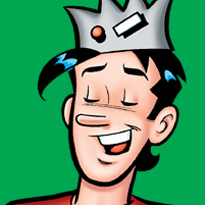
 Its a time for families, but something I saw yesterday filled me with sadness and dread. Walking down 7th avenue in the middle of a rush, the sun has set and its that dusky kind of dark at rush hour. A man and woman pushing a baby carriage toward me, I notice a light inside the carriage illuminating the baby. As I get closer, I see they suspended a digital tablet near the opening for the baby to watch, its small head bathed in its weird translucent glow. Right before this, I was leaving an eatery passing a table of a young family as the father pushed his cell phone toward his toddler to play with. This was no one time thing, the child knew exactly how to manipulate the device once it got into its tiny, pudgy hands.
 Because it has now reached epidemic stages, I feel its important to re-iterate a truth: if someone became interested in whiskey in the 2000s and started a distillery as a result, they are NOT a master distiller. It doesn’t matter what type of success or failure they have, who their distributor is or how many markets they’re in, they are not a master…of anything.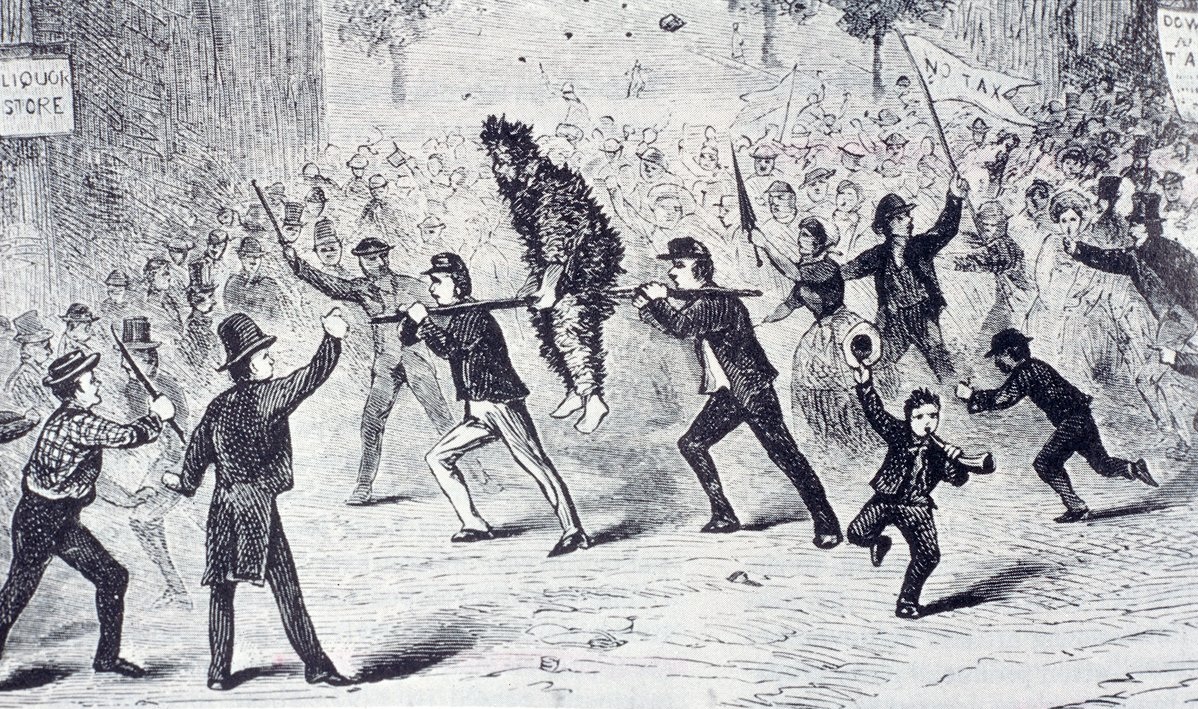
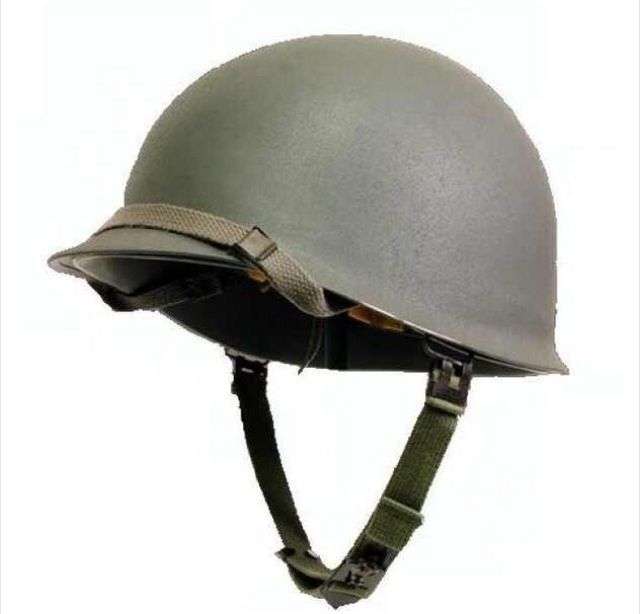 During my 2-year stint, I was not allowed to pursue any work in the industry: no films, plays, commercials, voice overs, nothing. It was harsh but they demanded the commitment from you. Robert Duvall called his time learning the technique “worse than my time in the Korean War” because it is emotionally brutal. It is brutal in that it does not allow the bullshit tricks and shortcuts that actors fall into during their career, things that got them work in the past; things they’re known for in the industry; little bits of business they use over and over again: the eyebrow raise, the cocked smile, the walk or strut. It had one goal, emotional truth, played truthfully in the moment from your own imagination. You learn to listen actively, be in the moment and serve the script and your fellow players.
 aled: that when you get stripped of the layers of sophistication that you adopt to hide your insecurities, you get angry, very, very angry, sometimes a rage. Its the first line of defense, the first impulse, its very primal, the engagement of fight/flight at a higher level. I’ve seen nuclear bursts of rage coming from the tiniest of people that made me frightened in that moment: it was real, it was enormous and it was locked inside them their entire lives before this exercise released it. Its why there is a mattress hanging on the wall of every Meisner studio in the country, because in the course of the exercises when that anger got so big and had to be exorcised, the teacher would yell, “go to the mattress” and you would leap at it flailing, crying, screaming, pounding and kicking until the anger was purged like a toxin from your blood. Then you would return to your partner and continue the exercise. And what happened in that moment, over and over, with each person in their own unique way, was why I was committed to being an actor, to pursuing art in this form for what I thought would be the rest of my life. You saw an almost transcendent human transformation happen in front of your eyes. With the anger purged, the emotional truth of that person was revealed, and I’m not kidding, as if it came down from heaven. You saw into that person’s soul, in the context of this repetitive dialogue, and you could not believe it transpired in front of you. It was scary, sexy and huge, it attracted us like flies to sugar in that we all wanted it, we all wanted what we saw to happen to us. So we came back day after day, week after week, filled with the homework assigned to us, ready to go to the mattress for our art. I did not go to war like Duvall did, but I have a sense of what he was talking about. At the end of 2 years, I was forever changed as an artist. And not surprisingly, its when I began to actually make a living at it.
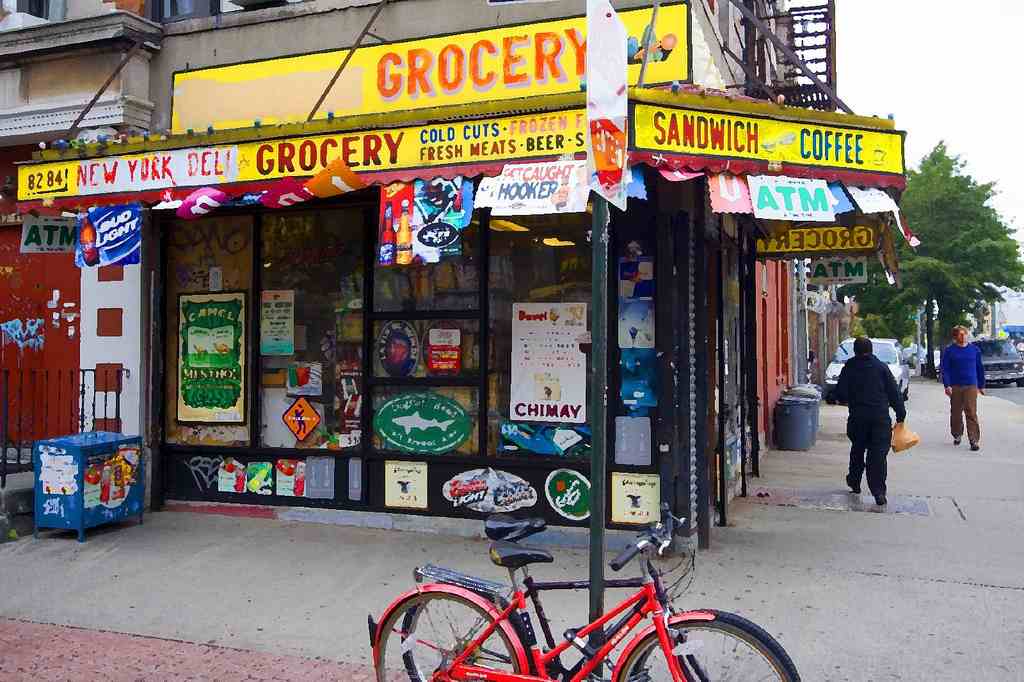 There’s a rush of righteous verdicts around an absolutely horrendous idea, concocted by 2 Google-twits, to replace real neighborhood bodegas around the country with automated kiosks filled with limited and generic items. Its a bad idea from every angle, not least of which is that bodegas are the heart of the neighborhoods they find themselves in, filled with stories like this:
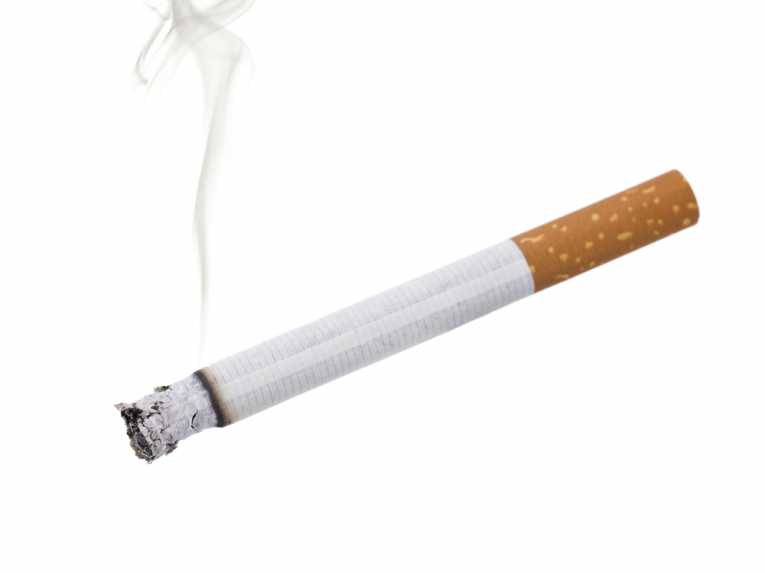 I was trying to quit smoking cigarettes so I decided to go the “loosies” route, hoping that the trouble and time it took me to get dressed, go downstairs and around the corner to buy a single Newport for a dime apiece (they were always Newports and I hated menthols) would be enough to deter me and break the habit. Consequently, I visited my neighborhood bodega 5 or 6 times a day in my futile quest.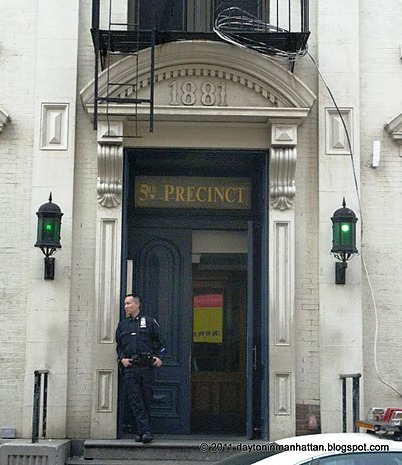
 When we’re all assembled, we walk into some narrow little room with only enough room for us to sit on small stools like we’re taking a crap (“what, we’re not standing? and where’s the lines on the back wall?”) and for fuck’s sake, I could be sitting next to “the guy” and I don’t see handcuffs on anyone and what the fuck is going on here? But there’s the glass panel in front of us (with Jerry Orbach or Richard Belzer or Dennis Franz behind it) and we stare dumbly at it like we don’t really know what’s going on, but in the tradition of all lineups, no smiling, please. And then we get up and leave.
 Bile
Bile 