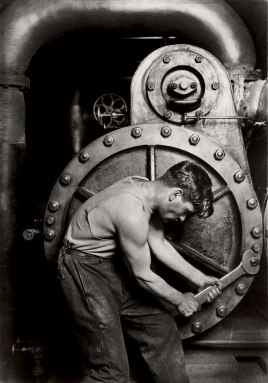
 Because it has now reached epidemic stages, I feel its important to re-iterate a truth: if someone became interested in whiskey in the 2000s and started a distillery as a result, they are NOT a master distiller. It doesn’t matter what type of success or failure they have, who their distributor is or how many markets they’re in, they are not a master…of anything.
True mastery is conferred on you by your peers and the industry you’re in, not self-annointed, or worse, bestowed upon you by a publicist or a blogger or a hack writer from Thrillist.
- Mastery is the result of thousands of hours laboring in every part of an industry, coming from under the tutelage of others greater than you
- Mastery is the great humility of learning over time what your mistakes are and understanding the thousands of permutations in the production of an end result
- Mastery is understanding how to not just teach, but to guide those who come to you for direction and knowledge, a conveyance of not just facts and information, but true wisdom as a result of a deep understanding
- Mastery is having the scars of failure and succeeding as a result of them
- Mastery is an outward recognition that you stand above others in a pursuit of acknowledged excellence and have achieved it through your labors
- Mastery is conferred upon a few. It is not a Participation Award.
- The hyper-need for instant self-gratification, driven through the prism of social media
- The confusion of facts with knowledge and knowledge with wisdom as a result of the hyper-reality of the internet
- A service economy vs. a production economy where there are few examples of long-term effort
- The commodification of titles (Manager, Director, VP, CEO, etc.) as a result of “entrepreneurial glorification”, a syndrome where anyone who starts something new on their own is considered a prodigy, a genius or brilliant simply by the act of starting, not on what they’ve achieved
- Outside investment money with no historical investment in the industry, seeing a distillery or a brand as just another commodity and titles as a marketing edge over the competition
This sense of entitlement is enabled by the wholesale showering of diluted “awards” from the huge number of competitions that have sprung up as a cottage industry, many of them coming from the organizations that purport to help grow and guide these young craftsmen into industry leaders.
One cannot demand transparency if one is not going to live it. If the craft movement is going to grow up to fulfill the destiny that is waiting for it, the capacity to re-arrange how hard spirits are made, marketed and consumed for a generation, it needs to start by looking inward at its practitioners and demanding a truthful accountability of their capabilities: not just to create, but to lead and guide, to pass their wisdom onto a new generation. Right now, I’m not seeing that happening enough to make me hopeful that it can.
 Bile
Bile 